
Pest Control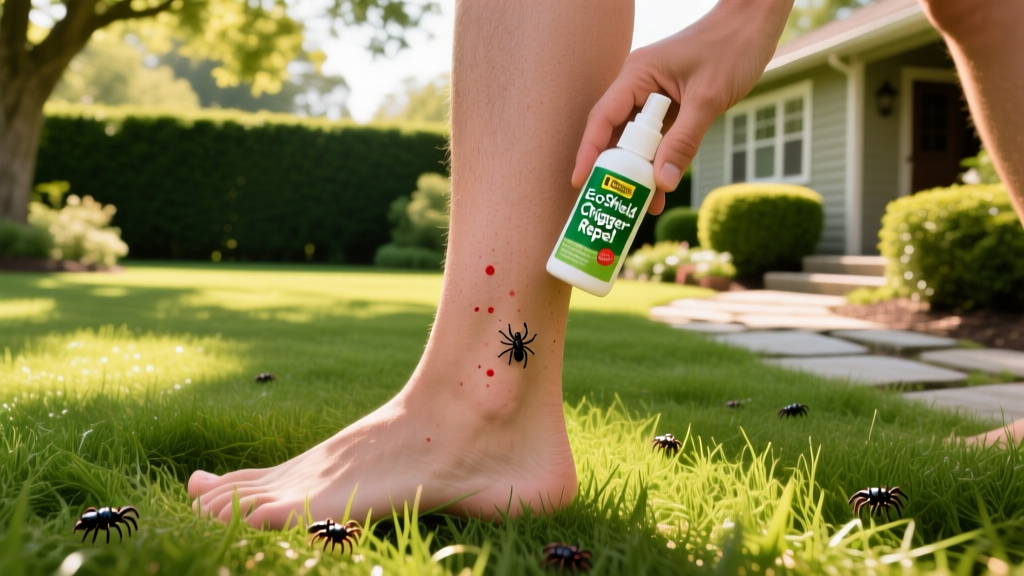
How to Prevent Chigger Bites: Yard Defense & Repellent Guide
Chiggers (the larval stage of mites in the Trombiculidae family) are notorious for ruining outdoor activities, leaving behind intensely itchy, clustered red welts. A pervasive myth suggests chiggers burrow under the skin and drink blood. In reality, they do neither. Chiggers pierce the skin and inject digestive enzymes that liquefy tissue, creating a hardened feeding tube called a stylostome. The severe itching is an allergic reaction to these enzymes, not a physical parasite burrowing in your flesh.
Because chiggers rely on specific microclimates to survive and ambush hosts, learning how to prevent chigger bites requires a two-pronged approach: disrupting their habitat in your yard and deploying chemical barriers on your person. This guide details the exact landscaping protocols, professional-grade perimeter treatments, and personal repellents required to reclaim your property.
Mapping the Chigger Microclimate
Chiggers cannot survive in direct, scorching sunlight or highly manicured, dry turf. They thrive in transition zones where moisture is trapped and vegetation provides a ladder to reach passing hosts. You will find the highest concentrations in:
- Ecotones: The boundary lines where your manicured lawn meets wooded areas, tall fescue fields, or overgrown brush.
- Moisture Traps: Areas beneath dense shrub canopies, near downspout drainage paths, or in shaded sections of the yard where morning dew lingers past 10:00 AM.
- Thatch Layers: Lawns with more than 0.5 inches of thatch provide an insulated, humid bunker for mite populations to overwinter and multiply.
Habitat Disruption: Landscaping Protocols
Before reaching for chemical sprays, you must alter the physical environment to make your yard inhospitable to chiggers. Implement these specific maintenance metrics:
1. Precision Mowing and Thatch Control
Mow your lawn to the lower end of its species-specific recommended height. For cool-season grasses (like Kentucky Bluegrass), maintain a height of 2.5 inches. For warm-season grasses (like Bermuda or Zoysia), keep it between 1.0 and 1.5 inches. This allows UV radiation to penetrate the soil surface, drying out the top layer where chiggers quest for hosts. If your thatch layer exceeds 0.5 inches, rent a mechanical dethatcher in early spring to physically remove the organic debris harboring mite eggs.
2. The 3-Foot Perimeter Rule
Create a 3-foot dry barrier between your lawn and any adjacent wooded or brushy areas. Remove all leaf litter, mulch, and low-hanging branches within this zone. Replace organic mulch with inorganic gravel or bare, compacted soil. Chiggers cannot easily cross hot, dry, exposed gravel, effectively creating a physical moat around your usable lawn space.
Pro-Tip: Elemental Sulfur Dusting
For localized problem areas (like a specific garden bench or playset border), apply Greenway Biotech Sulfur Dust (~$15 per pound). Dusting the perimeter of these high-traffic zones creates a hostile pH environment for mites. Alternatively, lightly dusting sulfur powder directly onto your socks and shoelaces before walking into tall grass provides an old-school, highly effective personal barrier.
For localized problem areas (like a specific garden bench or playset border), apply Greenway Biotech Sulfur Dust (~$15 per pound). Dusting the perimeter of these high-traffic zones creates a hostile pH environment for mites. Alternatively, lightly dusting sulfur powder directly onto your socks and shoelaces before walking into tall grass provides an old-school, highly effective personal barrier.
Chemical Perimeter Treatments
When cultural controls are insufficient, broadcast insecticides are necessary to break the breeding cycle. Pyrethroids are the industry standard for outdoor mite control due to their low mammalian toxicity and high residual efficacy.
Bifenthrin (Professional Grade)
Product: Talstar P Professional Insecticide (0.96% Bifenthrin)
Cost: ~$45 for a 3/4 gallon jug (covers up to 10,000 sq ft)
Application Rate: Mix 1 fluid ounce per gallon of water. Apply 1 gallon of mixed solution per 1,000 square feet of lawn and perimeter brush.
Residual: 30 to 60 days. Bifenthrin binds tightly to soil organic matter, resisting wash-off from rain and irrigation. Apply in late April (when soil temps hit 60°F) and again in late July to target peak larval emergence windows.
Permethrin (Consumer Grade)
Product: Martin's Permethrin 10%
Cost: ~$25 for an 8 oz bottle
Application Rate: Mix 1.5 ounces per gallon of water. Best used for targeted spot-treatments in dense shrubbery or along fence lines rather than broad lawn broadcasts.
Personal Defense Matrix: Repellents That Work
Yard treatments reduce the population, but personal repellents are your final line of defense. Essential oils (like citronella or cedarwood) fail rapidly against chiggers, often degrading within 45 minutes in high humidity. Rely on EPA-registered synthetics. According to the Environmental Protection Agency (EPA), the following active ingredients provide verified protection against biting mites.
| Active Ingredient | Target Zone | Duration | Avg Cost | Fabric/Plastic Safety |
|---|---|---|---|---|
| Picaridin 20% (e.g., Sawyer Premium) | Skin & Clothing | 12 Hours | $10 (4 oz) | Safe (Will not melt plastics or synthetics) |
| DEET 30% (e.g., OFF! Deep Woods) | Skin | 8 Hours | $8 (6 oz) | Unsafe (Degrades rayon, spandex, and watch crystals) |
| Permethrin 0.5% (e.g., Sawyer Clothing Spray) | Clothing/Gear ONLY | 6 Washes / 6 Weeks | $16 (24 oz) | Safe (Binds to fabric fibers, odorless when dry) |
Critical Safety Warning: Never apply Permethrin directly to your skin; it is rapidly metabolized and rendered ineffective by human skin enzymes. Furthermore, liquid Permethrin is highly toxic to cats until it has completely dried. Treat your clothing outdoors and allow it to dry for at least two hours before bringing it inside or wearing it.
The Pre-Treated Clothing Protocol
For maximum defense when entering heavily infested areas (like hunting leases or overgrown trails), use the 'tuck and treat' method:
- Pre-treat your hiking pants, socks, and boots with 0.5% Permethrin spray 24 hours before use.
- Wear lightweight, tightly woven synthetic pants. Chiggers can bite through thin cotton, but struggle with tight synthetics.
- Tuck your pants into your Permethrin-treated socks.
- Apply Picaridin 20% lotion to your hands, neck, and face, and spray a light mist around the waistband of your pants where clothing tends to bunch and restrict chigger movement.
Post-Exposure Triage and Bite Treatment
If you suspect you have walked through a chigger hotspot, immediate action can prevent the stylostomes from fully forming and minimize the ensuing immune response.
Step 1: The Shower Protocol
Do not use scalding hot water. While a common myth suggests hot water 'kills the chigger in the skin,' the larvae have already detached after feeding for 2 to 4 hours. Hot water actually increases blood flow to the skin, exacerbating the histamine response and worsening the itch. Instead, take a shower using cool to lukewarm water and a heavy lather of antibacterial soap. Use a washcloth to physically scrub the skin, which dislodges any unattached larvae still wandering your body.
Step 2: Symptom Management
The itch from chigger bites peaks between 24 and 48 hours post-bite. According to the American Academy of Dermatology (AAD), the most effective topical treatments include:
- Hydrocortisone 1% Cream: Apply twice daily to reduce localized inflammation.
- Calamine Lotion: Provides a cooling sensation and dries out weeping welts.
- Oral Antihistamines: Cetirizine (Zyrtec) or Diphenhydramine (Benadryl) block the systemic histamine reaction causing the itch.
Avoid scratching at all costs. Breaking the skin around the stylostome introduces Staphylococcus bacteria from your fingernails, frequently leading to secondary impetigo infections that require prescription antibiotics. Keep nails trimmed short and apply a physical bandage over severe clusters to prevent unconscious scratching during sleep.
By combining rigorous habitat disruption with targeted pyrethroid applications and modern Picaridin-based personal repellents, you can effectively neutralize the chigger threat and enjoy your yard without the aftermath of severe dermatitis.

