Pest Control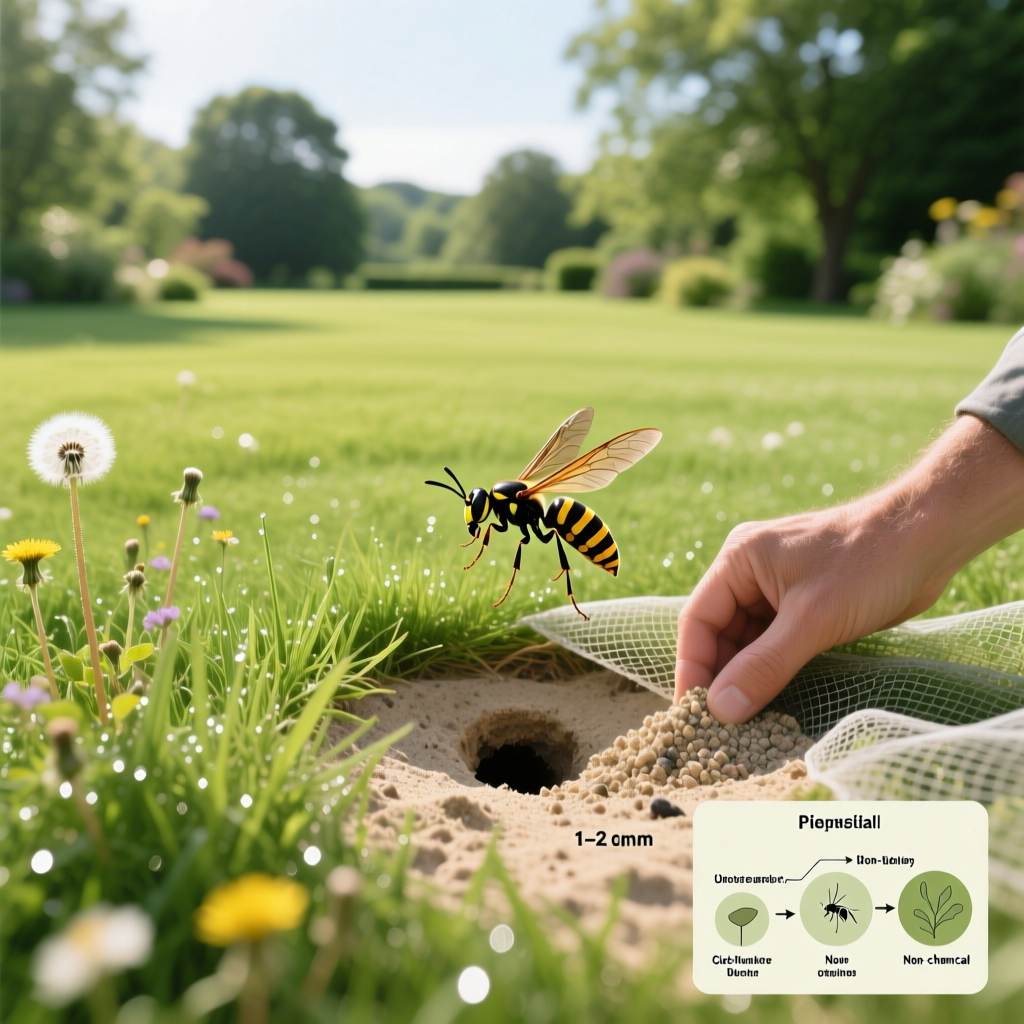
How to Prevent & Manage Cicada Killer Wasp Nests in Sandy Lawns
Mike RodriguezPublished
How to Prevent & Manage Cicada Killer Wasp Nests in Sandy Lawns
If you have noticed large, solitary wasps hovering low over bare patches of your yard, you may be dealing with cicada killer wasps (Sphecius speciosus). These imposing insects are among the largest wasps in North America, often measuring up to two inches in length. While their size and buzzing flight can be alarming, cicada killers are generally not aggressive toward humans. However, their preference for nesting in sandy, well-drained soil can turn a healthy lawn into a pockmarked landscape riddled with burrows and mounds.
Cicada killer wasps are solitary insects, meaning they do not form large colonies like yellow jackets or hornets. Each female digs her own burrow in loose, sandy soil to provision with paralyzed cicadas for her offspring. This nesting behavior makes lawns with sandy soil particularly attractive to them. Understanding how these wasps behave, what draws them to your yard, and how to manage their presence is the key to reclaiming your outdoor space without unnecessary chemical interventions.
This comprehensive guide walks you through everything you need to know about identifying cicada killer wasps, preventing them from nesting in your lawn, applying effective DIY management techniques, and knowing when it is time to call in professional help. Whether you are dealing with a handful of burrows or a full-blown infestation, the strategies below will help you take control of the situation.
Identifying Cicada Killer Wasps & Their Nests
Before you can manage cicada killer wasps effectively, you need to confirm that they are indeed the pest in your yard. Misidentification can lead to unnecessary treatments or missed opportunities to address the real problem. Here is what to look for when scouting your lawn.
Physical Characteristics of Cicada Killer Wasps
Cicada killer wasps are hard to miss once you know what to look for. They are robust insects with a black body marked with vivid yellow banding across the abdomen. Their wings are a translucent reddish-brown or amber color, and their large size sets them apart from most other wasps you might encounter. Males are smaller than females and are often seen darting around in zigzag patterns close to the ground, defending their territory. Females are the ones responsible for digging burrows and hunting cicadas.
One common source of confusion is the European hornet or the giant horntail, but cicada killers are distinctly larger and have a more pronounced yellow-and-black pattern. If you see a wasp carrying a cicada, that is a definitive identification since these wasps exclusively hunt cicadas to provision their nests.
Recognizing Nest Burrows in Sandy Lawns
Cicada killer burrows are distinctive features in a lawn. Each burrow entrance is a round hole roughly the diameter of a nickel or quarter, surrounded by a fan-shaped mound of loose, excavated soil. These mounds can be two to three inches tall and six to eight inches wide, resembling small volcanoes scattered across your yard. The burrows themselves can extend twelve to eighteen inches deep into the soil, with lateral tunnels branching off where the female places her eggs alongside paralyzed cicadas.
In sandy or loosely compacted soils, these burrows are especially easy for the wasps to excavate, which is why infestations tend to be more severe in lawns with poor soil density. You will typically notice burrows in areas where the grass is thin or where bare patches exist, such as along sidewalks, driveways, garden bed edges, and south-facing slopes that receive plenty of sunlight.
Seasonal Activity Patterns
Cicada killer wasps are active during the warmest months of the year, typically emerging in mid-summer when cicadas are abundant. Adult activity usually peaks over a span of four to eight weeks. Males emerge first and establish territories, often hovering aggressively near lawn furniture, walkways, and other ground-level features. Females emerge shortly afterward, mate, and begin the work of digging burrows and hunting cicadas. By late summer, adult activity declines, and the next generation of wasps develops underground as larvae and pupae, waiting to emerge the following season.
Understanding this seasonal cycle is critical because prevention and management efforts are most effective when timed correctly. Targeting the wasps early in their active season, before females have completed their nesting work, yields the best results.
Why Sandy Lawns Attract Cicada Killer Wasps
Cicada killer wasps are selective about where they nest, and sandy lawns provide near-ideal conditions for their burrowing lifestyle. Understanding the environmental factors that attract these wasps is the first step toward making your yard less inviting.
Soil Texture & Drainage Preferences
Female cicada killers need soil that is easy to excavate yet stable enough to prevent tunnel collapse. Sandy and loamy-sand soils meet both requirements perfectly. The loose particle structure of sand allows wasps to dig quickly with their mandibles and front legs, while the natural drainage properties of sandy soil prevent burrows from flooding during rain events. This is why you rarely see cicada killer nests in heavy clay soils or waterlogged areas.
Lawns that have been over-aerated or that suffer from compaction issues followed by topdressing with sand may inadvertently create favorable nesting conditions. Similarly, newly established lawns with sparse root systems and loose topsoil are vulnerable to colonization.
Thin Turf & Bare Spots
Cicada killer wasps strongly prefer areas with minimal vegetation cover. Dense, healthy turf acts as a natural deterrent because the root mat makes excavation difficult and the canopy discourages the wasps from landing. Conversely, bare spots and thin grass give wasps unimpeded access to the soil surface. Areas where foot traffic, pet activity, or shade have thinned the grass are prime targets for nesting.
South-facing and west-facing slopes that receive intense sunlight are particularly attractive because cicada killers are thermophilic, meaning they prefer warm environments. The heat absorbed by sandy soil on sunny slopes accelerates larval development and makes these microhabitats even more desirable.
Proximity to Cicada Populations
The single most important factor driving cicada killer presence is the availability of their prey. If your property or neighboring properties have mature deciduous trees that host cicada populations, you can expect cicada killer activity to some degree. The wasps will travel considerable distances to hunt cicadas, but they prefer to nest as close to their hunting grounds as possible. Properties with large oak, maple, ash, and elm trees are especially likely to see cicada killer nesting in nearby sandy areas.
Prevention Strategies for Cicada Killer Nests
Prevention is always more effective and less disruptive than reactive treatment. By making your lawn less attractive to cicada killer wasps, you can significantly reduce the likelihood of nesting activity without resorting to insecticides. The following strategies focus on cultural lawn care practices that deter burrowing while promoting a healthier, more resilient turf.
Maintain Thick, Dense Turf
The single most effective deterrent against cicada killer wasps is a thick, vigorously growing lawn. Dense turf with a robust root system creates a physical barrier that makes soil excavation difficult and unappealing. To achieve this, follow a consistent fertilization schedule tailored to your grass type and climate zone. Proper fertilization promotes lateral growth and tillering, which fills in bare spots and creates the dense canopy that discourages wasp nesting.
Overseeding thin areas in the fall or spring is another powerful preventive measure. Choose grass varieties that are well-adapted to your soil conditions and that spread aggressively through rhizomes or stolons. For sandy soils, consider incorporating fine fescues or improved turf-type tall fescues that tolerate drier conditions while maintaining density. A proper overseeding routine can transform a patchy lawn into a wasp-resistant carpet of grass within one or two growing seasons.
Adjust Irrigation Practices
Cicada killer wasps avoid moist soil because wet conditions make burrow walls unstable and prone to collapse. Strategic irrigation during the wasps' active season can serve as an effective deterrent. Increasing your watering frequency during mid-summer, when cicada killers are most active, keeps the upper soil layer consistently moist without overwatering. This is particularly effective on sandy soils that drain quickly and would otherwise be dry and easy to excavate.
Be careful not to overcorrect and create conditions favorable for fungal diseases or other moisture-loving pests. Deep, infrequent watering is generally best for lawn health, but during the four-to-eight-week window of cicada killer activity, adding a light supplemental watering cycle can make the soil surface just damp enough to discourage nesting without harming the turf.
Reduce Bare Soil Exposure
Any area of exposed soil is a potential nesting site. Address bare spots promptly by reseeding, applying mulch to garden beds, or installing ground covers in areas where grass struggles to grow. Along sidewalks and driveways where soil tends to be sandy and compacted, consider edging with dense, low-growing plants or applying a layer of mulch or gravel to eliminate exposed soil.
For larger bare areas that cannot be quickly established with grass, laying landscape fabric and covering it with decorative stone or bark mulch provides an immediate physical barrier. The wasps cannot burrow through fabric or heavy mulch layers, effectively eliminating these areas as nesting habitat.
Modify Soil Composition Over Time
If your lawn sits on extremely sandy soil, amending it over time with organic matter can gradually change its texture and make it less favorable for cicada killer nesting. Regular applications of compost, peat moss, or well-rotted manure increase the soil's water-holding capacity and cohesion, making it harder for wasps to dig. Topdressing with compost each season also improves overall turf health, creating a double benefit.
This is a long-term strategy that will not produce immediate results, but it addresses the underlying soil conditions that make your property attractive to cicada killers in the first place. Over several seasons, the cumulative effect of organic amendments can transform sandy, loose soil into a denser, more structured growing medium.
DIY Solutions for Managing Active Cicada Killer Nests
If cicada killer wasps have already established nests in your lawn, several do-it-yourself approaches can help you manage the situation. These methods range from non-chemical deterrents to targeted treatments that eliminate individual burrows without broadcasting pesticides across your entire yard.
Individual Burrow Treatment with Insecticidal Dust
The most effective DIY treatment for active cicada killer burrows is the application of an insecticidal dust labeled for ground-nesting wasps. Products containing deltamethrin, permethrin, or carbaryl can be applied directly into the burrow entrance using a hand duster or a puffer bottle. The best time to apply treatment is in the evening or at night when the female wasp is inside the burrow and less active.
To treat a burrow, gently approach the entrance after dusk with a flashlight covered in red cellophane (wasps are less sensitive to red light). Puff a small amount of dust into the hole, then cover the entrance loosely with a stone or clump of soil. The wasp will contact the dust when she attempts to exit the burrow the following morning. Avoid sealing the entrance completely, as this may cause the wasp to dig an alternate exit and bypass the treatment.
This method is highly effective for individual burrows but becomes labor-intensive if you are dealing with dozens of nests. It also requires a degree of comfort working near active wasps, even though cicada killers are relatively docile.
Boiling Water Treatment
For those who prefer to avoid chemical insecticides, pouring boiling water into cicada killer burrows can be an effective organic control method. This approach works best at night when the wasp is inside the burrow. Carefully pour one to two quarts of boiling water directly into the burrow entrance. The hot water kills the adult wasp, larvae, and any stored cicadas within the tunnel system.
The main drawback of this method is that boiling water also kills grass roots and beneficial soil organisms in the immediate area, leaving a dead patch that will need to be repaired afterward. Additionally, in very sandy soil, the water may percolate away from the burrow before reaching the nesting chamber, reducing effectiveness. Multiple applications may be necessary for deep burrows.
Ammonia Solution Application
A household ammonia solution can serve as a repellent and mild treatment for cicada killer burrows. Mix one part household ammonia with four parts water and pour the solution into active burrow entrances. The strong ammonia fumes irritate the wasps and can drive them from the burrow or kill them if the concentration is sufficient. This method is less reliable than insecticidal dust but is readily available and inexpensive.
Use caution when handling ammonia, as it can irritate skin and lungs. Apply the solution in the evening and avoid breathing the fumes directly. Like boiling water, ammonia can damage grass in the treated area, so plan to reseed or overseed treated spots once the wasp activity has subsided.
Physical Burrow Collapse
A simple mechanical approach involves collapsing the burrow tunnels by pressing down on the soil around the entrance with your foot or a heavy object. Repeatedly collapsing the burrow over several days can discourage the female from continuing to nest in that location, as the constant repair work depletes her energy and time. This method works best as a supplement to other treatments and is most effective early in the nesting season before the female has invested heavily in provisioning the burrow.
Combining burrow collapse with increased irrigation creates a two-pronged deterrent. The collapsed tunnel, combined with moist soil conditions, sends a strong signal to the wasp that the site is unsuitable for nesting.
Trapping & Decoy Strategies
While commercial wasp traps can catch some cicada killers, they are generally not effective as a primary control method because these wasps are not attracted to the sugar baits used in most traps. Cicada killers are predatory, not scavengers, so they are not drawn to the same lures that work for yellow jackets and paper wasps.
Some homeowners report success with decoy strategies, such as placing fake wasp nests in the area. The theory is that territorial males will avoid areas they believe are already occupied. However, since cicada killers are solitary rather than colonial, this approach has limited scientific backing. It may provide minor psychological deterrence but should not be relied upon as a standalone solution.
When to Call Professional Pest Control
While many cicada killer infestations can be managed with DIY methods, there are situations where professional intervention is the wisest course of action. Knowing when to escalate can save you time, frustration, and potential injury.
Large-Scale Infestations
If your lawn has more than twenty to thirty active burrows, treating each one individually becomes impractical for most homeowners. Professional pest control operators have access to commercial-grade products and application equipment that can treat large areas efficiently. They can apply broadcast granular insecticides or perform power-dust treatments that penetrate multiple burrows simultaneously, achieving control in a fraction of the time it would take with DIY methods.
Large infestations also suggest that the underlying conditions of your lawn are highly favorable for cicada killer nesting. A professional can assess your property holistically and recommend a comprehensive lawn restoration plan that addresses both the immediate pest problem and the long-term habitat factors.
Allergy Concerns & Safety Risks
Although cicada killer wasps are not aggressive, females are capable of stinging if handled or trapped against the skin. Males may bump into people in a territorial display but cannot sting since they lack a stinger. For individuals with known allergies to wasp venom or those who experience severe anxiety around stinging insects, professional treatment eliminates the need for close contact with active wasps.
Families with young children or pets that play in the yard may also want to consider professional treatment to ensure rapid and thorough elimination of the wasps. Children and dogs are more likely to accidentally disturb burrows during play, increasing the risk of stings.
Recurring Annual Infestations
If cicada killer wasps return to your lawn year after year despite your best prevention efforts, a professional pest control service can implement a long-term management strategy. This may include preseason soil treatments timed to coincide with wasp emergence, targeted habitat modifications, and ongoing monitoring throughout the active season. Professionals can also coordinate with neighboring properties to create a community-wide management approach that reduces the overall wasp population in your area.
Integration with Other Pest Issues
Sometimes, cicada killer activity is just one component of a broader pest problem. Lawns with sandy soil may also be susceptible to grub infestations, ground-nesting bees, ant colonies, or nematode problems. A professional pest control operator can conduct a thorough assessment and develop an integrated pest management plan that addresses all active and potential threats to your lawn's health.
Frequently Asked Questions About Cicada Killer Wasps
Are cicada killer wasps dangerous to humans & pets?
Cicada killer wasps are among the least dangerous stinging insects you are likely to encounter. Males cannot sting at all, and females will only sting if they are physically restrained or stepped on barefoot. Their solitary nature means there is no colony to defend, so they lack the aggressive group behavior seen in yellow jackets and hornets. That said, a sting from a cicada killer is painful due to the wasp's large size, and anyone with a known venom allergy should exercise caution. Pets that dig at burrows or snap at the wasps may get stung on the face or paws, which can cause swelling and discomfort but is rarely life-threatening.
How long do cicada killer wasps stay active each season?
Adult cicada killer wasps are typically active for four to eight weeks during mid-summer. The exact timing varies by region and local climate conditions, but emergence generally coincides with the annual cicada hatch. Males appear first, followed by females, and activity tapers off as females complete their nesting work and die. Once the active season ends, the next generation remains underground as developing larvae and pupae until the following summer. During the off-season, the abandoned burrows may remain visible as small mounds in the lawn but pose no threat.
Will cicada killer wasps damage my lawn permanently?
Cicada killer burrows do not cause permanent damage to lawns. The mounds of excavated soil can smother surrounding grass if left undisturbed for extended periods, and the burrows themselves create uneven ground that may be a tripping hazard. However, once the wasps have finished their seasonal activity, the burrows can be filled with topsoil and the affected areas overseeded. Lawns that receive proper seasonal maintenance typically recover from cicada killer activity within a few weeks. The more significant concern is that the conditions attracting the wasps, such as thin turf and sandy soil, will also invite other weeds and pests if left unaddressed.
Can I prevent cicada killers without using chemicals?
Yes, several non-chemical strategies can effectively reduce cicada killer activity. The most impactful approach is maintaining a thick, healthy lawn through proper watering, fertilization, mowing, and overseeding. Dense turf physically prevents wasps from accessing the soil surface. Supplemental irrigation during the active season keeps the soil too moist for comfortable burrowing. Mulching bare areas in garden beds and along borders eliminates alternative nesting sites. While these methods may not provide 100 percent control, they can reduce cicada killer activity to manageable levels without any chemical application.
Do cicada killer wasps serve any beneficial purpose?
Cicada killer wasps play an important role in the ecosystem by regulating cicada populations. While cicadas are not typically destructive to mature trees, heavy emergences can damage young trees and ornamental plantings through egg-laying activity. By preying on cicadas, cicada killers provide a natural form of population control. They also contribute to soil aeration through their burrowing activity, though this benefit is minor compared to the disruption they cause in maintained lawns. For homeowners who can tolerate a low level of wasp activity, allowing a few burrows to remain can be viewed as supporting local biodiversity without significant harm to the landscape.