Pest Control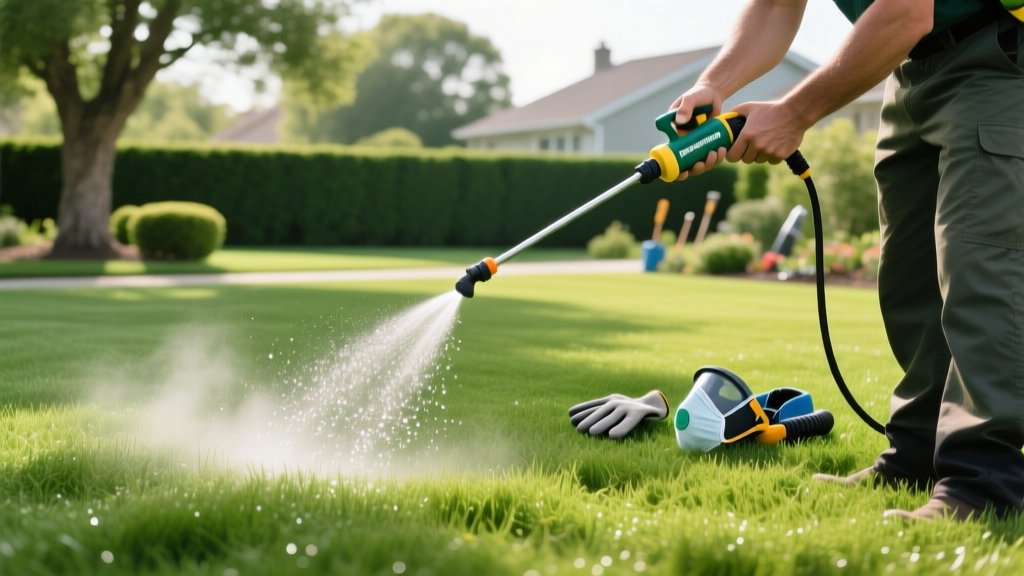
How to Apply Propiconazole Fungicide for Lawn Disease Control
Propiconazole is a highly effective, systemic Demethylation Inhibitor (DMI) fungicide that stops the biosynthesis of ergosterol, a critical component of fungal cell membranes. Because it is xylem-mobile, it moves upward through the grass blade, providing excellent protection against new growth while halting active infections. When applied correctly, it is the gold standard for curative and preventative control of devastating turf diseases like brown patch, dollar spot, and rust.
However, improper mixing, incorrect water volumes, or failure to rotate chemical classes will lead to treatment failure and pathogen resistance. This guide details the exact protocols for applying propiconazole fungicide to achieve professional-grade disease control on your lawn.
Identifying Target Diseases: When to Deploy Propiconazole
Propiconazole is a broad-spectrum fungicide, but it excels against specific fungal pathogens that thrive in high-humidity environments. Before mixing your tank, confirm your lawn is suffering from one of the following target diseases:
- Brown Patch (Rhizoctonia solani): Primarily affects tall fescue and perennial ryegrass during hot, humid summer nights (above 68°F). Look for circular, brown, sunken patches with a distinct dark 'smoke ring' border visible in the early morning. According to NC State Extension, curative applications are most critical when nighttime temperatures remain consistently high.
- Dollar Spot (Clarireedia jacksonii): Common on bermudagrass, zoysia, and bentgrass. Appears as small, silver-dollar-sized bleached spots that can coalesce into larger blighted areas. Penn State Extension notes that this pathogen thrives when daytime temperatures are between 60°F and 85°F combined with high moisture.
- Lawn Rust (Puccinia spp.): Identified by orange, powdery pustules on the grass blades that rub off on your shoes. Propiconazole halts spore production rapidly.
- Powdery Mildew: A white, dusty fungal growth usually found in heavily shaded areas with poor air circulation.
Temperature Threshold Warning: Do not apply propiconazole when ambient temperatures exceed 85°F. DMI fungicides can cause phytotoxicity (leaf burn) and severe growth stunting when applied during peak heat stress. Apply in the early morning or late evening when temperatures are dropping.
Top Propiconazole Products & Market Pricing
The professional turf market offers several formulations. While the active ingredient remains the same, the inert ingredients (solvents and surfactants) dictate how well the product penetrates the leaf cuticle and how safe it is for the turf.
| Product Name | Active Ingredient % | Est. Price (2026) | Best Use Case |
|---|---|---|---|
| Syngenta Banner MAXX II | 14.3% | $140 / pint | Premium curative control; micro-emulsion technology prevents leaf burn. |
| Quali-Pro Propiconazole 14.3 | 14.3% | $55 / pint | Budget-friendly preventative maintenance for large properties. |
| Syngenta Headway | 11.7% (w/ Azoxystrobin) | $180 / gallon | Tank-mix alternative; combines Group 3 and Group 11 for resistance management. |
Step-by-Step Mixing and Application Protocol
Achieving uniform coverage is the difference between curing a disease and watching it spread. Follow this exact calibration and application sequence.
1. Calibration and Mixing Rates
For preventative applications, mix 1.0 to 1.5 fluid ounces of 14.3% propiconazole per 1,000 square feet. For curative applications (when disease is actively visible), increase the rate to 2.0 fluid ounces per 1,000 square feet.
Water volume is just as critical as the chemical rate. You must use 1.5 to 2.0 gallons of water per 1,000 square feet to ensure the fungicide reaches the base of the plant and the lower leaf sheaths where pathogens initiate infection.
2. Tank Water pH Adjustment
Propiconazole is susceptible to alkaline hydrolysis. If your tap water has a pH above 7.5, the active ingredient will begin degrading in the tank before you even finish spraying. Add a buffering agent (like ammonium sulfate or a commercial pH adjuster) to bring your tank water to a pH between 5.5 and 6.5 before adding the fungicide.
3. Nozzle Selection and Spray Technique
Equip your backpack or cart sprayer with an air-induction or flat-fan nozzle, such as the TeeJet XR11004VS. Set your sprayer pressure to exactly 40 PSI. This pressure produces medium-to-coarse droplets that penetrate the turf canopy without drifting away in the wind. Walk at a steady pace of 3 miles per hour, overlapping your spray passes by 20% to prevent streaking.
The PGR Effect: Managing Growth Suppression
One of the most misunderstood aspects of propiconazole is its secondary effect as a Plant Growth Regulator (PGR). Because DMI fungicides inhibit C14-demethylation, they cross-react with the gibberellin biosynthesis pathway in grass. This results in shortened internodes and a noticeable reduction in vertical turf growth.
Pro-Tip for Lawn Care Operators: The PGR effect can be leveraged to reduce mowing frequency by up to 30% during peak summer growth. However, never apply propiconazole to a lawn that is already suffering from severe drought or heat stress, as the growth suppression will delay the turf's ability to recover and fill in bare spots.
Resistance Management and Rotation Strategies
Propiconazole belongs to FRAC Group 3 (Demethylation Inhibitors). Fungal populations can develop resistance to Group 3 chemistry if it is used repeatedly without rotation. The Fungicide Resistance Action Committee strictly advises against making more than two consecutive applications of the same FRAC group.
Recommended Rotation Schedule:
- Application 1: Propiconazole (FRAC Group 3) - Curative strike against brown patch.
- Application 2 (14-21 days later): Azoxystrobin or Pyraclostrobin (FRAC Group 11 - QoI) - Broad spectrum follow-up.
- Application 3 (14-21 days later): Fluxapyroxad or Penthiopyrad (FRAC Group 7 - SDHI) - Systemic protection.
Troubleshooting Common Application Failures
If your lawn continues to decline after applying propiconazole, review these common failure modes:
- Mowing Too Soon: Propiconazole requires time to be absorbed through the leaf cuticle and translocated into the xylem. Do not mow for at least 24 hours post-application. Mowing at 12 hours physically removes the chemical before it can enter the plant.
- Washing Off the Leaf: While propiconazole becomes rainfast in about 2 hours, heavy irrigation immediately after spraying will wash the product off the target zone. Turn off automated sprinklers for 24 hours.
- Thatch Barrier: If your lawn has more than 0.5 inches of thatch, the fungicide will bind to the organic matter and never reach the soil surface or lower crown. Dethatch or perform core aeration prior to your seasonal disease control program.
- Misdiagnosis: Abiotic stress (dull mower blades, dog urine, compacted soil) often mimics fungal disease. If the brown patches do not have distinct lesion patterns on individual grass blades, you are likely treating environmental stress with a fungicide, which will yield zero results.
Safety, Re-entry, and Environmental Precautions
Always wear chemical-resistant nitrile gloves, long sleeves, and protective eyewear when mixing concentrates. Propiconazole is highly toxic to aquatic invertebrates and fish. Maintain a strict 25-foot buffer zone between your spray area and any ponds, streams, or storm drains. The Restricted Entry Interval (REI) for treated turf is typically 12 hours; keep pets and children off the lawn until the spray has completely dried and the REI has passed.