
Pest Control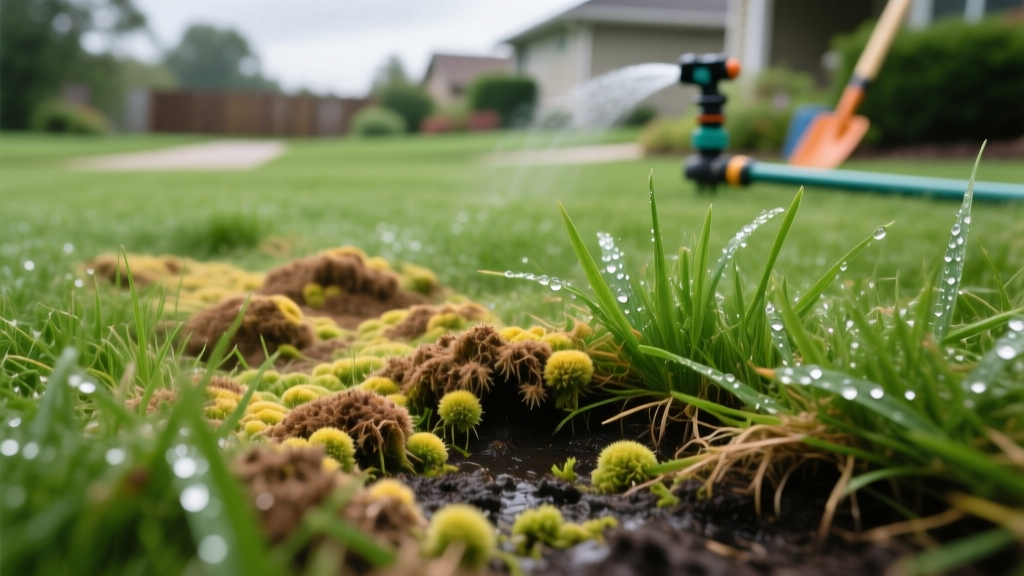
Diagnosing Turf Rot: Best Pythium Blight Fungicide Treatments
The 48-Hour Kill Window: Recognizing Pythium Blight
Pythium blight, historically known as cottony blight, is one of the most aggressive and destructive turfgrass diseases. Unlike standard fungal pathogens, Pythium aphanidermatum and Pythium graminicola are oomycetes (water molds). This biological distinction is critical: many broad-spectrum fungicides that control dollar spot or brown patch are completely ineffective against Pythium. If you misdiagnose the pathogen and apply a standard DMI or QoI fungicide, the disease will bypass the chemical barrier and destroy large sections of turf within 48 hours.
Accurate diagnosis requires observing specific environmental triggers and physical symptoms. Pythium blight thrives when nighttime temperatures remain above 70°F (21°C) and daytime temperatures exceed 85°F (29°C), coupled with high relative humidity or prolonged leaf wetness.
Key Diagnostic Symptoms
- Initial Lesions: Small, water-soaked, dark green to black spots on individual leaves.
- Tactile Test: Affected leaves feel distinctly greasy or slimy when rubbed between the fingers, unlike the dry, brittle lesions of true fungal diseases.
- Morning Mycelium: In the early morning, when dew is heavy, a distinct white, cottony mycelium is visible on the margins of the blighted areas. This mycelium vanishes as the sun dries the canopy.
- Pattern of Spread: The disease typically appears in streaks following water drainage patterns, in low-lying areas, or where turf is under mechanical stress from mower turning.
⚠️ Critical Oomycete Warning: Because Pythium species are water molds, their cell walls are composed of cellulose and glucans, not chitin. Standard fungicides targeting chitin synthesis or ergosterol biosynthesis (like propiconazole or myclobutanil) will fail. You must select a pythium blight fungicide specifically labeled for oomycetes.
Top Pythium Blight Fungicide Active Ingredients
Selecting the correct chemistry requires understanding the Fungicide Resistance Action Committee (FRAC) codes. Relying on a single active ingredient will rapidly induce resistance in Pythium populations. Below is a comparison matrix of the most effective chemistries currently available for professional and advanced residential turf management.
| Active Ingredient | Brand Example | FRAC Code | Rate (per 1,000 sq ft) | Est. Cost (per Gallon) |
|---|---|---|---|---|
| Mefenoxam | Subdue Maxx | Group 4 | 0.5 - 1.0 fl oz | $260 - $290 |
| Fosetyl-Al | Signature Xtra | Group 33 | 4.0 - 8.0 oz | $180 - $220 |
| Cyazofamid | Segway | Group 21 | 0.45 - 0.9 fl oz | $450 - $500 |
| Fluopicolide + Propamocarb | Stellar | Group 43 + 28 | 2.0 - 4.0 fl oz | $320 - $360 |
| Phosphite Salts | Alude / Vital | Group 33 | 2.0 - 6.0 fl oz | $90 - $130 |
According to NC State Extension TurfFiles, mefenoxam (Group 4) has historically been the gold standard for Pythium control. However, due to decades of reliance, localized resistance to mefenoxam has been documented in several regions. This makes rotating to Group 21 (Cyazofamid) or utilizing pre-mixed combinations like Stellar essential for long-term efficacy.
Preventative vs. Curative Application Protocols
The timing of your pythium blight fungicide application dictates the water volume, nozzle selection, and adjuvant requirements. Pythium attacks the crown and roots just as aggressively as the foliage, meaning surface-level applications often fail to protect the plant's vital growing points.
Preventative Protocol (The Weather-Trigger Method)
Do not apply preventative treatments on a strict calendar schedule. Instead, monitor local weather models. When forecasts predict three consecutive days of high humidity and nighttime lows above 70°F, initiate a preventative application.
- Product Selection: Signature Xtra or a phosphite salt. These provide excellent baseline protection and help the plant manage heat stress.
- Water Volume: 2.0 gallons per 1,000 square feet.
- Nozzle Type: Air-induction nozzles (e.g., AI TeeJet 11008) to produce coarse droplets that penetrate the canopy without excessive drift.
Curative Rescue Protocol (The Knockdown Strategy)
If you observe active cottony mycelium and greasy lesions, the disease is already sporulating. A single systemic product will not act fast enough to stop the spread. You must execute a curative tank-mix protocol immediately.
- The Tank Mix: Combine a fast-acting contact oomycete fungicide (Segway at 0.9 fl oz/1,000 sq ft) with a systemic penetrant (Subdue Maxx at 1.0 fl oz/1,000 sq ft).
- Adjuvant Addition: Add a high-quality non-ionic surfactant (NIS) at 0.25% v/v. Pythium mycelium is highly hydrophobic; the surfactant is mandatory to break the surface tension and allow the chemistry to contact the pathogen.
- Application: Spray at a high water volume (minimum 2.0 to 3.0 gallons per 1,000 sq ft) using flat-fan nozzles (e.g., XR TeeJet 8002VS) to ensure thorough coverage of the lower stem and crown.
- Syringe and Water-In: Immediately after application, irrigate with 0.1 to 0.2 inches of water. This washes the active ingredients off the leaf blade and down into the thatch and crown where the pathogen is actively destroying tissue.
Resistance Management: Decoding FRAC Codes
Pythium species are notorious for their high genetic variability and rapid mutation rates. Penn State Extension emphasizes that relying exclusively on Group 4 (Phenylamides) or Group 33 (Phosphonates) will inevitably lead to control failure. To protect the longevity of these critical chemistries, turf managers must implement strict FRAC rotation strategies.
"Never apply more than two consecutive applications of a fungicide belonging to the same FRAC group before rotating to a completely different mode of action. If Pythium pressure remains high, alternate with a contact chemistry like chlorothalonil (Group M05) to reduce the selection pressure on systemic sites."
For high-value turf like creeping bentgrass or annual bluegrass putting greens, mapping your FRAC rotations on a spreadsheet is non-negotiable. A standard summer rotation might look like: Group 33 (June) → Group 4 (Early July) → Group 21 (Late July) → Group 43+28 (August).
Cultural Controls That Make Fungicides Work
Even the most expensive pythium blight fungicide will fail if the microclimate remains highly conducive to the pathogen. Chemical controls must be paired with aggressive cultural modifications to reduce canopy moisture and lower soil temperatures.
Canopy Moisture Management
Pythium requires free water on the leaf surface to infect. Implement syringing during the hottest part of the day (1:00 PM to 3:00 PM). Syringing involves applying a microscopic amount of water (just enough to wet the leaf, not the soil) to cool the turf canopy via evaporation. This prevents the heat stress that compromises the plant's natural immune response without adding the deep soil moisture that Pythium zoospores use to swim toward roots.
Nitrogen and Airflow Adjustments
Avoid applying highly water-soluble nitrogen sources, such as urea or ammonium sulfate, during peak Pythium season. Excessive soluble nitrogen produces lush, thin-walled leaf cells that are highly susceptible to oomycete penetration. Switch to slow-release, methylene-urea based fertilizers. Furthermore, install oscillating fans on poorly drained or shaded areas of the property. Increasing airflow across the turf canopy by even 2 to 3 mph drastically reduces the duration of leaf wetness, effectively shrinking the daily infection window.

