
Pest Control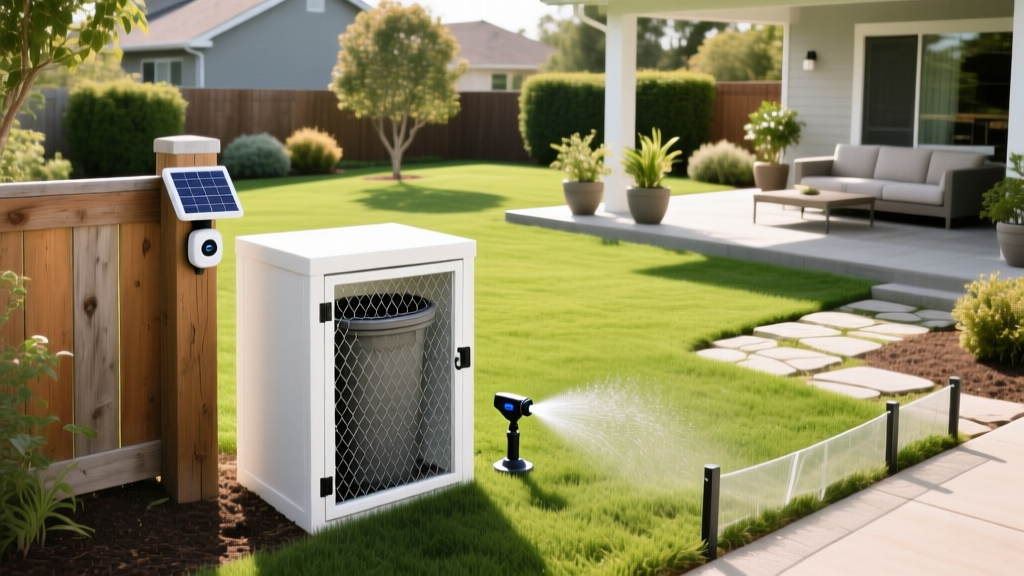
Proven Raccoon Deterrent Methods for Yards and Trash Enclosures
The Reality of Raccoon Intrusion and Dexterity
Finding a reliable raccoon deterrent requires understanding the animal's physical capabilities. Raccoons (Procyon lotor) possess highly dexterous front paws with five elongated fingers, allowing them to manipulate complex latches, untie knots, and tear through weak fencing. Their cognitive retention is exceptional; a raccoon that successfully solves a mechanical puzzle to access food will remember the solution for up to three years. Consequently, generic repellents and flimsy barriers fail rapidly. Effective mammal deterrence relies on a layered approach combining heavy-duty physical exclusion, sensory disruption, and habitat modification.
⚠ Health & Safety Warning: Raccoons are primary vectors for rabies and Baylisascaris procyonis (raccoon roundworm). Roundworm eggs shed in feces can remain viable in soil for over a decade. Never handle raccoon latrines without an N95 respirator and disposable gloves. For detailed safety protocols, consult the Internet Center for Wildlife Damage Management.
Tier 1: Physical Exclusion and Barrier Specifications
Physical barriers form the foundation of any long-term mammal management plan. However, material selection is critical. Standard poultry netting (chicken wire) is entirely ineffective; raccoons can easily rip the thin hexagonal mesh apart with their claws.
Under-Deck and Crawl Space Trenching
To prevent raccoons from nesting under sheds, decks, or porches, you must install a trench barrier using 19-gauge galvanized hardware cloth with a 1/2-inch or 1/4-inch mesh. The installation requires a specific L-shaped configuration to defeat their digging instincts:
- Dig a trench 12 inches deep and 6 inches wide around the perimeter of the structure.
- Cut the hardware cloth to a width of 24 inches.
- Bend the bottom 6 inches of the cloth outward at a 90-degree angle to create an L-shaped apron.
- Place the cloth in the trench so the 18-inch vertical section extends above ground, and the 6-inch apron points away from the structure, buried just under the topsoil.
- When a raccoon attempts to dig at the base of the fence, they will hit the buried horizontal apron and cannot bypass it.
Trash Enclosure Security Protocols
Raccoons can generate up to 50 pounds of bite force and possess the manual dexterity to slip bungee cords off trash can lids. According to guidelines from The Humane Society of the United States, securing garbage requires mechanical locking mechanisms. Upgrade to bear-proof and raccoon-proof bins like the Toter Bear-Proof cart or use heavy-duty ratchet straps threaded through the can handles and over the lid. Carabiner clips (rated for at least 50 lbs) threaded through the lid latch and the handle hinge provide a low-cost, high-efficacy alternative to bungee cords.
| Barrier Material | Mesh/Gauge Spec | Raccoon Efficacy | Failure Mode |
|---|---|---|---|
| Poultry Netting (Chicken Wire) | 20-gauge, 1-inch hex | Poor | Easily torn by claws and teeth. |
| Welded Wire Fencing | 16-gauge, 2x4 inch | Moderate | Paws and snouts can reach through large gaps. |
| Galvanized Hardware Cloth | 19-gauge, 1/2 inch | Excellent | Fails only if not buried (digging bypass). |
| PVC / Plastic Mesh | Variable | Poor | Chewed through in minutes. |
Tier 2: Active Sensory Deterrent Systems
When physical barriers cannot be deployed across an entire property line, active deterrents disrupt the raccoon's foraging behavior through negative reinforcement.
Motion-Activated Sprinklers vs. Ultrasonic Repellents
The most reliable active deterrent on the market is the Orbit Yard Enforcer Motion-Activated Sprinkler (Model 62100), typically priced between $50 and $70. This device utilizes an infrared sensor to detect body heat and motion, triggering a sudden, noisy burst of water. Raccoons are highly averse to sudden tactile and auditory shocks. For optimal results, set the device dial to 'Night Only' mode to conserve water and target nocturnal foraging windows. Place the unit near trash enclosures or garden beds, ensuring the sensor is angled slightly downward to catch smaller juvenile raccoons.
Conversely, ultrasonic repellents (such as the CritterGitter) emit high-frequency sound waves intended to cause discomfort. While they may work for the first 48 hours, wildlife biologists note that raccoons rapidly habituate to static ultrasonic frequencies once they realize the sound is not paired with a physical threat. If you use ultrasonic devices, they must be paired with variable-frequency settings and physical barriers to prevent habituation.
Tier 3: Habitat Modification and Lawn Care
Raccoons frequently tear up turfgrass in search of Japanese beetle grubs and earthworms. A raccoon can roll back 10 square feet of sod in a single night. To eliminate this food source, implement a targeted grub control regimen.
- Biological Control: Apply Paenibacillus popilliae (Milky Spore) to your lawn in late summer. This naturally occurring bacterium specifically targets Japanese beetle grubs without harming earthworms or beneficial soil nematodes. Apply at a rate of 1 teaspoon per 4 square feet.
- Nematode Application: Beneficial nematodes (Heterorhabditis bacteriophora) can be applied via hose-end sprayer in early fall to actively destroy grub populations before they mature.
- Pet Food Protocols: Never leave dry cat or dog food outdoors overnight. Raccoons have a highly developed olfactory sense and will travel up to 15 miles to investigate a reliable protein source.
The 30-Day Raccoon Deterrent Implementation Plan
Execute this phased approach to systematically harden your property against mammal intrusion.
Week 1: Sanitation and Audit
Remove all fallen fruit, secure compost bins with heavy lids, and transition pet feeding to indoor-only. Audit your property for potential den sites (open crawl spaces, hollow trees, gaps under sheds).
Week 2: Mechanical Exclusion
Install 19-gauge hardware cloth L-barriers around vulnerable structures. Upgrade trash can latches to ratchet straps or carabiner systems.
Week 3: Active Deterrent Deployment
Install the Orbit Yard Enforcer sprinkler near high-traffic zones (trash pads, garden entrances). Adjust the sensor sensitivity to prevent false triggers from wind-blown foliage.
Week 4: Turf and Habitat Management
Treat the lawn for grubs using Milky Spore or beneficial nematodes. Trim tree branches that overhang your roofline to a minimum distance of 8 feet to prevent roof and attic access.
Frequently Asked Questions
Do mothballs or ammonia work as a raccoon deterrent?
No. Using mothballs (naphthalene) outdoors is illegal in most jurisdictions due to soil and groundwater toxicity. Ammonia-soaked rags evaporate within 24 to 48 hours and pose severe respiratory risks to pets and children. Raccoons will simply avoid the immediate rag but continue foraging elsewhere on the property.
Can raccoons climb smooth metal poles?
While raccoons are exceptional climbers, they cannot ascend perfectly smooth, vertical metal surfaces wider than their grip span. However, they can easily climb wooden posts, brick walls, and downspouts. If protecting a bird feeder or specific structure, use a 24-inch wide metal predator baffle mounted at least 5 feet off the ground.
What should I do if I find a raccoon latrine on my property?
Raccoon latrines (communal defecation sites) are highly concentrated sources of roundworm eggs. Do not use a leaf blower or high-pressure washer, which will aerosolize the eggs. Mist the area with water to keep dust down, wear an N95 mask and rubber gloves, and carefully shovel the feces into heavy-duty garbage bags for landfill disposal. Burn or bury the contaminated topsoil if possible.

