
Pest Control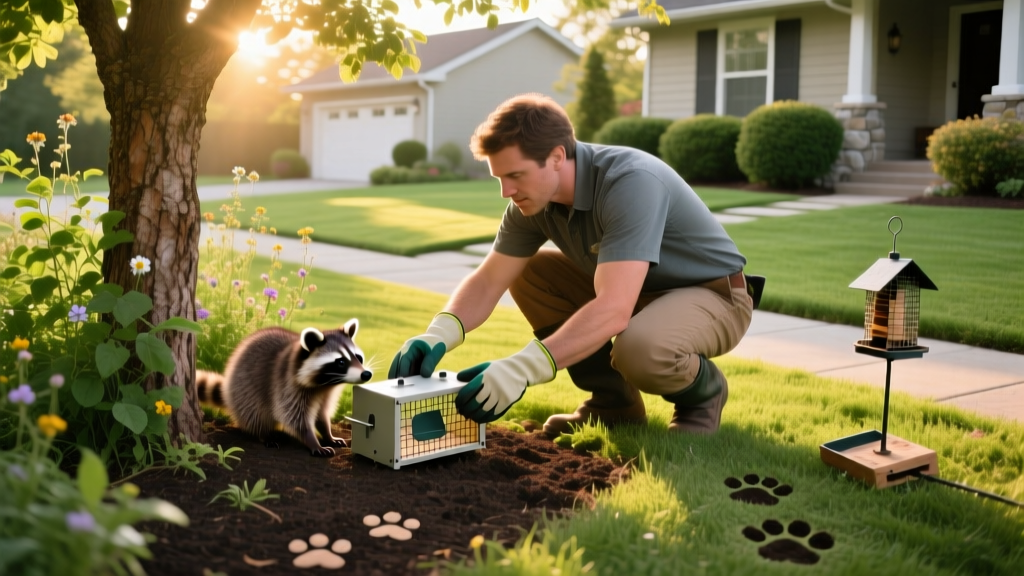
How to Get Rid of a Raccoon: Proven Yard & Garden Tactics
Understanding Raccoon Behavior in Landscapes
Raccoons (Procyon lotor) are highly adaptable, intelligent omnivores that view manicured lawns and vegetable gardens as all-you-can-eat buffets. Unlike smaller rodents that merely nibble at the edges of your landscape, a single adult raccoon can cause hundreds of dollars in property damage in a single night. Their forepaws contain four to five times more sensory cells than most mammals, granting them near-human dexterity. This allows them to undo simple latches, peel back turf like a carpet, and dismantle lightweight garden netting with ease.
Before deploying deterrents, you must identify the specific attractant. Raccoons rarely enter a yard without a primary food or shelter source. The most common landscape attractants are accessible trash, unprotected compost, fallen fruit, and—most critically for lawn care enthusiasts—subsurface white grubs. According to Penn State Extension, eliminating the primary food source is the mandatory first step in any long-term mammal deterrence strategy.
The Grub Connection: Why Raccoons Destroy Lawns
If you wake up to find large, irregular patches of your lawn rolled up or peeled back, you are dealing with raccoon foraging behavior targeting soil-dwelling insects. Raccoons use their sensitive front paws to locate the larvae of Japanese beetles, June bugs, and European chafers beneath the soil surface.
Targeted Grub Eradication
You cannot deter a raccoon from digging if the food source remains. Traditional chemical grub killers often contain neonicotinoids, which harm beneficial pollinators and earthworms. For a targeted, eco-friendly approach that specifically breaks the raccoon's foraging cycle, use biological controls:
- Beneficial Nematodes (Heterorhabditis bacteriophora): These microscopic worms actively hunt and infect white grubs. Apply them in late summer when soil temperatures are between 60°F and 85°F. They require moist soil to survive, so water the lawn lightly before and after application. A 50-million nematode pack treats roughly 5,000 square feet and costs around $35 to $45.
- Bt galleriae (Bacillus thuringiensis galleriae): A newer organic bacterial spray that specifically targets beetle larvae without harming earthworms or pets. Apply at the first sign of adult beetle flight in early summer.
- Milky Spore (Paenibacillus popilliae): Best for long-term Japanese beetle grub control. It takes 1 to 3 years to fully establish in the soil but provides protection for up to 15 years once established. Expect to pay about $45 for a 4,000-square-foot treatment.
Sensory Deterrents: What Actually Works?
The pest control market is flooded with ultrasonic devices and flashing lights that claim to repel wildlife. In practice, raccoons habituate to passive sensory deterrents within 48 to 72 hours. To maintain efficacy, deterrents must be dynamic, unpredictable, and physically disruptive. Below is a comparison of common deterrent categories based on real-world landscape efficacy.
| Deterrent Type | Specific Product Example | Estimated Cost | Efficacy & Expert Notes |
|---|---|---|---|
| Motion-Activated Water | Orbit 62100 Yard Enforcer | $75 - $90 | High. The sudden noise and physical water spray trigger a flight response. Requires 4 AA batteries and a standard 3/4-inch hose. Move the unit every 3 days to prevent habituation. |
| Predator Scent | Shake-Away Coyote Urine | $15 - $20 | Moderate to Low. Works initially, but degrades rapidly in rain and UV light. Raccoons in urban areas often recognize that coyotes are absent and will ignore the scent after a week. |
| Ultrasonic Sound | Generic Solar Pest Repellers | $25 - $40 | Very Low. Raccoons quickly realize the high-frequency sound poses no physical threat. Not recommended for serious infestations. |
| Physical Light | Nite Guard Solar Predator Light | $35 - $50 | Low. Flashing red LEDs mimic predator eyes. Effective for deer, but raccoons are nocturnal foragers with excellent night vision and will simply navigate around the light. |
⚠️ Warning: Avoid Mothballs and Ammonia
Using mothballs (naphthalene or paradichlorobenzene) or ammonia-soaked rags outdoors is highly illegal in most jurisdictions. These chemicals leach into the soil, contaminate groundwater, and pose severe respiratory and neurological risks to pets, children, and non-target wildlife. The EPA strictly regulates mothballs as pesticides, and outdoor use violates federal law.
Securing the Perimeter: Trash and Compost
Because of their advanced dexterity, standard bungee cords are entirely useless against raccoons. They can easily hook a claw under the cord and pull it off the lid. To secure your trash and compost bins, you must use mechanical locking mechanisms.
- Gravity Latches: Install heavy-duty gravity latches (like the CritterGuard Pro system) that require a human thumb to lift and twist. Raccoons lack the opposable thumb strength to manipulate dual-action locks.
- CinchStraps: If replacing bins is not an option, use a CinchStrap or a heavy-duty climbing carabiner to lock the left and right handles together over the lid.
- Compost Bin Selection: Avoid open-bin composting if raccoons are active. Use fully enclosed, tumbling composters made of thick UV-resistant polypropylene. Never add meat, dairy, or grease to outdoor compost, as the lipid scents travel up to a mile on the wind.
Exclusion Fencing: The L-Footer Technique
If raccoons are raiding a specific garden bed or accessing a crawl space, physical exclusion is the only permanent solution. Standard chicken wire is too flimsy; raccoons can tear it apart. Instead, use 16-gauge, 1/2-inch galvanized hardware cloth.
When burying hardware cloth to prevent digging, do not simply dig a straight trench. Raccoons will dig directly at the base of the fence, hit the wire, and keep digging. You must use the L-Footer (or Apron) Technique:
- Dig a shallow trench 6 inches deep along the perimeter of the garden or structure.
- Bury the bottom 6 inches of the hardware cloth vertically in the trench.
- Bend the remaining bottom 12 inches of the wire outward, away from the protected area, forming an 'L' shape.
- Cover the outward-facing wire with 2 inches of soil or mulch.
When a raccoon approaches the fence and begins to dig at the base, its paws will hit the horizontal wire apron. Because mammals naturally dig straight down rather than backing up to dig behind the barrier, the L-footer completely defeats their digging instinct.
The Reality of Trapping and Relocation
Many homeowners instinctively purchase a Havahart live trap to catch and relocate a nuisance raccoon. Before doing so, you must understand the legal and biological realities. According to The Humane Society of the United States, relocating wildlife is often a death sentence and is illegal in many states without a specialized nuisance wildlife permit.
Raccoons possess a powerful homing instinct and have been documented traveling over 15 miles to return to their original territory. Furthermore, relocating a raccoon moves the rabies and canine distemper vectors into new ecosystems, potentially spreading disease to unexposed wildlife populations. If a raccoon has nested in your attic or under a shed, trapping the adult will almost certainly orphan a litter of kits hidden inside, leading to severe odor and secondary pest issues as the carcasses decompose. Always rely on exclusion and one-way doors installed by licensed professionals for structural infestations.
Frequently Asked Questions
Do radios or talking deterrents work for raccoons?
Leaving a talk-radio station playing near a garden can work as a temporary, short-term deterrent (for 2 to 3 nights). However, raccoons are highly intelligent and will quickly realize the human voices are not accompanied by human scent or physical presence, leading to rapid habituation.
How do I clean up raccoon latrines safely?
Raccoons establish communal defecation sites called latrines, often on raised flat surfaces like stumps, large rocks, or roof intersections. These latrines can contain eggs from Baylisascaris procyonis (raccoon roundworm), which is highly dangerous to humans. Never sweep or use a leaf blower on a latrine, as this aerosolizes the eggs. Wear an N95 respirator and rubber gloves, spray the area heavily with water to prevent dust, and shovel the feces into double-sealed plastic bags for landfill disposal. Disinfect the surface with boiling water, as standard bleach solutions do not destroy the resilient roundworm eggs.
Will planting specific herbs repel raccoons?
While some gardening blogs suggest planting garlic, marigolds, or mint to repel mammals, there is no scientific evidence supporting this for raccoons. Their olfactory drive to find high-calorie foods like grubs and sweet corn easily overrides the mild scent of companion plants. Rely on physical barriers and biological grub control instead.

