
Pest Control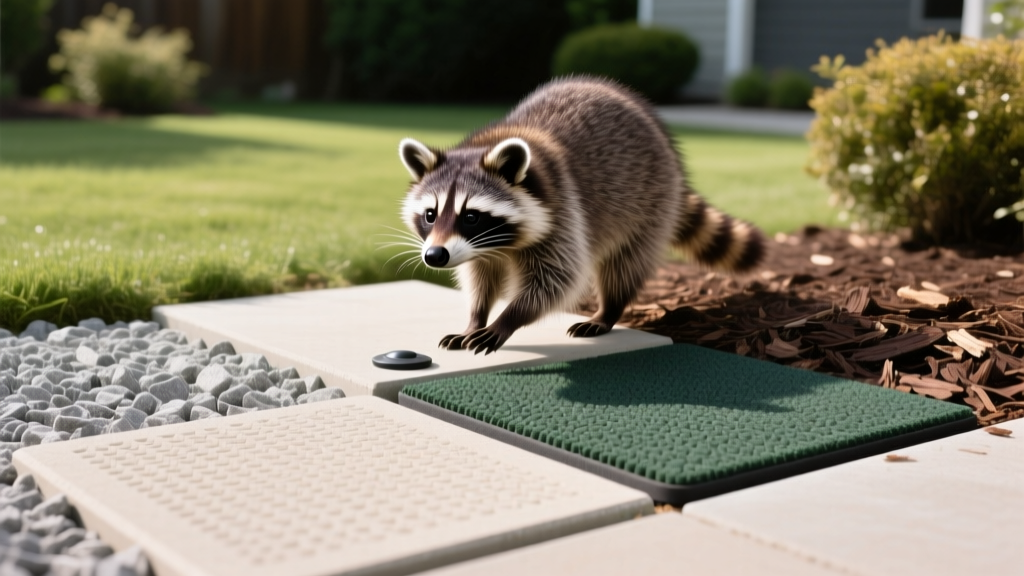
What Do Raccoons Hate to Walk On? 4 Proven Surface Deterrents
The Neurological Reason Raccoons Hate Certain Textures
Before deploying physical barriers, it is critical to understand the biological mechanism that makes texture-based deterrents so effective. Raccoons do not just use their front paws for locomotion; they use them as their primary sensory organs. According to wildlife biologists, a raccoon's front paws contain four to five times more sensory cells than most mammals of similar size. Their somatosensory cortex is heavily dedicated to tactile feedback, meaning they essentially "see" their environment through touch.
When a raccoon steps on a surface that is overly prickly, unstable, sticky, or electrified, the overwhelming sensory input triggers an immediate avoidance reflex. They do not experience pain in the way a glue trap or barbed wire would cause injury; rather, the extreme discomfort and loss of tactile control make the surface unnavigable. By exploiting this hyper-sensitivity, homeowners can create impenetrable zones around gardens, trash enclosures, and lawns without resorting to toxic chemicals or lethal traps.
The 4 Most Effective Surfaces Raccoons Refuse to Walk On
Not all physical barriers are created equal. While chicken wire is often recommended, raccoons can easily manipulate and pull it apart with their highly dexterous fingers. To stop them, you must use rigid, unyielding, or highly stimulating surfaces. Here are the four most effective materials, ranked by efficacy and ease of installation.
1. Polypropylene Anti-Digging Spike Strips
Commercial plastic spike strips, often marketed for deterring cats and digging dogs, are exceptionally effective against raccoons. These strips feature dense, blunt polycarbonate or polypropylene spikes measuring exactly 0.8 to 1.0 inches in height. Because raccoons rely on the flat pads of their paws for balance and sensory input, stepping on a dense grid of these spikes forces them to immediately retreat.
- Specifications: Look for strips that are at least 19.5 inches long and 2 inches wide, with spikes spaced no more than 0.5 inches apart.
- Cost: Approximately $18 to $25 for a 10-linear-foot kit.
- Best Application: Laying flat across the tops of fence lines, along the edges of raised garden beds, or directly over soft soil where they frequently dig for grubs.
2. 19-Gauge Galvanized Hardware Cloth (Laid Flat)
While raccoons can manipulate vertical chicken wire, they absolutely hate walking on rigid, heavy-gauge hardware cloth laid flat against the ground. The 19-gauge steel wire is too thick for them to bend or pry up, and the 1/2-inch by 1/2-inch mesh grid creates an uneven, unyielding surface that disrupts their paw-pad sensory feedback.
- Specifications: Must be 19-gauge or thicker (16-gauge is ideal for high-traffic areas). Do not use 20-gauge or higher, as raccoons can bend it.
- Cost: $0.75 to $1.20 per square foot.
- Best Application: Buried 1 inch beneath the soil surface of a lawn to prevent grub-digging, or pinned flat over mulch beds using 6-inch steel U-stakes every 12 inches.
3. Low-Impedance Electrified Polywire
For severe infestations or high-value targets like sweet corn patches and koi ponds, a low-voltage electric fence provides an unforgettable tactile shock. Raccoons have a high moisture content in their paws, making them excellent conductors. A low-impedance energizer delivers a sharp, high-voltage but low-amperage pulse that startles the animal without causing physical harm.
- Specifications: Use a low-impedance energizer (such as the Gallagher MBS800 or Zareba 10-Mile AC model) outputting 4,000 to 5,000 volts. String a single strand of conductive polywire exactly 6 inches above the soil line.
- Cost: $80 to $150 for a complete energizer kit, plus $0.15 per linear foot for the polywire.
- Best Application: Perimeter fencing around vegetable gardens, poultry coops, and water features.
4. Coarse River Cobble and Unstable Gravel
Raccoons prefer stable, soft footing that allows them to dig and maintain balance. A 3-inch deep layer of coarse, 2.5 to 4-inch diameter smooth river cobble creates an unstable, shifting surface that they find highly frustrating to walk on. Furthermore, the large gaps between the cobbles prevent them from accessing the soil beneath to dig for earthworms or insect larvae.
- Specifications: Smooth river rock measuring 3 to 5 inches in diameter. Avoid crushed gravel with sharp edges, as it can compact and become walkable over time.
- Cost: $60 to $90 per ton (covers roughly 60 square feet at a 3-inch depth).
- Best Application: Creating a 3-foot wide "moat" around the base of fruit trees, trash enclosures, and deck perimeters.
Surface Deterrent Comparison Matrix
| Surface Material | Material Cost | Installation Effort | Best Use Case | Expected Lifespan |
|---|---|---|---|---|
| Plastic Spike Strips | $1.80 - $2.50 / linear ft | Low (Lay and pin) | Fence tops, garden edges | 5 - 7 years (UV dependent) |
| 19-Gauge Hardware Cloth | $0.75 - $1.20 / sq ft | Medium (Dig and staple) | Lawns, under-shed barriers | 10 - 15 years |
| Electric Polywire | $0.15 / linear ft + energizer | High (Posts and wiring) | Large gardens, koi ponds | 3 - 5 years (wire replacement) |
| Coarse River Cobble | $1.00 - $1.50 / sq ft | High (Heavy material) | Trash pads, tree bases | Permanent |
How to Build an Impenetrable "Texture Moat" Around Your Garden
If you are protecting a high-value area like a vegetable garden or a freshly seeded lawn, combining two surface deterrents creates a psychological and physical barrier that raccoons will not attempt to cross. Follow this step-by-step framework to build a texture moat:
- Clear the Perimeter: Remove all leaf litter, mulch, and low-hanging vegetation within 2 feet of your target area. Raccoons will use debris as a "bridge" to bypass surface deterrents.
- Lay the Base Layer: Unroll 19-gauge hardware cloth flat against the soil, extending 2 feet outward from the garden edge. Pin it securely using 6-inch steel landscape staples every 12 inches to prevent the raccoon from prying up the corners.
- Install the Tactile Spikes: Place polypropylene spike strips directly on top of the hardware cloth at the outermost edge. Secure them with zip ties threaded through the mesh grid.
- Add Visual Deterrence: While this guide focuses on touch, adding a motion-activated sprinkler (like the Orbit 62100 Yard Enforcer) aimed at the moat will condition the raccoon to avoid the area entirely after one or two encounters.
Warning: Avoid Illegal and Inhumane Surface Traps
Never use roofing tar, industrial polybutene glues, or DIY sticky boards on the ground. These substances cause severe fur matting, skin tearing, and prolonged suffering, and are illegal in most jurisdictions. Furthermore, avoid barbed wire or razor wire, which can cause lethal lacerations to wildlife and domestic pets. Always rely on rigid, blunt tactile deterrents.
Troubleshooting: Why Are They Still Crossing the Barrier?
If you have installed hardware cloth or spike strips and are still finding raccoon tracks, the failure is almost always due to environmental degradation of the barrier. Check for these three common failure modes:
- The Debris Bridge: Autumn leaves, windblown soil, or overgrown grass can cover spike strips and hardware cloth, creating a soft, walkable layer on top of the deterrent. You must rake or blow off surface barriers weekly during peak foliage seasons.
- The Overhang Bypass: Raccoons are exceptional climbers. If a tree branch hangs within 4 feet of your protected zone, they will bypass the ground surface entirely by dropping in from above. Prune all branches back at least 6 feet from the target area.
- Lifting Corners: If hardware cloth is not pinned every 12 inches, a raccoon will use its thumbs to lift the edge, slide underneath, and dig from the inside out. Always overlap seams by 6 inches and double-pin the corners.
Frequently Asked Questions
Do coffee grounds or cayenne pepper stop raccoons from walking on soil?
No. While often cited in amateur gardening blogs, olfactory deterrents like coffee grounds, cayenne pepper, and predator urine degrade rapidly when exposed to rain and UV light. Furthermore, raccoons quickly habituate to smells if there is a high-value food source nearby. According to Penn State Extension, physical and tactile barriers are the only consistently reliable methods for excluding raccoons from specific ground areas.
Will raccoons walk on chicken wire?
Yes. Standard 20-gauge or 22-gauge hexagonal chicken wire is highly flexible. Raccoons possess immense grip strength and dexterity in their front paws, allowing them to easily bend, tear, and roll up thin chicken wire to access the soil beneath. Always upgrade to rigid, welded 19-gauge hardware cloth.
Is it legal to use electric fencing for raccoons in residential areas?
In most municipalities, low-impedance, UL-listed electric fences designed for wildlife and pet containment are legal for residential use, provided they are clearly marked with warning signs and do not border public sidewalks. However, you must verify your local zoning ordinances. For non-lethal, long-term coexistence strategies, The Humane Society of the United States recommends prioritizing habitat modification and physical exclusion over electrified barriers in densely populated neighborhoods.

