
Pest Control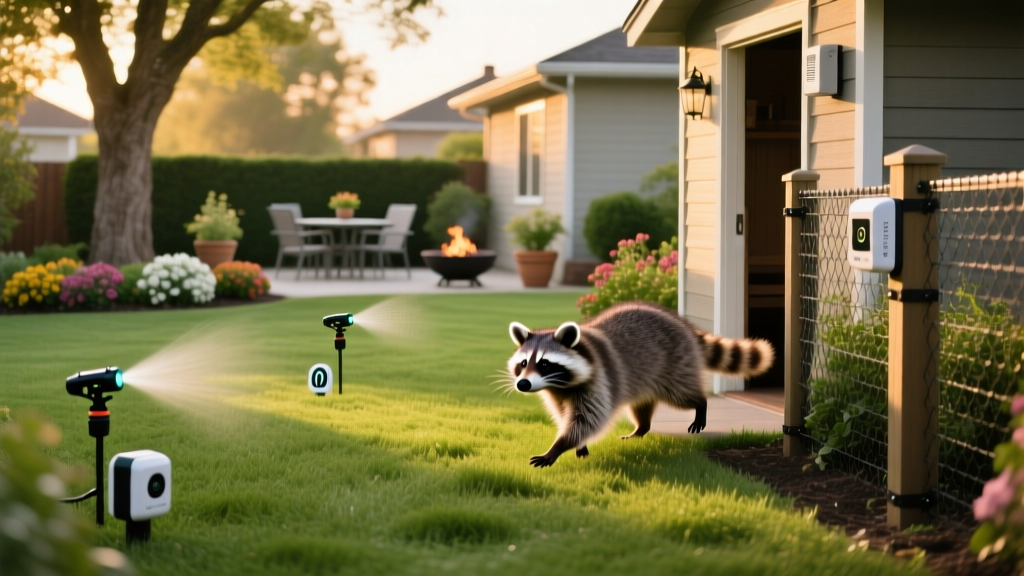
How to Keep Raccoons Out of Your Yard: Proven Deterrents & Fencing
Raccoons (Procyon lotor) possess remarkable manual dexterity, spatial memory, and problem-solving skills. Once they map a reliable food or water source in your landscape, they will return nightly, often causing severe damage to turfgrass, gardens, and property infrastructure. Understanding how to keep raccoons out of your yard requires moving beyond temporary scares and implementing permanent physical exclusion and habitat modification.
According to the Humane Society of the United States, raccoons are highly adaptable omnivores that thrive in suburban environments precisely because human landscapes provide concentrated, easily accessible calories. To permanently evict them, you must systematically dismantle the attractants and fortify your perimeter.
The Raccoon Threat Matrix: Why They Target Your Yard
Raccoons do not invade yards randomly; they follow established foraging routes based on caloric return on investment. Identifying which category your yard falls into is the first step in exclusion.
| Attractant Category | Specific Yard Features | Immediate Mitigation |
|---|---|---|
| High-Calorie Food | Unsecured trash, pet food bowls, birdseed, fruit drops | Gravity-latch trash locks, bring pet food indoors at dusk |
| Soil-Dwelling Prey | White grubs, earthworms, cicadas in turfgrass | Apply beneficial nematodes, maintain proper turf health |
| Water Sources | Birdbaths, koi ponds, pet water bowls, leaky spigots | Drain birdbaths at night, install pond netting |
| Shelter & Nesting | Open crawlspaces, elevated decks, hollow trees, chimneys | Install 1/4-inch hardware cloth barriers, use chimney caps |
Physical Barriers: Fencing and Trash Can Security
Standard residential fencing is virtually useless against raccoons. They are expert climbers capable of scaling chain-link, wood, and vinyl fences with ease. Effective exclusion requires specific architectural modifications.
Perimeter Fencing Specifications
To stop raccoons, a fence must address both their climbing and digging capabilities. The most effective design is a woven wire fence (minimum 14-gauge) with an L-footer. Dig a trench 6 inches deep along the fence line. Bury the bottom 12 inches of the wire mesh, bending it outward at a 90-degree angle away from the yard. When a raccoon digs at the base of the fence, they hit the wire mesh and cannot figure out how to back up and dig further away from the barrier.
Alternatively, you can install an electric wire offset. Mount a single strand of electric fencing wire 8 inches outside your primary fence and 12 inches off the ground. A low-impedance energizer (such as the Gallagher S100, approx. $180) delivering a 0.5-joule pulse will deliver a memorable shock without causing permanent harm, effectively training the local raccoon population to avoid your property line.
Fortifying Trash Receptacles
Bungee cords, ratchet straps, and standard carabiners will fail. Raccoons have five fingers with highly sensitive tactile pads and can manipulate simple clasps, untie knots, and slip carabiner gates.
- Gravity Latches: Upgrade to carts with gravity-based locking mechanisms, like the Toter Bear-Proof 64-gallon cart ($220-$280). These lids only open when the cart is tilted upside down by a mechanical arm on a garbage truck.
- Retrofit Straps: If replacing your bins is not an option, use ratcheting, animal-proof straps specifically designed with complex dual-buckle releases, such as the Animal Stopper trash can straps ($25-$40). Mount the bin to a wall or fence using heavy-duty D-rings to prevent the raccoon from simply knocking the can over and using leverage to pop the lid.
Sensory and Chemical Deterrents: What Actually Works?
The pest control market is flooded with ultrasonic devices, strobe lights, and chemical repellents. Most offer a poor return on investment due to rapid habituation.
Motion-Activated Sprinklers (Highly Effective)
Water is a primary aversive stimulus that raccoons do not easily habituate to because the physical consequence (being soaked) is immediate and unpleasant. The Orbit 62100 Yard Enforcer ($60-$80) uses an infrared sensor to detect heat and motion up to 70 feet away, triggering a sharp burst of water.
Pro-Tip: Raccoons are intelligent and will eventually learn the blind spots of a stationary sprinkler. You must relocate the Yard Enforcer every 3 to 4 days and adjust the sensitivity dial to maintain the element of surprise.
Ultrasonic and Audio Repellents (Low Effectiveness)
High-frequency sound emitters and motion-activated radios playing talk shows may work for the first 48 hours. However, studies on urban wildlife habituation show that without a paired physical consequence (like a shock or water blast), raccoons quickly realize the noise poses no actual threat and will ignore it entirely within a week.
Habitat Modification: Controlling the Hidden Grub Attractant
One of the most common reasons raccoons tear up pristine lawns is to forage for white grubs (the larval stage of Japanese beetles, June bugs, and European chafers). Raccoons will literally peel back sections of sod like a carpet to access these high-protein morsels.
If your lawn is suffering from raccoon digging, you must eliminate the food source. According to Penn State Extension, biological control is highly effective and avoids the ecological damage of broad-spectrum pesticides.
- Beneficial Nematodes: Apply Heterorhabditis bacteriophora (Hb nematodes) in late summer or early fall when soil temperatures are consistently above 60°F. These microscopic worms actively seek out and parasitize grubs in the soil. Cost is approximately $40 for 10 million nematodes, which covers about 3,000 square feet. Apply via a hose-end sprayer in the early evening to protect the nematodes from UV degradation.
- Milky Spore: For long-term Japanese beetle grub control, apply milky spore disease (Paenibacillus popilliae). It takes 2 to 3 years to fully establish in the soil, but once established, it provides 10 to 15 years of grub suppression.
⚠️ Critical Health Warning: Raccoon Latrines
Raccoons frequently establish communal defecation sites, known as latrines, on flat surfaces like decks, stumps, or roofs. These feces often contain eggs of Baylisascaris procyonis (raccoon roundworm). The University of California IPM warns that ingestion of these microscopic eggs can cause severe neurological damage in humans and pets. Never use a leaf blower or pressure washer on a latrine, as this aerosolizes the eggs. Instead, carefully remove feces using a shovel and disposable gloves, burn the waste, or bury it deeply. Disinfect the hard surface with boiling water or a 10% bleach solution.
Cost and Effectiveness Matrix
When budgeting your raccoon exclusion strategy, prioritize physical barriers over temporary deterrents. Below is a breakdown of common methods based on current market pricing and long-term efficacy.
| Deterrent Method | Estimated Cost | Effectiveness | Longevity |
|---|---|---|---|
| L-Footer Wire Fencing | $3 - $6 per linear ft | Very High | 10+ Years |
| Electric Offset Wire | $150 - $250 (kit) | Very High | 5 - 8 Years |
| Motion-Activated Sprinkler | $60 - $90 | High | 2 - 4 Years |
| Gravity-Latch Trash Cart | $220 - $300 | Very High | 10+ Years |
| Beneficial Nematodes (Hb) | $40 per 3k sq ft | High (for grubs) | 1 Season |
| Ultrasonic Repellents | $30 - $60 | Very Low | 1 - 2 Weeks |
Your 4-Step Weekend Exclusion Protocol
To reclaim your yard, execute this step-by-step protocol over a single weekend:
- Friday Evening (Audit & Clean): Walk your property at dusk. Remove all pet food bowls, drain birdbaths, and pick up fallen fruit. Inspect your trash cans and order gravity-latch replacements or heavy-duty retrofit straps if the lids lack complex locking mechanisms.
- Saturday Morning (Perimeter Fortification): Inspect your fence line for gaps. Dig the 6-inch trench for the L-footer wire mesh along any vulnerable boundary. Check under decks and sheds, sealing entry points with 1/4-inch galvanized hardware cloth buried 4 inches into the soil.
- Saturday Afternoon (Turf Treatment): Inspect the lawn for rolled-back sod or digging holes. If grubs are present, apply Hb nematodes using a hose-end sprayer just before sunset, followed by a light watering to push the nematodes into the root zone.
- Sunday Morning (Active Deterrence): Set up motion-activated sprinklers (like the Orbit Yard Enforcer) near high-value targets such as vegetable gardens or koi ponds. Adjust the sensor range to cover the exact approach paths you identified during your Friday audit.
By combining impenetrable physical barriers with targeted biological grub control, you eliminate both the access and the caloric incentive, forcing raccoons to relocate their foraging routes to less fortified neighborhoods.

