
Pest Control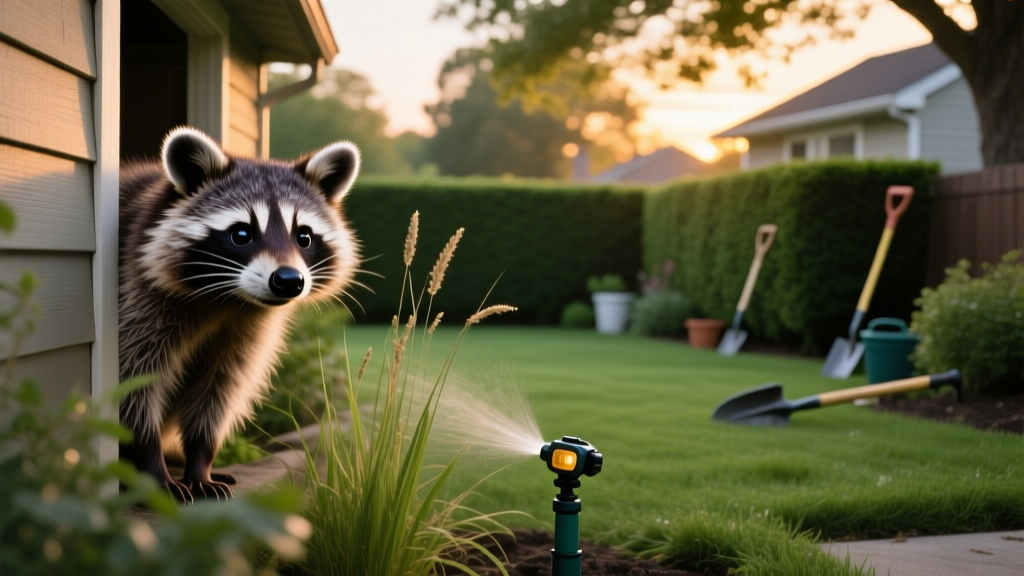
How to Get Rid of Raccoons in Your Yard: Proven Deterrents
Learning how to get rid of raccoons in your yard requires moving beyond temporary scares and implementing permanent exclusion strategies. Raccoons (Procyon lotor) possess remarkable dexterity, spatial memory, and problem-solving intelligence. A single raccoon can roll back hundreds of square feet of newly laid sod in a single night while hunting for white grubs, and they will return to the exact same location if the food source remains. To effectively reclaim your property, you must disrupt the attraction triangle of food, water, and shelter while deploying physical barriers that exploit their biological limitations.
The Attraction Triangle: Why Raccoons Target Your Lawn
Raccoons are opportunistic omnivores with a caloric requirement that spikes in late summer and autumn as they prepare for winter torpor. Your yard likely offers one or more of these high-value attractants:
- White Grubs and Turf Insects: Japanese beetle and June bug larvae are a primary food source. Raccoons will peel back grass like a carpet to access them.
- Unsecured Caloric Density: Pet food left outdoors, unsealed compost bins containing fruit scraps, and standard trash cans with loose-fitting lids provide effortless calories.
- Structural Shelter: Uncapped chimneys, open crawl space vents, and elevated decks with lattice skirting offer ideal nesting sites for females raising kits between March and June.
Health and Safety Warning: Raccoons are the primary host for Baylisascaris procyonis (raccoon roundworm). According to the Centers for Disease Control and Prevention (CDC), raccoon latrines—often found at the base of trees, on raised decks, or on flat roof sections—contain millions of infectious eggs that can survive in soil for years. Never clean a latrine without an N95 respirator, rubber gloves, and a dedicated bleach solution, as inhalation or ingestion of eggs can cause severe neurological damage in humans and pets.
Exclusion Tactics: Physical Barriers That Actually Work
Chemical repellents and ultrasonic devices offer marginal, short-term results. Raccoons quickly habituate to static threats. True deterrence requires physical exclusion engineered to defeat their climbing and digging capabilities.
The L-Footer Fence Method
Standard vertical fencing is useless against raccoons, as they can easily scale wood and chain-link. To protect garden beds or keep them out of a specific yard perimeter, install an L-footer using 1-inch hexagonal poultry netting or 14-gauge galvanized hardware cloth.
- Dig a trench 12 inches deep and 12 inches wide along the perimeter of the area you are protecting.
- Attach the wire mesh to the bottom of your existing fence or a dedicated wooden frame.
- Bend the bottom 12 inches of the mesh at a 90-degree angle pointing away from the protected area (outward into the yard).
- Bury this horizontal flap in the trench and cover with soil and sod.
When a raccoon attempts to dig under the fence, they will hit the horizontal wire barrier. Because they lack the instinct to back up and dig further away from the fence line, they will abandon the effort.
Securing Trash and Compost Receptacles
Bungee cords are insufficient; raccoons will chew through them or use their incisors to pry the hooks loose. Upgrade to locking mechanisms. The Simplehuman 50-Gallon Outdoor Trash Can (approx. $120) features a proprietary locking rim that requires human opposable-thumb mechanics to open. For existing bins, install a Trash Can Lock Kit (such as the Rocket Socket system, ~$25), which uses a gravity-fed pin mechanism that drops into place when the lid closes, requiring a specific upward pull to release.
Repellents vs. Exclusion: A Cost and Efficacy Matrix
When planning your defense, it is critical to weigh the upfront costs against long-term efficacy. The following matrix compares popular deterrent categories based on field performance and maintenance requirements.
| Deterrent Method | Specific Product Example | Est. Cost | Efficacy & Failure Modes |
|---|---|---|---|
| Motion-Activated Sprinklers | Orbit 62100 Yard Enforcer | $55 - $70 | High. Sudden water bursts exploit the startle reflex. Failure mode: Freezing winter temperatures; battery drain if not hardwired. |
| L-Footer Exclusion | 14-Gauge Galvanized Hardware Cloth | $45 (per 50ft roll) | Permanent. 100% effective if buried correctly. Failure mode: Gaps at gate hinges or corners. |
| Ultrasonic Emitters | Generic Solar Pest Repellers | $25 - $40 | Very Low. Raccoons habituate within 48 hours. Sound waves are blocked by dense foliage and fencing. |
| Predator Urine | Coyote Urine Granules | $20 - $30 | Low/Moderate. Washes away in rain. Urban raccoons often coexist with coyotes and ignore the scent. |
| Tactile Spikes | Critter Pricker Fence Strips | $25 (per 4-pack) | Moderate. Effective on narrow fence rails to prevent balancing. Failure mode: Useless on wide surfaces or ground level. |
Humane Trapping Protocols and Legal Realities
When exclusion and deterrents fail to stop a persistent, habituated raccoon, live trapping becomes necessary. However, according to the Humane Society of the United States, trapping should be a last resort, particularly between March and August, as trapping a mother will orphan her dependent kits inside your attic or yard structures.
Selecting and Baiting the Trap
Use a single-door live trap with a minimum dimension of 10x12x32 inches, such as the Havahart 1081 (approx. $60). Smaller traps will result in tail-catches, which can cause severe lacerations and lead to self-amputation by the animal.
The Bait Strategy: Avoid using meat, fish, or cat food, which will inevitably trap neighborhood feral cats or skunks. Instead, use marshmallows or sweet corn coated in honey. Marshmallows are highly visible in low light, appealing to a raccoon's sweet tooth, and generally unappealing to felines and canines. Place the bait at the very back of the trap, behind the trigger pan, forcing the raccoon to step fully onto the pedal.
Step-by-Step Trap Setting Procedure
- De-scent the Trap: Wash a new or used trap with a 50/50 white vinegar and water solution to remove human olfactory markers and manufacturing oils. Rinse and air dry.
- Stabilize the Base: Place the trap on perfectly level ground. If the trap rocks or shifts when the animal steps inside, the trigger mechanism will fail. Place a piece of plywood underneath if the soil is uneven.
- Camouflage the Floor: Line the wire floor of the trap with a layer of soil, leaves, or a dark cloth. Raccoons are hesitant to step on exposed wire grids.
- Monitor Frequently: Check the trap at dawn and dusk. Leaving a trapped animal in direct midday sun can cause fatal hyperthermia within hours. State laws generally mandate checking traps every 12 to 24 hours.
Legal Restriction on Relocation: In many jurisdictions, including California, New York, and Massachusetts, it is strictly illegal for unlicensed individuals to relocate trapped wildlife. Relocation spreads diseases (like rabies and distemper) to naive populations and usually results in the animal's death due to territorial disputes. You must either release the animal on the exact property where it was caught or hire a licensed operator certified by the National Wildlife Control Operators Association (NWCOA).
Lawn Recovery and Grub Eradication
Once the raccoons are excluded, you must address the root cause of the turf damage: the grub population. If you simply re-seed or lay new sod without eradicating the insects beneath the soil, new raccoons will eventually find the food source and repeat the destruction.
Apply beneficial nematodes (Heterorhabditis bacteriophora or Hb strain) to your lawn. Unlike chemical insecticides like imidacloprid, which can harm pollinators and earthworms, Hb nematodes are microscopic organisms that specifically hunt and kill soil-dwelling grubs. Apply at a rate of 1 million nematodes per 1,000 square feet. Ensure the soil temperature is between 60°F and 85°F, and water the lawn deeply immediately after application to wash the nematodes down into the root zone where the grubs are feeding. For rolled-back sod that is still green, simply press it firmly back into place, tamp it down with a lawn roller to ensure soil-to-root contact, and water heavily to encourage re-establishment.

