
Pest Control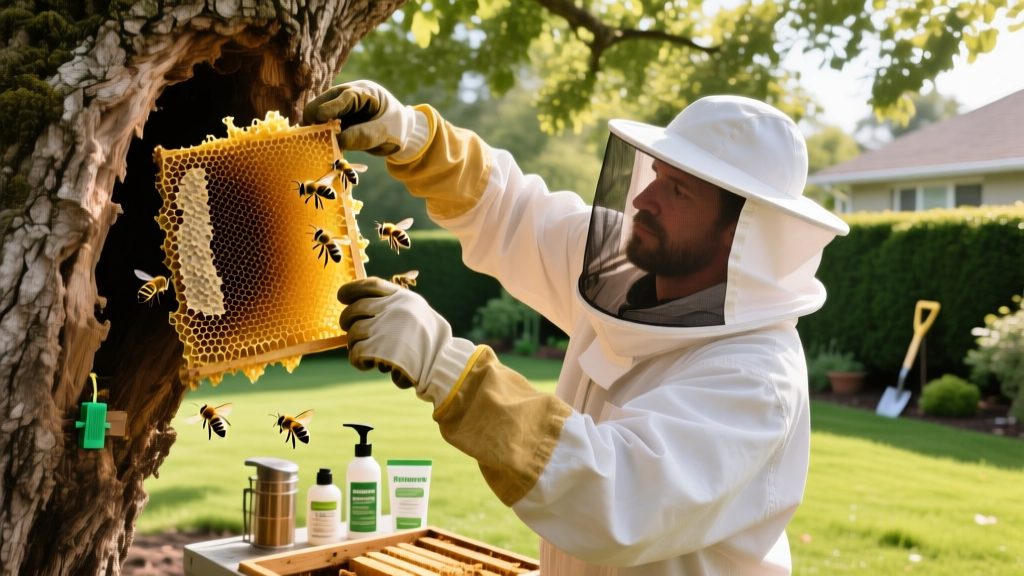
How Do You Get Rid of a Bees Nest in Your Yard Safely?
Identify the Stinging Insect Before Taking Action
When homeowners ask how to get rid of a bees nest in the yard, they are usually looking at a yellowjacket, hornet, or paper wasp nest. True honey bees and bumblebees are critical pollinators, heavily protected by environmental regulations, and require live relocation rather than extermination. Misidentifying the insect leads to unnecessary ecological damage or dangerous DIY failures. According to University of Minnesota Extension, yellowjackets are responsible for the vast majority of late-summer stinging incidents in residential yards due to their aggressive, ground-nesting habits.
| Insect Type | Nest Material & Location | Aggression Level | Required Action |
|---|---|---|---|
| Honey Bee | Wax comb; hollow trees, wall voids, or exposed swarms | Low (unless defending hive) | Call local beekeeper for live relocation |
| Bumblebee | Fuzz/moss; underground rodent burrows | Very Low | Leave alone; they die off naturally in late fall |
| Yellowjacket | Paper; underground holes, wall voids, dense shrubs | Extreme (swarm attackers) | Chemical dust or professional extermination |
| Paper Wasp | Open umbrella paper; eaves, deck rails, overhangs | Moderate (defend immediate nest) | DIY aerosol knockdown at night |
| Bald-Faced Hornet | Enclosed paper football shape; trees, tall shrubs | High | DIY aerosol or professional removal |
Decision Matrix: DIY Removal vs. Professional Exterminator
Attempting to remove a large colony without the right protective gear or chemical delivery system is a primary cause of emergency room visits for anaphylaxis and severe envenomation. Use this framework to determine your approach.
⚠️ Mandatory Professional Removal Triggers
- The nest is located inside a wall void, attic, or buried directly against your home's foundation.
- You or any family member has a known allergy to hymenoptera venom.
- The nest is a honey bee hive (requires specialized bee-vac extraction and honeycomb removal to prevent structural rot).
- The colony is a ground-nesting yellowjacket nest larger than a basketball.
Cost Breakdown (2026 Estimates):
- DIY Aerial Wasp Spray: $8 - $15 per can (Requires 1-2 cans)
- DIY Ground Nest Dust: $15 - $25 for insecticidal dust and pump
- Professional Wasp/Hornet Removal: $150 - $350 per nest
- Honey Bee Live Relocation: Free to $150 (Many beekeepers remove swarms for free to acquire the bees, but charge for cut-outs inside walls).
Step-by-Step DIY Removal for Aerial Nests (Paper Wasps & Hornets)
Aerial nests attached to eaves, deck ceilings, or tree branches are the most straightforward to eliminate using modern jet-stream aerosols. The critical failure point for most DIYers is timing and lighting.
1. Select the Correct Chemical
Do not use standard bug spray. You need a specialized Wasp & Hornet killer with a jet-stream nozzle that reaches at least 20 feet and contains fast-acting knockdown agents like Prallethrin combined with a residual like Cypermethrin. The Spectracide HG-33018 Wasp & Hornet Killer 3 (18 oz, ~$8.50) is an industry-standard consumer choice that shoots a concentrated stream up to 22 feet, allowing you to maintain a safe distance.
2. The Nighttime Stealth Approach
Wasps and hornets return to the nest at dusk and remain largely dormant overnight. They also have poor vision in the red light spectrum.
- Wait until 90 minutes after sunset. Ensure all foragers have returned to the nest.
- Use a red-filtered flashlight. Cover your LED flashlight lens with red cellophane or use a tactical flashlight with a red-light mode. White light will agitate the colony and draw guards out.
- Dress defensively. Wear thick denim, a heavy hoodie with the hood up, leather work gloves, and tuck your pants into your socks. Cover your neck with a towel.
- Soak the nest entrance. Stand 15 feet away. Aim the jet stream directly at the bottom opening of the nest and hold the trigger down until the nest is thoroughly saturated.
- Retreat immediately. Do not linger to watch them fall. Leave the area and keep outdoor lights off to avoid drawing out surviving stragglers.
- Knock down after 24 hours. Return the next evening. If no activity is observed, use a long pole to knock the nest into a heavy-duty trash bag, seal it, and dispose of it.
Handling Ground-Nesting Yellowjackets (The Dust Method)
Ground nests present a unique hazard. According to Penn State Extension, spraying a liquid aerosol into a ground hole is highly ineffective and dangerous. Liquid sprays only coat the top inch of soil, enraging the colony and causing thousands of yellowjackets to flood out of the entrance in a defensive swarm.
To destroy a subterranean colony, you must use an insecticidal dust such as Delta Dust (Deltamethrin) or Sevin Dust (Carbaryl).
The Ground Nest Protocol
- Locate the entrance hole during the day, but do not approach it. Mark it from a distance by tossing a small pebble or placing a stick a few feet away.
- At night, approach the hole with a red-lens light and a hand duster or squeeze-bottle filled with insecticidal dust.
- Puff a generous cloud of dust directly into and around the entrance hole. The returning foragers will walk through the dust, carrying the lethal particles deep into the subterranean gallery where the queen resides.
- CRITICAL WARNING: Never plug, cover, or seal the entrance hole with dirt or rocks. If you trap the colony inside, they will simply dig a secondary exit, which frequently leads directly into your basement, crawlspace, or living room through foundation cracks.
- Allow 48 to 72 hours for the dust to circulate through the colony. Once activity ceases entirely, fill the hole with topsoil.
The Honey Bee Exception: Relocation Over Extermination
If the nest consists of exposed, honeycomb-like structures with fuzzy, golden-brown bees, you are looking at a honey bee swarm or hive. Killing a honey bee colony with over-the-counter pesticides is ecologically destructive and illegal in several municipalities without a permit.
Honey bees in your yard are usually transient swarms resting on a tree branch while scout bees search for a permanent cavity. These swarms are generally docile. Contact your county's cooperative extension office or search for a local 'Swarm Catcher' list via the National Pesticide Information Center or local apiary societies. A beekeeper will typically arrive within 24 hours to vacuum or shake the swarm into a specialized transport box at no cost to you.
Long-Term Yard Defense and Prevention
Eliminating a nest does not prevent a new queen from claiming the same territory next spring. Implement these perimeter defenses to deter nesting:
- Seal Structural Voids: In early spring, caulk cracks in siding, repair damaged soffit vents, and install wire mesh over weep holes in brickwork to deny yellowjackets access to wall voids.
- Deploy Decoy Nests: Wasps and hornets are highly territorial and will avoid building within 200 feet of an existing colony. Hang realistic, fake paper wasp nests (available for $10-$15 online) under your eaves and deck corners in early April before new queens begin scouting.
- Manage Late-Summer Attractants: In August and September, yellowjackets shift their diet from insects to sugars and proteins. Keep trash cans sealed with tight-fitting lids, clean BBQ grills immediately after use, and harvest fallen, rotting fruit from orchard trees daily.
- Perimeter Residual Spraying: Apply a microencapsulated residual insecticide like Syngenta Demand CS (Lambda-cyhalothrin 9.7%) to the perimeter of your home, eaves, and deck joints in May. This leaves a microscopic barrier that kills scouting queens before they can establish a founding chamber.

