
Pest Control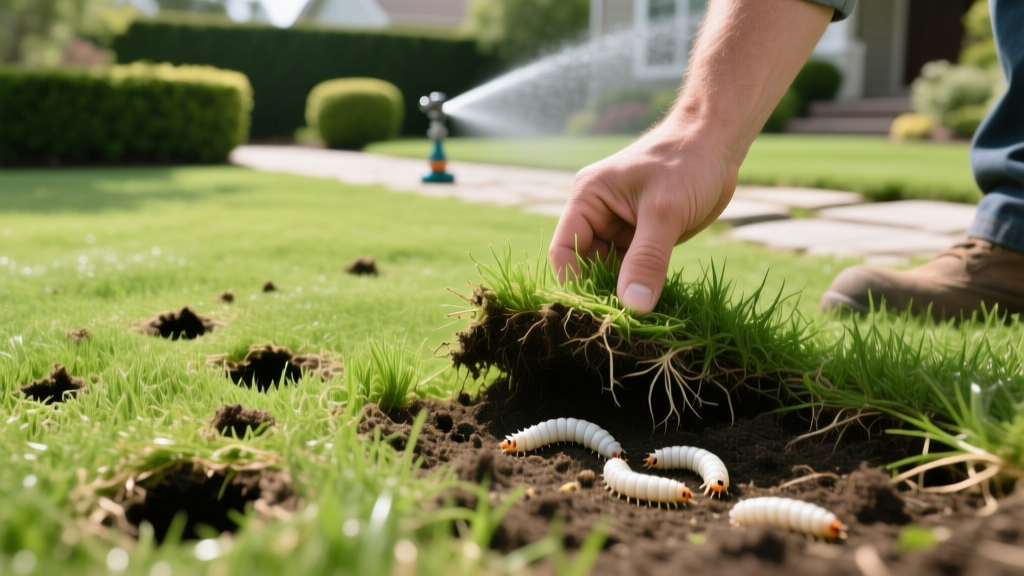
How to Remove Grubs From Lawn: Step-by-Step Defense Guide
The Hidden Threat Beneath Your Turf
When your lawn develops irregular brown patches that peel back like loose carpet, you are likely dealing with a white grub infestation. Grubs are the larval stage of scarab beetles, including Japanese beetles, June bugs, and European chafers. They feed aggressively on grassroots, severing the plant from its water and nutrient supply. Worse, an active grub infestation acts as a beacon for secondary yard intruders; skunks, raccoons, and crows will tear up your topsoil to feast on the larvae, compounding the destruction. Understanding how to remove grubs from lawn environments requires a strategic approach that combines precise identification, targeted biological or chemical interventions, and post-treatment turf recovery.
Identifying the Culprit: Grub Species Matrix
Not all grubs are created equal. The species dictating the infestation will determine your treatment window and the efficacy of organic controls like Milky Spore. According to University of Kentucky Entomology, accurate identification relies on examining the raster pattern (the bristle arrangement on the grub's underside) and the anal slit.
| Species | Primary Damage Window | Distinguishing Feature | Organic Susceptibility |
|---|---|---|---|
| Japanese Beetle | Late Summer / Early Fall | V-shaped bristle pattern on raster | High (Milky Spore effective) |
| European Chafer | Spring & Fall | Y-shaped anal slit, parallel bristles | Low (Milky Spore ineffective) |
| June Bug (May Beetle) | Spring (Year 2 & 3 of cycle) | Large size (up to 1.5 inches), zipper-like raster | Low (Requires chemical curatives) |
Confirming the Infestation: The Sod Peel Test
Before spending money on treatments, verify the population density. Penn State Extension recommends the 1-square-foot sod peel test to establish a baseline.
- Locate the Margin: Find the boundary between healthy green grass and the damaged brown patch.
- Cut the Sod: Use a flat spade to cut a 12x12 inch square of turf, about 2 inches deep.
- Peel and Inspect: Roll the sod back like a carpet and count the C-shaped white grubs in the top 2 inches of soil and the root zone.
- Evaluate the Threshold: If you count 5 to 10 grubs per square foot, treatment is mandatory. If you find fewer than 5, your lawn can typically outgrow the damage with proper irrigation and fertilization.
Biological Warfare: Organic Removal Tactics
For homeowners prioritizing eco-friendly yard defense, biological controls offer a sustainable way to collapse grub populations without harming earthworms or beneficial soil microbes.
Beneficial Nematodes (Heterorhabditis bacteriophora)
The Hb species of nematode is a microscopic, unsegmented worm that actively hunts grubs in the soil, penetrating their bodies and releasing a bacteria that kills the host within 48 hours.
- Application Rate: 1 billion nematodes per 2,000 square feet.
- Cost: Approximately $40 to $55 per billion (brands like BioLogic or Arbico Organics).
- Critical Soil Temperature: Soil must be consistently above 60°F at a 2-inch depth.
- Execution Protocol: Apply at dusk to prevent UV degradation. The soil must be moist before application, and you must irrigate immediately after with at least 1/4 inch of water to wash the nematodes off the grass blades and into the root zone.
⚠️ Nematode Storage Warning: Beneficial nematodes are living organisms. If you order them online, ensure they are shipped with ice packs. Never leave the package in a hot mailbox, and apply them within 24 hours of receipt. Store in a refrigerator (not a freezer) if a brief delay is unavoidable.
Milky Spore (Paenibacillus popilliae)
Milky Spore is a naturally occurring bacterium that targets only Japanese beetle grubs. It is applied via a grid pattern using a drop spreader or specialized tube applicator. While highly effective long-term (spores persist in soil for 10-15 years), it is a slow burn. It takes 2 to 3 years for the spore count to build up to lethal levels in the soil. It is a preventative legacy investment, not a quick fix for an active, severe infestation.
Conventional Chemical Interventions
When grub thresholds exceed 10 per square foot, or when secondary animal damage (skunk digging) is severe, synthetic chemistry provides the fastest knockdown. Chemical grub control is strictly divided into two categories: preventatives and curatives.
Preventative Chemistry: Chlorantraniliprole
Products containing Chlorantraniliprole (e.g., Scotts GrubEx1) are the gold standard for prevention. This active ingredient is highly targeted, affecting only the target pests while maintaining an excellent safety profile for pollinators and mammals once watered in.
- Timing: Apply between mid-May and early July. The chemical requires 60 to 90 days to translocate through the soil profile and reach peak efficacy before eggs hatch in August.
- Cost: ~$28 for a 10,000 sq ft bag.
- Failure Mode: Applying in late August. By this time, the chemical cannot move through the soil fast enough to stop the already-hatched, feeding grubs.
Curative Chemistry: Trichlorfon
If you missed the preventative window and your lawn is actively dying in late summer or early fall, you need a curative contact killer. Trichlorfon (e.g., Bayer Advanced 24-Hour Grub Killer Plus) moves rapidly through the soil and kills grubs within 24 to 48 hours.
- Timing: Late August through October, when grubs are actively feeding near the surface.
- Cost: ~$22 for a 10,000 sq ft bag.
- Limitation: Trichlorfon degrades rapidly in soil with a high pH (above 7.2) and has a short residual life. It will not protect your lawn the following spring.
| Treatment Type | Active Ingredient | Best Application Window | Kill Speed | Residual Control |
|---|---|---|---|---|
| Preventative | Chlorantraniliprole | May - June | Slow (Weeks) | Up to 4 months |
| Curative | Trichlorfon | August - October | Fast (24-48 hrs) | Less than 2 weeks |
| Biological | Hb Nematodes | August - September | Medium (3-5 days) | Single season |
Defending Against Secondary Animal Damage
Removing the grubs is only half the battle in yard defense. If raccoons, skunks, or crows have already discovered the buffet, they will return out of habit even after the grubs are dead. To protect your recovering turf:
- Bird Netting: Stake lightweight plastic bird netting over the most damaged areas to physically block crows and skunks from digging while the grassroots re-establish.
- Scent Deterrents: Broadcast castor oil-based repellents (like Bonide Molemax) over the lawn. While designed for moles, the strong scent disruption deters foraging skunks and raccoons.
- Motion-Activated Sprinklers: Devices like the Orbit Yard Enforcer discharge a sudden burst of water when triggered by infrared motion, effectively startling nocturnal foragers without harming them.
Post-Removal Lawn Recovery Protocol
Once the grub population is neutralized, the severed turf will not magically reattach to the soil. You must execute a recovery protocol to restore the lawn's structural integrity.
- Press the Sod Down: For areas that have been peeled back by animals or the sod test, press the turf firmly back into place with your feet to ensure root-to-soil contact.
- Core Aeration: If the soil is compacted from animal traffic, rent a core aerator to pull 2-to-3-inch plugs. This improves water infiltration for the new roots.
- Overseeding: Apply a premium turf-type tall fescue or Kentucky bluegrass blend (depending on your hardiness zone) at a rate of 5 to 8 lbs per 1,000 square feet.
- Starter Fertilizer: Use a fertilizer high in phosphorus (e.g., a 10-18-10 NPK ratio) to stimulate rapid root development in the newly germinating seed and damaged existing grass.
Frequently Asked Questions
Can I apply grub control and grass seed at the same time?
Yes, if you are using Chlorantraniliprole (GrubEx) or beneficial nematodes, they are safe to use concurrently with grass seed. However, avoid using certain combination weed-and-feed products containing mesotrione, as this herbicide can prevent grass seed germination.
Why do I see grubs in my lawn in the spring?
Grubs overwinter deep in the soil and migrate back to the root zone in early spring to feed before pupating into adult beetles. Spring feeding damage is usually minor compared to fall damage. If you see them in spring, a curative Trichlorfon application can reduce the population before they emerge as flying adults to lay the next generation of eggs.

