
Pest Control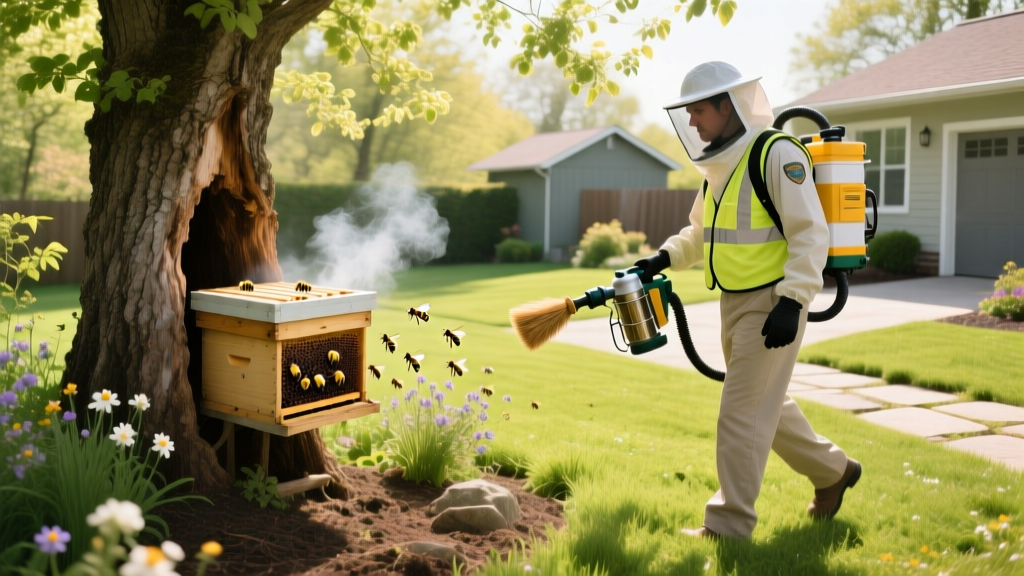
How to Remove Honey Bee Hives From Your Yard Safely
The Critical First Step: Accurate Identification
Before attempting any yard defense strategy, you must confirm the insects are actually honey bees (Apis mellifera). Homeowners frequently confuse honey bees with aggressive yellowjackets or carpenter bees, leading to inappropriate and potentially dangerous removal attempts. If you are researching how to remove honey bee colonies, misidentification is the most common point of failure.
| Feature | Honey Bees | Yellowjackets | Carpenter Bees |
|---|---|---|---|
| Body Texture | Fuzzy, covered in pale hairs | Smooth, hairless, bright yellow/black | Large, mostly hairless black abdomen |
| Nest Location | Tree hollows, structural voids, exposed swarms | Ground holes, wall voids, eaves | Perfectly round holes in bare wood |
| Aggression Level | Low (only defend hive directly) | High (will sting unprovoked near nest) | Low (males lack stingers, females rarely sting) |
| Diet | Pollen and nectar exclusively | Sugars, proteins, and human food waste | Pollen and nectar |
Legal and Ecological Realities of Honey Bee Removal
Extermination is rarely the correct answer for honey bees. Due to severe global population declines and their critical role in agricultural pollination, many states and municipalities have enacted strict protections for Apis mellifera. The EPA Pollinator Protection framework heavily discourages the use of broad-spectrum insecticides on honey bees, and local laws often mandate live relocation by a registered apiarist.
Yard Defense Warning: Spraying an established honey bee hive with over-the-counter wasp and hornet killer will not only kill the colony but leave behind hundreds of pounds of melting wax and fermenting honey. This residue will permanently stain your drywall, attract secondary pests like roaches and rodents, and cause structural rot in your home's exterior.
Furthermore, the USDA Pollinator Health initiatives highlight that preserving local feral honey bee genetics is vital for breeding disease-resistant stock. Relocation preserves the bees and protects your property without ecological damage.
How to Remove Honey Bee Swarms vs. Established Hives
The removal technique depends entirely on whether you are dealing with a transient swarm or an established, comb-building colony. Understanding the difference dictates your timeline and budget.
Scenario A: The Transient Swarm
A swarm looks like a massive, vibrating cluster of bees hanging from a tree branch, fence post, or shrub. This occurs when a hive becomes overcrowded, and the old queen leaves with half the workers to find a new home. They are resting while scout bees search for a permanent location. Swarms are incredibly docile because they have no brood or honey stores to defend.
- Action: Do not spray them. They usually move on within 24 to 72 hours.
- Removal: Contact your local county beekeeping association. Beekeepers will often come and vacuum or shake the swarm into a nuc box for free or a nominal travel fee ($50 to $100).
Scenario B: The Established Hive (Structural or Tree Hollow)
If bees are consistently flying in and out of a hole in your siding, a soffit vent, or a hollow in an oak tree, they have built wax comb and are raising brood. This is a permanent residency that requires professional intervention.
Advanced Removal Techniques: Cut-Out vs. Trap-Out
When dealing with established hives, professionals use two primary methods. Knowing the difference will help you negotiate with pest control operators and ensure the job is done correctly.
The Cut-Out Method (For Accessible Structures)
This involves physically opening the wall, tree, or structure to expose the comb. The technician uses a specialized bee vacuum (like the BeeSmart Designs Vortex) to safely suction the workers while manually cutting out the honeycomb. The queen is captured and placed in a queen cage. The comb is rubber-banded into wooden frames and transferred to a standard Langstroth hive box.
Pros: Immediate resolution; all wax and honey are removed, preventing future pest issues.
Cons: Invasive; requires carpentry skills to repair the structure afterward.
The Trap-Out Method (For Inaccessible Tree Hollows)
If the hive is deep inside a tree or a structural pillar that cannot be opened, a trap-out is the only non-destructive option. A one-way exclusion cone (typically fashioned from #8 hardware cloth) is placed over the entrance hole. Worker bees can exit to forage but cannot re-enter. A small 'nuc' hive containing a frame of brood and a caged queen is placed next to the cone. Foraging bees, unable to return to their original hive, will adopt the new queen and begin building comb in the nuc box.
This process takes 4 to 8 weeks. It forces the original colony to slowly deplete its resources and eventually abandon the inaccessible space. Once traffic stops, the cone is removed, and the entrance must be sealed with expanding foam or steel wool.
2026 Professional Removal Cost Breakdown
Pricing for live honey bee extraction has risen due to increased demand for live relocation and the specialized carpentry skills required for cut-outs. Below are the current national averages for professional apiary services.
| Service Type | Average Cost Range | Time Required | Structural Repair Included? |
|---|---|---|---|
| Swarm Collection | $50 - $150 | 1 - 2 hours | No (not applicable) |
| Standard Cut-Out (Eaves/Siding) | $450 - $850 | 4 - 8 hours | Rarely (carpenter needed) |
| Complex Cut-Out (Masonry/Chimney) | $900 - $1,500+ | 1 - 2 days | No |
| Trap-Out (Tree Hollows) | $300 - $600 | Multiple visits over 6 weeks | No |
DIY Yard Defense: Preventing Future Colonies
Once a hive is removed, the residual pheromones (specifically Nasonov pheromone) left in the wood will attract scout bees for years. To defend your yard against recolonization, you must execute a targeted exclusion and deodorization strategy.
- Seal All 1/4-Inch Gaps: Honey bees can enter a void through a gap as small as 1/4 inch. Inspect your soffits, fascia boards, and siding. Use 1/4-inch galvanized hardware cloth to cover weep holes and vent gaps before sealing with exterior-grade silicone or polyurethane expanding foam.
- Neutralize Pheromones: For accessible areas where a hive was previously cut out, scrub the wood with a solution of trisodium phosphate (TSP) and water, followed by a coat of oil-based primer like Kilz Original. This locks in the scent markers.
- Deploy Decoy Traps: While commercial 'bee traps' are largely ineffective for honey bees, you can use lemongrass oil (which mimics the Nasonov pheromone) to manipulate scout behavior. Place a few drops of lemongrass essential oil on a cotton ball inside a commercial swarm trap (like the Mann Lake HD290) located at the far edge of your property, drawing scouts away from your home's eaves.
- Remove Dead Wood: Clear out hollow stumps, abandoned birdhouses, and stacked firewood near the home's perimeter, as these are prime real estate for feral colonies.
Frequently Asked Questions
Can I just spray the hive with Raid or a foaming wasp killer?
No. Foaming wasp killers are designed for small, exposed paper wasp nests. An established honey bee hive contains tens of thousands of bees and deep wax comb. The spray will only kill the surface bees, enraging the colony and causing them to chew through drywall into your living space to escape the fumes. Furthermore, the resulting rotting honey will destroy your home's interior.
Will the bees leave on their own in the winter?
Unlike yellowjackets, which die off in the winter leaving only a few queens to overwinter, honey bees are perennial. They survive the winter by clustering together and consuming their stored honey. If they are in your wall in October, they will still be there in March, significantly larger and more defensive.
How do I find a legitimate beekeeper to do the removal?
Avoid general pest control companies that advertise 'bee removal,' as they often exterminate. Instead, search for your state's master beekeeper directory or contact your local county extension office. Registered apiarists are trained in live extraction and will provide proof of their apiary registration and liability insurance before beginning a structural cut-out.

