
Pest Control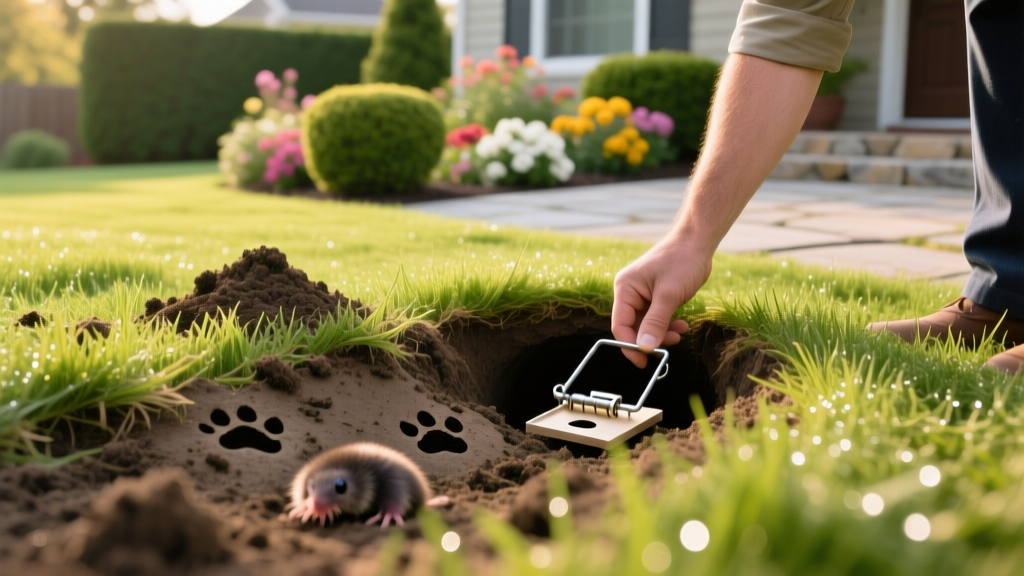
How to Remove Moles From Your Yard: Traps, Baits & Repellents
Confirming the Culprit: Moles vs. Voles vs. Pocket Gophers
Before deploying any control measures, you must accurately identify the pest. Moles, voles, and pocket gophers cause distinct types of turf damage, and a treatment designed for one will completely fail on another. Moles are insectivores, not rodents, which fundamentally changes how they interact with baits and traps.
| Pest | Surface Evidence | Tunnel Characteristics | Diet |
|---|---|---|---|
| Moles | Symmetrical, volcano-shaped mounds of fine soil. | Surface ridges (runways) and deep vertical shafts. | Earthworms, grubs, soil insects. |
| Voles | No soil mounds; visible 1-2 inch wide runways through grass. | Shallow surface runways, often under snow or mulch. | Grass roots, bulbs, bark. |
| Pocket Gophers | Asymmetrical, fan-shaped or crescent mounds with a plugged hole. | Deep tunnels, rarely surface ridges. | Plant roots, tubers, vegetation. |
The Biology of the Problem: Why Moles Invade Your Lawn
The most pervasive myth in lawn care is that moles invade your yard solely to eat white grubs. While grubs are part of their diet, research from the University of California Statewide Integrated Pest Management Program confirms that earthworms make up 70% to 90% of an Eastern mole's (Scalopus aquaticus) diet. A 6-ounce mole can consume its entire body weight in earthworms daily.
Warning: The Grub Control Fallacy
Applying broad-spectrum insecticides like Dylox (trichlorfon) or Acelepryn (chlorantraniliprole) to eliminate grubs will not starve out a mole population. Because the soil remains rich in earthworms, the moles will simply continue tunneling. Habitat modification must focus on soil moisture and physical removal.
Moles prefer loose, moist, sandy loam soils. Overwatering your lawn drives earthworms closer to the surface, which in turn draws moles upward to feed. Reducing irrigation frequency to encourage deeper root growth and deeper earthworm burrowing can naturally reduce surface tunneling activity.
Lethal Control: Trapping Strategies That Actually Work
Trapping remains the most reliable, cost-effective method for immediate mole removal. According to wildlife specialists at Internet Center for Wildlife Damage Management, success rates with modern scissor and choker traps exceed 85% when placed in active main runways.
Top Recommended Trap Models
- Victor Out O'Sight (Model 0631): $18–$24. A scissor-style trap that sits entirely underground. Highly lethal and protected from pets and birds.
- Wire Tek 1001 EasySet: $25–$32. Features a foot-operated set mechanism, keeping your hands away from the trigger springs.
- Nash Choker Loop: $20–$25. Uses a wire loop that tightens rapidly. Best for deeper, narrower tunnels.
Step-by-Step Trap Deployment
- Locate the Main Runway: Find the straightest tunnel connecting two or more mounds. Avoid the meandering, erratic surface tunnels used only for temporary foraging.
- Verify Activity: Step on a 3-inch section of the main runway to collapse it. Mark the spot with a flag. If the mole pushes the soil back up within 24 hours, the tunnel is active.
- Excavate the Placement Zone: Using a trowel, carefully remove the top 2 inches of soil over the active section, exposing the tunnel without collapsing the sides.
- Set the Trap: Compress the trap and place it squarely in the excavated gap. The trigger pan must rest lightly on the tunnel floor.
- Block the Light: Moles will abandon a tunnel if they detect drafts or light. Place a small clod of dirt or a piece of stiff cardboard loosely over the excavation. Do not pack soil tightly around the trap, which can jam the trigger mechanism.
Chemical Warfare: Toxic Baits
When trapping is impractical due to rocky soil or heavy clay, toxic baits offer a viable secondary option. The only active ingredient proven highly effective against moles is Bromethalin (0.025%). Because moles do not eat grain-based pellets, the bait must be formulated as an artificial earthworm.
Talpirid vs. Tomcat Mole Killer
Talpirid Mole Bait ($35–$45 for a 10-worm box) mimics the exact size, texture, and scent of an earthworm. Tomcat Mole Killer ($12–$16 for 6 worms) uses the same active ingredient but is generally more cost-effective for smaller infestations. Both require identical deployment strategies.
Pro-Tip: Bait Placement Technique
Never crush the tunnel to insert the bait. Use a specialized soil dibber or a 1/2-inch steel rod to puncture a hole directly into the roof of the active runway. Drop one bait worm into the hole using tweezers, then seal the surface hole with a single clod of dirt. Place one bait every 5 to 10 feet along the active main runway.
Non-Lethal Deterrence and Repellents
Repellents do not eliminate moles; they temporarily irritate their highly sensitive olfactory and tactile senses, forcing them to relocate. Efficacy is highly variable and dependent on soil type and rainfall.
- Castor Oil Formulations: Products like Bonide Moletox or Sweeney's Mole & Gopher Repellent rely on castor oil. Apply at a rate of 1 to 2 ounces per gallon of water per 1,000 square feet. You must water the repellent deeply into the soil profile (at least 4 inches down) to reach the tunnel level. Expect to reapply every 2 to 3 weeks, or immediately after heavy rain.
- Solar Vibrational Spikes: Devices that emit low-frequency sonic pulses (e.g., Aspectek Solar Mole Repeller) have largely been debunked by university extensions. Moles quickly habituate to the constant noise and will tunnel directly beneath the stakes. Avoid spending $40-$60 on these ineffective units.
Cost and Efficacy Matrix
The following matrix compares the primary control methods based on current market pricing and real-world success rates in residential turf environments.
| Method | Estimated Cost | Success Rate | Time to Results | Best Use Case |
|---|---|---|---|---|
| Scissor/Choker Traps | $18 - $32 (one-time) | 85% - 95% | 24 - 72 hours | Loamy soil, active main runways |
| Bromethalin Worm Baits | $35 - $45 per box | 70% - 80% | 3 - 7 days | Rocky or heavy clay soil where traps fail |
| Castor Oil Repellents | $15 - $25 per bottle | 40% - 50% | 1 - 2 weeks | Temporary deterrence for small, isolated tunnels |
| Grub Insecticides | $40 - $80 per bag | < 10% | N/A | Ineffective for mole control; use only for turf health |
Frequently Asked Questions
Will flattening the mole hills with a lawn roller kill them?
No. Rolling the lawn only compresses the surface soil. Moles will simply dig the tunnels back out, often causing more extensive damage to the turf root system in the process. Furthermore, heavy rolling compacts the soil, which damages grass health and creates poor drainage conditions.
Are mole traps safe around dogs and cats?
Traps like the Victor Out O'Sight are placed entirely underground and covered with soil, making them inaccessible to pets. However, if using above-ground scissor traps, you must cover them with a 5-gallon bucket weighed down by a brick to prevent curious dogs from digging them up and suffering severe lacerations.
How do I know if the bait worked?
Moles rarely die in the tunnels where they eat the bait; they typically retreat to deep nesting chambers to expire. You will know the treatment was successful when the existing surface tunnels remain collapsed and no new volcano mounds appear for a period of 10 to 14 days. For more information on post-treatment monitoring, refer to the Michigan State University Extension guidelines on mole management.

