
Pest Control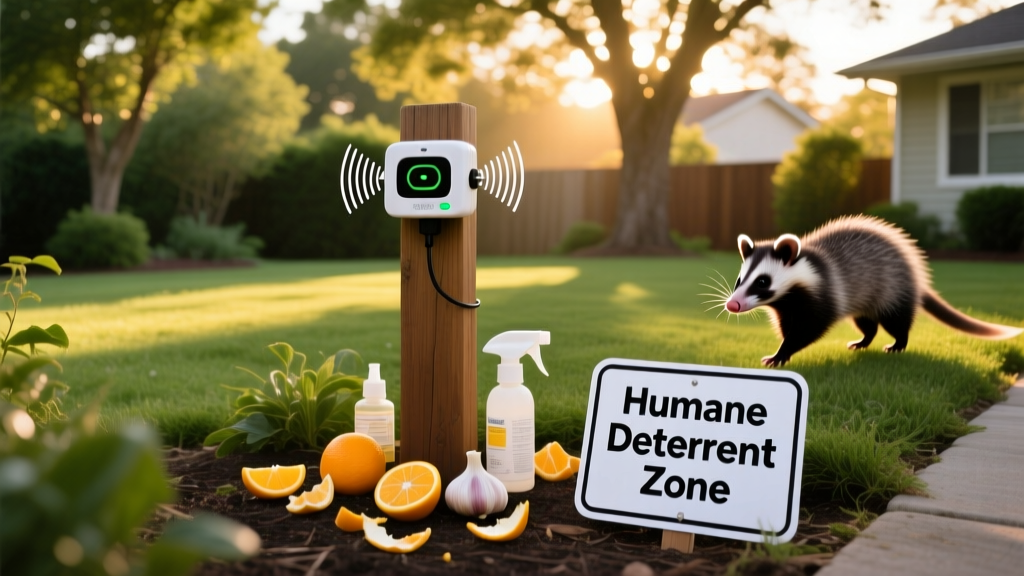
How to Get Rid of a Possum in My Yard Using Humane Deterrents
The Opossum Audit: Identifying Yard Attractants
When homeowners ask how to get rid of a possum in my yard, the first step is understanding why the animal is there. In North America, the culprit is almost always the Virginia opossum (Didelphis virginiana), a nocturnal marsupial driven by two primary needs: high-calorie food and secure daytime shelter. Unlike raccoons, opossums have poor spatial memory and are relatively clumsy, meaning they are usually drawn to easily accessible, ground-level resources.
Before deploying deterrents, conduct a perimeter audit to eliminate these attractants:
- Outdoor Pet Food: This is the number one opossum magnet. Cat and dog kibble left outside overnight provides the exact protein-to-fat ratio they seek.
- Fallen Fruit & Nuts: Persimmons, apples, and pecans rotting on the lawn ferment and emit strong olfactory signals. Use a lawn sweeper or rake bi-weekly during autumn.
- Unsecured Compost: Open compost piles containing vegetable scraps or meat bones act as an all-you-can-eat buffet. Upgrade to a sealed, tumbling compost bin with a locking latch.
- Grub Infestations: Opossums will tear up turfgrass to eat white grubs. If your lawn has active grub damage, treating the soil with Bacillus thuringiensis (Bt) or beneficial nematodes removes the opossum's secondary food source.
💡 Ecological Insight: Before resorting to lethal measures, consider the ecological benefit. According to Penn State Extension, a single opossum can consume thousands of ticks per season, significantly reducing the local population of Lyme disease vectors. If the animal is not causing structural or severe lawn damage, coexistence is often the most ecologically sound choice.
Perimeter Exclusion: Fencing and Habitat Modification
If eliminating food sources does not solve the problem, physical exclusion is your most reliable long-term strategy. Opossums are not adept climbers compared to squirrels or raccoons, but they can scale wooden privacy fences if the grain provides enough grip.
Deck and Crawlspace Fortification
Opossums seek dark, enclosed spaces to sleep during the day. To block access to decks, sheds, and crawlspaces, install a trench screen using 19-gauge, 1/2-inch galvanized hardware cloth. Do not use chicken wire; opossums can easily chew through or bend thin-gauge poultry netting.
- Dig a trench 12 inches deep and 6 inches wide around the perimeter of the structure.
- Cut the hardware cloth to a height of 24 inches.
- Bury the bottom 12 inches in the trench, angling the bottom edge outward (away from the structure) in an L-shape to prevent digging.
- Backfill the trench and secure the top 12 inches to the structure using heavy-duty galvanized staples.
Tree and Canopy Trimming
While opossums prefer ground travel, they will use overhanging branches to access rooflines or escape predators. Trim all tree limbs so they maintain a minimum 6-foot clearance from your roof, fences, and second-story balconies.
Sensory Deterrent Matrix: Active Yard Defense
When physical barriers are impractical for large properties, sensory deterrents exploit the opossum's sensitive hearing, sight, and smell. Below is a comparison of the most effective commercial and DIY deterrents available in 2026.
| Deterrent Type | Product / Method | Est. Cost | Efficacy & Maintenance |
|---|---|---|---|
| Motion-Activated Water | Orbit Yard Enforcer (Model 621000) | $65 - $75 | Highly effective. Requires hose connection. Reset sensitivity dial to avoid false triggers from wind. |
| Olfactory Repellent | Liquid Fence Dog & Cat Repellent | $15 - $20 | Moderate. Uses putrescine egg solids. Must reapply every 7 days or after heavy rainfall. |
| Ultrasonic Sound | Solar Ultrasonic Animal Repeller | $25 - $40 | Low to Moderate. Opossums quickly habituate to static frequencies. Only useful as a temporary supplement. |
| Tactile/Spicy | Capsaicin-based Pepper Spray (DIY) | $5 - $10 | High for targeted garden beds. Irritates nasal passages. Washes away quickly; requires frequent reapplication. |
The Humane Society of the United States strongly recommends motion-activated sprinklers as the premier non-lethal deterrent. The sudden burst of water and the mechanical clicking sound startle the opossum without causing physical harm, creating a negative psychological association with your yard.
Precision Trapping Protocol: When Deterrents Fail
If an opossum has established a den in an inaccessible area or is causing severe turf damage, humane live-trapping is the next logical step. Avoid body-grip or snap traps, which are inhumane and pose severe risks to neighborhood pets.
Selecting the Right Trap
Use a single-door or double-door gravity-action live trap. The Havahart 1045 Two-Door Trap (32 x 10 x 12 inches) is the industry standard for mid-sized mammals. It retails for approximately $45 to $55. The 32-inch length ensures the opossum can fully enter without its tail triggering the door prematurely.
Baiting Strategy and Edge Cases
The most common failure mode in DIY trapping is using the wrong bait, which results in catching a skunk, raccoon, or feral cat. Do not use fruit, peanut butter, or marshmallows.
- The Ideal Bait: Wet, fish-based or poultry-based canned cat food. The strong, pungent odor of fish travels well at night and specifically targets the opossum's scavenging preferences while being slightly less appealing to herbivorous or omnivorous bycatch.
- Placement: Place the trap along a known travel route (usually parallel to a fence line or foundation wall), never in the middle of an open lawn.
- Pre-Baiting: Tie the doors open and leave the bait inside for two nights before setting the trigger. This builds the animal's confidence in entering the wire enclosure.
⚠️ Trap Covering Protocol: The moment you confirm an opossum is caught, immediately drape a heavy bath towel or canvas tarp over the entire trap. Opossums are highly prone to stress-induced capture myopathy. Blocking their visual stimuli lowers their heart rate, prevents them from thrashing and breaking their teeth on the wire, and keeps them docile until release.
Legal Framework and Relocation Realities
Before setting a trap, you must understand the legal and ecological realities of wildlife relocation. In many states (including California, Texas, and New York), it is strictly illegal to trap and relocate wildlife across county lines or release them on public lands without a permit.
Furthermore, relocation is often a death sentence. Opossums have highly localized home ranges. Dropping an opossum in a random wooded area three miles away strips it of its known food and water sources, and it will likely be killed by resident territorial wildlife or vehicles attempting to migrate back.
The Best Practice Release Strategy:
- If local laws permit, release the opossum within 100 yards of where it was trapped, but only after you have completed the exclusion and fencing steps mentioned above.
- Release at dusk, allowing the nocturnal animal to immediately seek cover under the cover of darkness.
- If the opossum is a nursing female (check for a pouch with young), do not trap her. Separating a mother from her young guarantees the death of the joeys. Wait until the young are weaned and mobile (usually mid-summer) before initiating trapping protocols.
By combining rigorous habitat modification, targeted sensory deterrents like the Orbit Yard Enforcer, and legally compliant trapping protocols, you can successfully reclaim your lawn. Consistency in removing food sources remains the single most critical factor in ensuring the opossum does not return next season.

