
Pest Control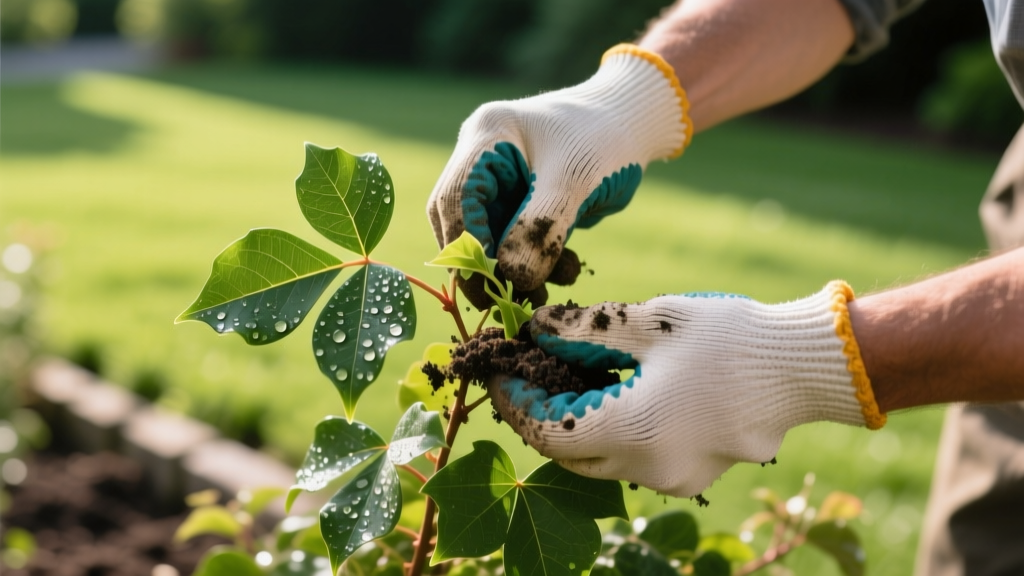
A Beginner's Guide to Removing Poison Ivy Without Getting a Rash
Removing poison ivy (Toxicodendron radicans) is one of the most intimidating tasks for beginner gardeners. The plant produces urushiol, a highly persistent resin that causes severe allergic contact dermatitis in roughly 85% of the population. Unlike standard weeds, poison ivy requires a strict safety protocol, precise extraction techniques, and careful tool decontamination. This guide provides a comprehensive, step-by-step framework for eradicating poison ivy from your landscape without suffering the consequences.
Identifying the Enemy: Poison Ivy vs. Lookalikes
Before you touch anything, you must accurately identify the plant. The old adage 'leaves of three, let it be' is a good starting point, but it is not foolproof. Poison ivy features three leaflets with smooth or slightly notched edges, arranged alternately on the stem (not directly across from each other). The middle leaflet always has a noticeably longer stem than the two side leaflets.
Expert Identification Tip: In early spring, new poison ivy growth often has a distinct reddish tint and a highly glossy sheen. By late summer, the leaves turn dark green and matte, and the plant may produce small, off-white berries. Avoid confusing it with Virginia creeper (which has five leaflets) or boxelder seedlings (which have three leaflets but feature an opposite stem arrangement).
For a deeper visual breakdown and regional variations, the Penn State Extension provides excellent photographic guides to help you distinguish poison ivy from harmless native vines.
The Pre-Removal Safety Protocol
Urushiol oil can penetrate standard gardening gloves and remain active on clothing for months. Historically, gardeners relied on barrier creams containing bentoquatam (sold as IvyBlock), but the FDA discontinued these products years ago. Today, physical barriers and specialized degreasers are your only reliable defense.
Required Protective Gear (Budget: $35 - $50)
- Base Layer: Long-sleeved synthetic shirt and long pants. Avoid cotton, which absorbs and holds urushiol oil.
- Hand Protection: A dual-glove system. Wear 6-mil nitrile gloves directly on your skin, covered by heavy-duty leather work gloves. The nitrile prevents oil from seeping through the leather's porous surface.
- Body Suit: A disposable Tyvek coverall with elastic cuffs and a hood. This prevents accidental arm or neck contact when reaching into dense brush.
- Footwear: Rubber boots. Leather boots can absorb urushiol and become permanently contaminated.
- Eye/Face Protection: Safety goggles to prevent sweat from transferring oil from your hands to your eyes.
Method 1: Manual Extraction for Small Patches
If you are dealing with a small, isolated patch (less than 10 square feet), manual removal is the most permanent solution. Poison ivy spreads via an extensive underground network of rhizomes and a deep taproot. If you leave the roots, the plant will regenerate.
Step-by-Step Extraction Process
- Sever the Vine: If the ivy is climbing a tree or fence, use loppers to cut the main vine about 6 inches above the soil line. Do not pull the top vine down immediately; leave it attached to the structure to die off, as pulling it can shower you with urushiol-laced dust and debris.
- Soak the Soil: Water the base of the plant heavily the night before. Soft soil makes root extraction significantly easier.
- Dig Deep: Using a sharp spade or a heavy-duty hori-hori knife, dig a trench 8 to 12 inches deep around the base of the plant. You must extract the entire taproot and the lateral rhizomes, which look like thick, pale, woody ropes.
- Bag Immediately: Place all plant matter and contaminated soil directly into heavy-duty, 3-mil contractor trash bags. Never use thin household trash bags, as sharp vine tips can puncture them.
CRITICAL WARNING: Never burn poison ivy. Burning vaporizes the urushiol oil. Inhaling the smoke can cause severe, potentially fatal pulmonary edema (fluid in the lungs) and systemic respiratory distress. Always dispose of bagged poison ivy in your municipal landfill trash, never in compost or yard waste bins.
Method 2: Targeted Herbicide Application
For large infestations or ivy growing densely among desirable plants, chemical control is safer and more practical. The timing of your application is just as critical as the chemical you choose. According to the U.S. Food and Drug Administration, proper handling of these chemicals is vital to avoid secondary skin exposure from treated foliage.
Herbicide Comparison Matrix
| Active Ingredient | Common Brand Example | Selectivity | Best Application Timing | Avg. Cost (Quart) |
|---|---|---|---|---|
| Triclopyr | Ortho MAX Poison Ivy Killer | Selective (Broadleaf) | Late Summer / Early Fall | $12 - $16 |
| Glyphosate | Roundup Poison Ivy Plus Tough Brush | Non-Selective | Late Summer / Early Fall | $14 - $18 |
| Imazapyr | Bayer Advanced Brush Killer Plus | Non-Selective (Soil Active) | Spring to Early Summer | $18 - $24 |
Strategic Application Advice
Triclopyr is generally the best choice for lawns and garden beds because it targets broadleaf woody plants without harming surrounding turfgrass. Apply it when the plant is actively moving nutrients down to its roots (late summer to early fall) for maximum systemic kill.
Imazapyr is highly effective but acts as a soil sterilant. It can remain active in the soil for up to six months and will be absorbed by the roots of nearby desirable trees and shrubs, killing them. Only use Imazapyr in isolated areas like fence lines or driveway edges, far from the drip line of trees you want to keep.
Post-Removal Decontamination Protocol
The removal process is only half the battle. Improper decontamination is the leading cause of post-removal rashes. Urushiol is not water-soluble; it requires mechanical friction and heavy-duty surfactants to break down.
Cleaning Your Body
Within 30 minutes of finishing the job, wash all exposed skin with a specialized urushiol-removing soap like Tecnu Extreme or Zanfel. If these are unavailable, standard Dawn dish soap (the original blue formula) works well because it is designed to strip heavy grease. Wash with cool water; hot water opens your pores and can drive residual oil deeper into the skin.
Cleaning Gear and Tools
- Clothing: Wash your base layers and Tyvek suit (if reusable) separately from your regular laundry. Use the hottest water setting your fabric can tolerate (minimum 140°F) and a heavy-duty detergent. Run the washing machine through an empty rinse cycle afterward to clear the drum.
- Boots and Tools: Wipe down rubber boots, shovels, and loppers with rubbing alcohol (isopropyl alcohol 70% or higher) or a solution of 1/2 cup bleach mixed with one gallon of water. Use disposable paper towels for this step and throw them directly into the trash.
- Gloves: Dispose of the outer leather gloves and the inner nitrile gloves. The cost of replacing $15 worth of gloves is negligible compared to the misery of a three-week systemic rash.
Frequently Asked Questions
Is dead poison ivy still dangerous?
Yes. Urushiol oil is incredibly stable and can remain active on dead vines, dried leaves, and contaminated tools for up to five years. Never handle dead poison ivy without full protective gear, and never assume a brown, withered vine is safe to touch bare-handed.
Will mowing over poison ivy kill it?
No. Mowing simply chops the top growth while leaving the extensive root system intact. Worse, a rotary mower will violently shred the leaves, spraying microscopic droplets of urushiol oil across your lawn, your shoes, and the mower deck, creating a massive contamination hazard. Always remove it manually or chemically.

