
Pest Control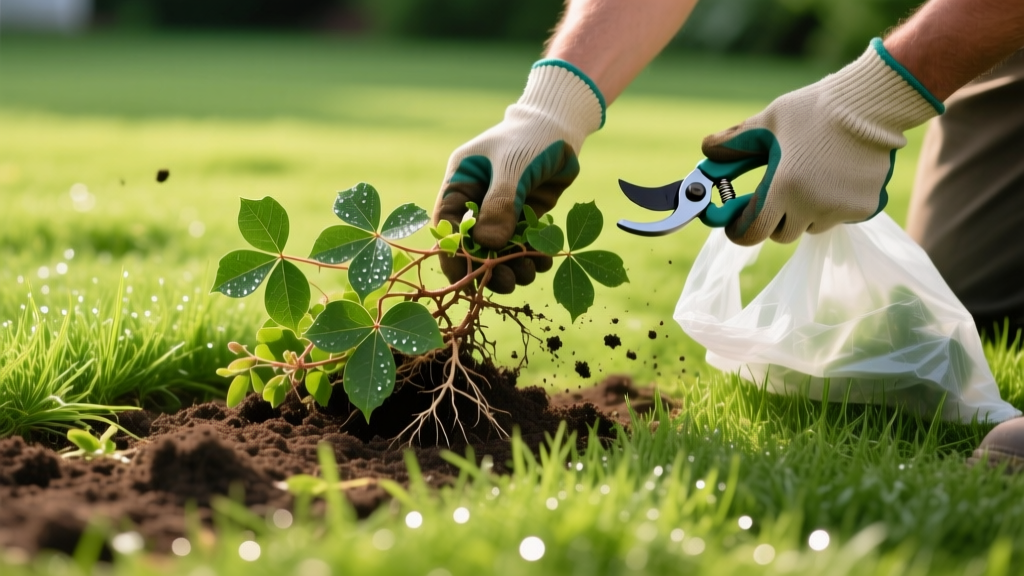
Eradicating Poison Ivy in the Grass: A Step-by-Step Removal Guide
Poison ivy (Toxicodendron radicans) infiltrating a manicured lawn presents a severe biological hazard. Unlike the thick, woody vines climbing tree trunks, poison ivy in the grass often grows as a low-lying rosette or a creeping ground cover, making it difficult to spot during routine mowing. The plant produces urushiol, a highly reactive organic allergen that causes severe contact dermatitis in 85% of the population. Eradicating it from turfgrass requires a precise, phased approach that eliminates the deep rhizome network without destroying your surrounding monocot grasses.
Phase 1: Positive Identification in Turf Environments
The adage 'leaves of three, let it be' is a helpful starting point, but insufficient for accurate identification in a dense lawn. In turf environments, poison ivy rarely exhibits its mature climbing structure. Instead, it spreads via underground rhizomes, sending up small, trifoliate (three-leaflet) shoots that mimic harmless broadleaf weeds. The leaflets are typically 2 to 4 inches long, with smooth or slightly toothed edges, and often feature a reddish tint at the base of the petiole (leaf stem).
Misidentification is common. Homeowners frequently confuse young poison ivy with boxelder seedlings or Virginia creeper. Applying the wrong treatment or manually pulling a misidentified plant wastes time and increases exposure risk.
| Plant Species | Leaflet Count | Leaf Edge & Texture | Stem Characteristics | Growth Habit in Grass |
|---|---|---|---|---|
| Poison Ivy (T. radicans) | 3 (trifoliate) | Smooth or slightly toothed; glossy surface | Reddish tint near base; smooth | Low rosette or creeping runner |
| Boxelder Seedling (Acer negundo) | 3 (sometimes 5) | Deeply lobed and heavily toothed | Green, occasionally with a white waxy bloom | Upright, rapid vertical growth |
| Virginia Creeper (P. quinquefolia) | 5 (palmate) | Coarse, heavily toothed edges | Green to purple; develops tendrils | Spreading ground cover, larger footprint |
| Poison Oak (T. diversilobum) | 3 (trifoliate) | Deeply lobed, resembling oak leaves; fuzzy | Green, fuzzy texture | Shrub-like, rarely found in eastern turf |
For definitive identification, consult the Penn State Extension Poison Ivy Guide, which provides high-resolution macro photography of the plant's distinct aerial rootlets and leaf venation patterns.
Phase 2: Mandatory Safety and Decontamination Protocols
Before initiating any removal procedure, you must establish a strict safety perimeter. Urushiol oil is incredibly resilient; it remains active on dead plant matter, clothing, and gardening tools for up to five years. Standard gardening gloves are insufficient, as the oil can permeate porous fabrics and thin latex.
⚠️ CRITICAL WARNING: Never Mow or Burn Poison Ivy
Running a rotary mower over poison ivy shreds the leaves, aerosolizing urushiol-laced sap into the air, which can cause life-threatening respiratory distress if inhaled. Similarly, never burn poison ivy debris. Smoke carries the toxin directly into the lungs and eyes. Always remove the plant manually or treat it chemically while it is intact.
Required Personal Protective Equipment (PPE):
- Hands: Heavy-duty nitrile gloves (minimum 8-mil thickness). Do not use cotton or leather.
- Body: Disposable Tyvek coveralls with elastic cuffs to prevent vines from sliding up your sleeves.
- Eyes: Wrap-around safety goggles (sealed to prevent splashback from herbicides or sap).
- Feet: Rubber boots that can be scrubbed with a degreasing soap post-treatment.
Phase 3: Step-by-Step Eradication Procedures
The removal method you choose depends on the size of the infestation and the maturity of the root system. Small, newly established patches can be manually extracted, while widespread infestations require targeted systemic herbicides.
Method A: Manual Extraction (For patches under 3 sq. ft.)
Manual removal is highly effective if you extract the entire rhizome network. Poison ivy roots typically extend 8 to 12 inches deep and can spread laterally for several feet.
- Soil Hydration: Water the target area heavily 24 hours before extraction. Soft soil prevents the taproot from snapping during extraction.
- Perimeter Trenching: Using a sharp, narrow spade, cut a 12-inch deep trench in a 1-foot radius around the visible plant cluster.
- Root Levering: Slide a digging fork under the root ball and gently lever it upward. Do not yank the vines, as this breaks the rhizomes and leaves fragments behind to resprout.
- Sifting: Sift the excavated soil through a 1/2-inch mesh screen to catch any broken root fragments. Even a 1-inch piece of rhizome can regenerate.
Method B: Systemic Chemical Control (For established lawns)
When poison ivy is woven deeply into your turfgrass, manual removal will destroy the lawn. Chemical control requires a selective broadleaf herbicide that targets dicots (poison ivy) while sparing monocots (your grass). Triclopyr is the gold standard active ingredient for this scenario.
According to the Environmental Protection Agency (EPA), always read and follow the specific product label regarding mixing ratios and application restrictions.
| Active Ingredient | Example Product | Turf Safety | Application Rate | Best Application Timing |
|---|---|---|---|---|
| Triclopyr + 2,4-D | Ortho GroundClear Poison Ivy & Tough Brush Killer | Safe for most established cool/warm-season grasses | 4 fl. oz. per 1 gallon of water (per 400 sq ft) | Late Summer / Early Fall (Aug-Sept) |
| Glyphosate (41%) | Roundup Pro Concentrate | NON-SELECTIVE: Will kill all surrounding grass | 2.5 fl. oz. per 1 gallon of water | Anytime plant is actively growing |
| Fluroxypyr | Spotlight (Professional Grade) | Highly safe for sensitive turf like St. Augustine | 1.5 fl. oz. per 1 gallon of water | Spring to Early Summer |
The Surfactant Advantage: Poison ivy leaves possess a thick, waxy cuticle that repels water-based herbicides. Always add a non-ionic surfactant (such as Southern Ag Surfactant or a simple teaspoon of liquid dish soap) to your tank mix. This breaks the surface tension, allowing the Triclopyr to penetrate the leaf tissue and translocate down to the root crown.
Timing is Critical: Apply systemic herbicides in late summer to early fall (August through late September). During this window, the plant is actively pulling carbohydrates down into its rhizomes to prepare for winter dormancy. This downward phloem transport carries the herbicide directly into the root system, ensuring a complete kill rather than just top-growth burn.
Phase 4: Post-Treatment Disposal and Turf Recovery
Once the poison ivy has been killed or manually extracted, proper disposal and lawn rehabilitation are mandatory.
Safe Disposal Protocols
- Bagging: Carefully invert your nitrile gloves over the plant debris, pulling them off inside-out to trap the urushiol. Place all plant matter into heavy-duty, 3-mil contractor trash bags.
- Double Bagging: Seal the first bag, place it inside a second bag, and seal it tightly. Label the bag 'Poison Ivy - Toxic Plant Material' so sanitation workers are aware.
- Landfill vs. Curbside: Check local municipal codes. Many municipalities prohibit yard waste containing poisonous plants from entering composting facilities and require it to be disposed of as general landfill trash.
Turf Rehabilitation
If you used a selective herbicide (Triclopyr), your grass will remain largely intact, though you may see temporary yellowing. Wait 14 days after the final herbicide application before overseeding bare spots. If you used Glyphosate for spot-treatment, rake out the dead grass, apply a 1-inch layer of topsoil, and sow a matching turfgrass seed blend at a rate of 4 to 6 pounds per 1,000 square feet. Keep the seedbed consistently moist for 14 days to ensure germination.
Frequently Asked Questions
Can I get a rash from poison ivy in the winter when it has no leaves?
Yes. Urushiol oil is present in all parts of the plant, including the dormant vines and roots, year-round. The CDC NIOSH Poison Ivy Guidelines explicitly warn that handling leafless vines during winter pruning or yard cleanup is a leading cause of off-season dermatitis.
How do I decontaminate my tools after removal?
Standard water rinsing will not remove urushiol. You must use a solvent. Wipe down shovels, shears, and boot soles with rubbing alcohol (isopropyl alcohol 70% or higher) or wash them thoroughly with a heavy-duty degreasing soap like Fels-Naptha or Tecnu. Do not use a wire brush, as this can embed the oil into microscopic scratches in the metal.
Will vinegar or boiling water kill poison ivy in my lawn?
Horticultural vinegar (20% acetic acid) and boiling water will burn off the top growth of the plant, but they possess no systemic action. The deep rhizome network will survive and resprout within two to three weeks. Furthermore, pouring boiling water or high-strength vinegar onto your lawn will alter the soil pH and kill the surrounding turfgrass roots, creating a dead patch that invites further weed invasion.

