
Pest Control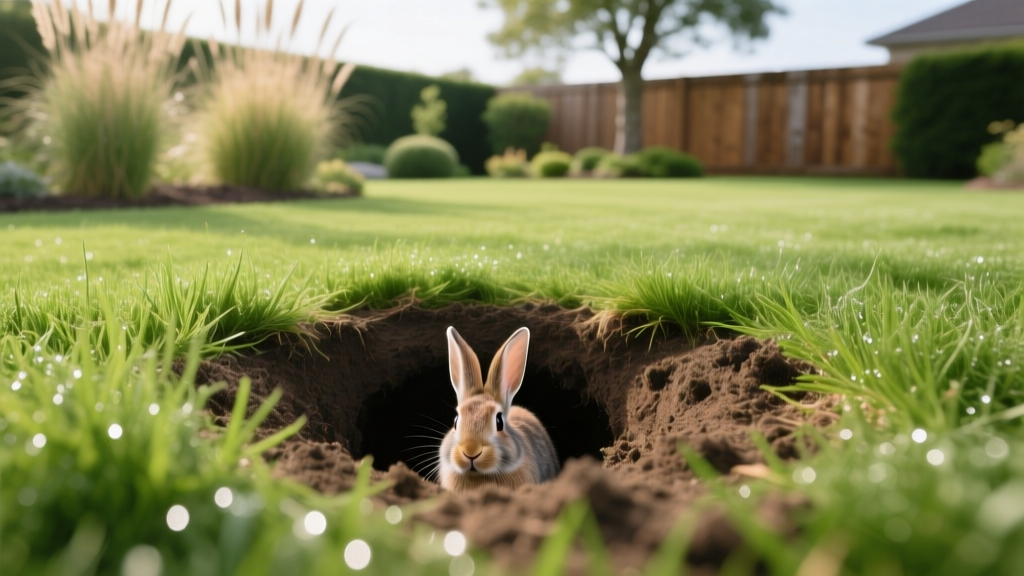
How to Identify, Fill, and Prevent Rabbit Holes in Lawn
The Dual Threat of Rabbit Turf Damage
Eastern cottontails (Sylvilagus floridanus) and European rabbits cause dual-threat damage to residential landscapes. While the visible rabbit holes in lawn areas create tripping hazards and disrupt mower blades, the secondary damage—severe clipping of young turf shoots and ornamental bark—often costs homeowners hundreds of dollars in landscaping repairs. Unlike voles that create shallow surface runways, rabbits excavate distinct burrows, usually 4 to 6 inches in diameter, often tucked beneath the protective canopy of foundation shrubs, woodpiles, or dense ornamental grasses.
Effective management requires a three-phase approach: accurate diagnostic identification, structural turf repair, and long-term physical exclusion. According to wildlife management guidelines from Penn State Extension, rabbits do not hibernate and remain active year-round, meaning exclusion and repair protocols must be maintained across all four seasons.
Diagnostic Matrix: Rabbit vs. Vole vs. Groundhog
Before purchasing exclusion materials, verify the culprit. Misidentifying the digging mammal leads to ineffective fencing depths and incorrect trap sizing. Use this diagnostic matrix to confirm the source of the excavation.
| Feature | Rabbit (Cottontail) | Meadow Vole | Groundhog (Woodchuck) |
|---|---|---|---|
| Hole Diameter | 4 to 6 inches | 1.5 to 2 inches | 10 to 12 inches |
| Soil Displacement | Minimal, often swept under nearby shrubs | None (soil pushed into shallow runways) | Massive fan-shaped mounds at entrance |
| Entrance Shape | Oval, often hidden by vegetation | Circular, connected to surface grass tunnels | Large, semi-circular with a 'porch' of dirt |
| Associated Turf Damage | Clipped grass at 45-degree angles, missing bark on young trees | Girdled roots, spongy turf from runway networks | Uprooted plants, large collapsed trench lines |
Step-by-Step Protocol for Filling Rabbit Holes
Simply kicking loose dirt back into a rabbit burrow guarantees collapse within two weeks, especially after heavy irrigation or rainfall. Rabbits excavate into loose subsoil, creating voids that require a structurally sound backfill mixture to prevent future sinkholes.
- Clear and Inspect the Void: Use a hand trowel to remove loose debris from the hole entrance. Probe the depth with a 3/8-inch steel rebar rod. Most active rabbit burrows extend 12 to 18 inches deep before angling horizontally.
- Mix the Structural Backfill: Combine 50% screened clay-heavy topsoil, 30% peat-free compost, and 20% coarse horticultural sand. The clay provides structural binding to prevent settling, while the sand ensures the burrow does not become a water trap that rots surrounding turf roots. Expect to spend roughly $12 to $15 per cubic foot for premium bagged components.
- Tamp in 3-Inch Lifts: Shovel the mixture into the hole and compact it using a 4x4 wooden post or a manual hand tamper. Compacting in 3-inch layers (lifts) eliminates air pockets that invite re-excavation.
- Crown the Surface: Mound the final inch of backfill slightly above the surrounding grade. Soil naturally settles by 5% to 8% after the first three heavy watering cycles.
- Overseed and Topdress: Apply a high-germination turf seed blend matching your existing lawn. For high-traffic repair zones, use a coated Tall Fescue seed (e.g., Scotts Turf Builder Tall Fescue Mix) which establishes deep 2-foot root systems within 45 days, outcompeting the loose soil structure rabbits prefer for digging.
Advanced Deterrence: Physical Exclusion Standards
Olfactory repellents offer temporary relief, but physical exclusion remains the only permanent solution for chronic rabbit hole issues. Standard surface-level chicken wire fails because rabbits are natural diggers and will easily excavate beneath a flat barrier.
The L-Shape Apron Fencing Method
To secure garden borders and vulnerable lawn edges, install a 14-gauge, 1-inch hexagonal galvanized steel mesh. This specific gauge resists bending when subjected to lateral digging pressure.
- Total Height: 36 inches (rabbits can leap 24 inches vertically when startled).
- Burial Depth: 6 inches straight down.
- The Apron: Bend the bottom 12 inches of the wire outward, away from the protected zone, forming an 'L' shape. Bury this apron 2 inches below the turf surface. When a rabbit digs at the fence line, their paws hit the horizontal wire mesh, triggering a natural retreat response rather than allowing them to dig deeper.
- Cost Estimate: Approximately $1.50 to $2.20 per linear foot for materials, plus $45 for a box of 6-inch galvanized landscape staples to secure the underground apron.
⚠️ Legal Warning on Trapping: Before attempting to trap and relocate rabbits excavating your lawn, consult your state's Department of Natural Resources. In many jurisdictions, relocating wildlife is illegal due to the risk of spreading diseases like Rabbit Hemorrhagic Disease Virus (RHDV2). The Humane Society of the United States strongly advises against relocation, recommending exclusion and habitat modification instead.
Chemical and Olfactory Repellent Strategies
If fencing is unfeasible for large open lawn areas, chemical deterrents can protect the turf margins where holes frequently appear. The efficacy of these products relies heavily on their active ingredients and application frequency.
Putrescent Egg Solids
Products utilizing putrescent whole egg solids (such as Liquid Fence) trigger a predator-scent response in rabbits. A 32-ounce ready-to-spray bottle typically costs $22 to $26 and covers up to 500 square feet. For maximum efficacy, apply to dry turf and shrub margins in the early evening. UV radiation degrades the sulfur compounds rapidly; reapplication is required every 14 days or immediately after 1 inch of rainfall.
Capsaicin and Thiram Blends
For severe grazing pressure on the turf surrounding the burrows, capsaicin-based sprays (derived from hot peppers) create an immediate oral irritation response. However, rabbits quickly habituate to capsaicin if food sources are scarce. For professional-grade results, landscapers use Thiram-based fungicides, which double as a bitter-tasting mammal repellent. Thiram applications cost roughly $40 per gallon of concentrate and provide a longer residual barrier of up to 30 days.
Turf Recovery Protocol for Chewed Margins
Rabbits clip grass blades cleanly at a 45-degree angle, often scalping the turf down to the crown. If the crown is severed, the grass plant dies, leaving bare dirt patches that invite weed invasion and further digging.
Expert Insight: Fine fescues and perennial ryegrass are highly susceptible to rabbit scalping due to their shallow growing points. Transitioning vulnerable lawn borders to Tall Fescue or Zoysiagrass (in warm-season zones) raises the growing crown, allowing the plant to survive severe clipping and regenerate rapidly.
To accelerate recovery in damaged zones, apply a fast-release nitrogen fertilizer at a rate of 0.5 lbs of nitrogen per 1,000 square feet. Pair this with a liquid kelp extract (applied at 2 oz per gallon of water) to stimulate root cytokinin production, forcing the damaged turf to push new lateral shoots within 7 to 10 days.
Frequently Asked Questions
Do rabbit holes in lawn indicate a massive colony?
Not necessarily. Eastern cottontails are largely solitary and do not live in large, interconnected warrens like European rabbits. A single 5-inch hole usually houses one adult or a mother with a temporary nest of kits. Finding multiple holes across a large lawn typically indicates overlapping home ranges of several solitary rabbits rather than a single massive colony.
Will filling holes with mothballs or ammonia work?
No. Placing mothballs or ammonia-soaked rags into rabbit burrows is highly ineffective, illegal in many states (as mothballs are regulated pesticides), and dangerous to local groundwater, pets, and soil biology. Rabbits will simply abandon that specific hole and dig a new one three feet away. Structural backfilling and physical exclusion are the only reliable methods.
How deep do rabbits dig their burrows?
While the entrance is visible on the lawn surface, the primary living chamber of a cottontail burrow typically sits 12 to 18 inches below grade. In regions with heavy clay soils, they may dig shallower, utilizing existing depressions or root voids left by decaying trees to minimize excavation effort.

