
Pest Control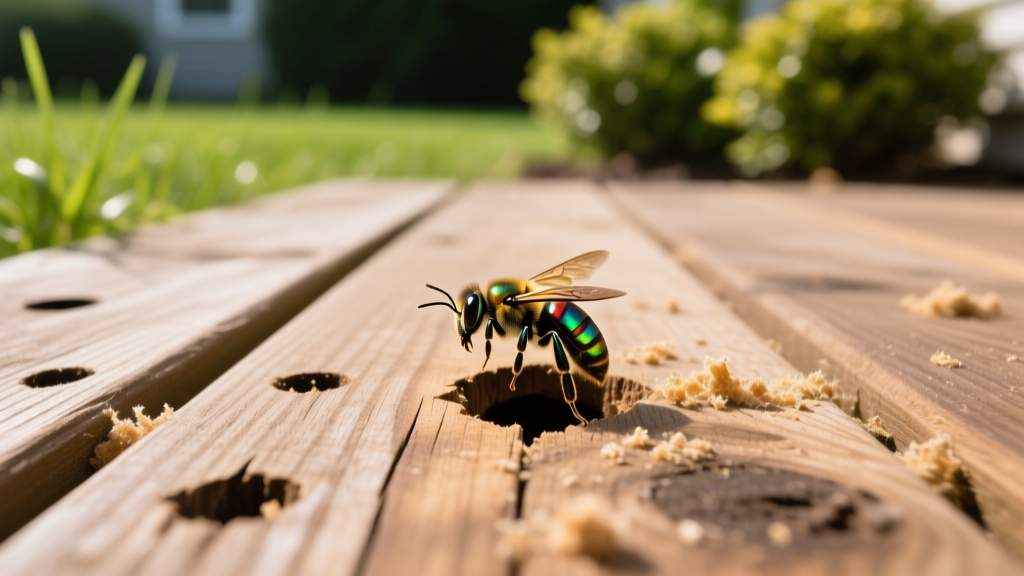
How to Repel Carpenter Bees From Wooden Decks and Fences
Carpenter bees (Xylocopa spp.) are solitary, wood-boring insects that excavate perfectly circular, half-inch diameter galleries into untreated softwoods to lay their eggs. While they are vital pollinators for your garden flora, their nesting habits cause severe structural degradation to wooden decks, fence posts, pergolas, and fascia boards. According to Penn State Extension, the primary damage is often compounded by woodpeckers that tear apart the wood to feed on the developing bee larvae inside the tunnels.
To effectively repel carpenter bees and protect your yard infrastructure, you must move beyond temporary sprays and implement a comprehensive protocol combining targeted eradication, physical exclusion, and surface deterrence.
Carpenter Bee Identification and Damage Signatures
Before treating, confirm you are dealing with carpenter bees rather than wood-destroying organisms like termites or wood-boring beetles. The Eastern carpenter bee (Xylocopa virginica) is the most common culprit in North America, characterized by a shiny, hairless black abdomen, distinguishing it from the fuzzy, yellow-and-black bumblebee.
Behavioral Note: Male carpenter bees often exhibit aggressive "dive-bombing" behavior to defend their territory. However, males lack stingers. Only the females possess stingers, and they are generally docile unless physically crushed or handled.
Key Indicators of an Active Infestation
- Entry Holes: Perfectly round, 1/2-inch diameter openings, usually located on the underside of eaves, deck railings, or unpainted fence rails.
- Frass Accumulation: Coarse, pale yellow sawdust (frass) piled directly beneath the entry hole, pushed out as the female excavates the internal gallery.
- Yellow-Brown Staining: Fecal streaks running down the wood surface directly below the nest entrance.
- Audible Cues: A distinct buzzing or chewing sound emanating from within the wood, especially on warm spring afternoons.
The 3-Step Protocol to Repel and Eradicate
Successfully defending your yard structures requires a phased approach. Applying surface repellents while active galleries remain inside the wood will only force the bees to bore new entry holes adjacent to the old ones.
Step 1: Targeted Gallery Treatment (Late Evening)
Carpenter bees return to their galleries at dusk. Treat active holes between 8:00 PM and 10:00 PM when the females are inside and least active. Avoid liquid aerosol sprays, which only coat the entrance. Instead, use an insecticidal dust like Delta Dust (Deltamethrin 0.05%) or Drione Dust (Silica aerogel + Pyrethrin).
- Load a brass bellows hand duster with the insecticidal dust.
- Insert the duster nozzle into the 1/2-inch hole and puff 2 to 3 times. The dust will coat the interior walls of the 6-to-10-inch deep gallery.
- Leave the hole open for 48 hours. This allows returning foraging bees to track the dust deep into the nest, eliminating the larvae and the mother.
Step 2: Physical Exclusion and Plugging
After the 48-hour exposure period, the tunnels must be sealed to prevent future generations from reusing the same galleries. According to North Carolina State University Extension, leaving old tunnels open invites secondary pests and accelerates moisture rot.
- For shallow holes: Inject a high-quality polyurethane exterior caulk (e.g., OSI QUAD Max) directly into the void, smoothing it flush with the wood grain.
- For deep or structural galleries: Cut a 1/2-inch wooden dowel, coat it heavily in waterproof carpenter's glue (Titebond III), and tap it into the hole with a mallet. Snap off the excess and sand it flush before painting.
Step 3: Surface Deterrence and Wood Modification
Carpenter bees strongly prefer untreated, weathered softwoods like pine, fir, cedar, and redwood. They struggle to grip and bore into painted or heavily sealed surfaces. Applying two coats of an oil-based exterior paint creates a physical barrier that deters excavation. If you prefer the natural wood look, apply a penetrating sealer containing almond oil or citrus oil (d-limonene), which masks the wood's scent and irritates the bees' sensory receptors.
Chemical vs. Natural Repellents: Efficacy and Cost Breakdown
Choosing the right repellent depends on your yard's ecosystem, the severity of the infestation, and your budget. Below is a comparative analysis of the most effective deterrents available for yard structures.
| Deterrent Type | Active Agent / Product | Cost per Application | Longevity | Best Use Case |
|---|---|---|---|---|
| Insecticidal Dust | Bayer Delta Dust (Deltamethrin) | $18.00 / 1 lb bottle | 6-8 months (inside voids) | Eradicating active, deep galleries in fence posts and structural beams. |
| Residual Liquid | Syngenta Demand CS (Lambda-cyhalothrin) | $45.00 / 35 oz bottle | 60-90 days (surface) | Perimeter spraying on eaves and soffits during peak spring emergence. |
| Natural Oil | Pure Almond Oil (Benzaldehyde) | $14.00 / 4 oz bottle | 3-4 weeks | Protecting outdoor wooden furniture and small decorative yard features. |
| Citrus Spray | d-Limonene Extract (Orange Oil) | $22.00 / 16 oz bottle | 1-2 weeks | Organic gardens where synthetic pyrethroids are restricted. |
| Physical Barrier | Copper Mesh / Steel Wool | $12.00 / 50 ft roll | Permanent (if caulked over) | Plugging large, irregular voids where wood dowels cannot fit. |
Structural Defense: Upgrading Vulnerable Yard Woods
If you are rebuilding a deck or replacing a rotting fence, material selection is your first line of defense against Xylocopa species. As noted by University of Kentucky Entomology, carpenter bees rarely attack pressure-treated lumber or non-wood composites.
Material Vulnerability Matrix
- Untreated Pine / Spruce (High Risk): The most vulnerable materials. The soft grain allows females to bore a 1/2-inch hole in under 15 minutes. Must be painted or sealed annually.
- Western Red Cedar (Moderate Risk): While naturally resistant to rot and termites due to tannins, cedar is soft enough for carpenter bees to excavate. Requires a heavy polyurethane topcoat to deter nesting.
- Pressure-Treated Southern Yellow Pine (Low Risk): The chemical treatment (usually copper-based) and the density of the wood deter most bees, though heavily weathered, cracked pressure-treated wood can still be targeted.
- Wood-Plastic Composites (Zero Risk): Materials like Trex or TimberTech are entirely immune to carpenter bee excavation. For high-moisture, high-pest areas, composite fencing and decking eliminate the problem permanently.
Pro-Tip for Pergola Builders: If you are constructing a wooden pergola, wrap the vertical support posts in 12-inch PVC post sleeves at the base, and use composite caps on the horizontal rafters. Carpenter bees prefer to bore upward into the end-grain of horizontal rafters; capping them with PVC or composite removes their primary target.
Frequently Asked Questions
Will hanging fake wasp nests repel carpenter bees?
No. While carpenter bees are solitary and somewhat territorial, scientific studies and entomological field tests show that decoy nests (like paper or plastic wasp bags) do not deter them from boring into favorable wood. They rely on tactile and olfactory cues from the wood itself, not visual territorial markers.
Can I use WD-40 or motor oil to keep them away?
Applying petroleum-based lubricants to yard wood is highly discouraged. WD-40 will temporarily mask the wood scent, but it attracts dust, degrades the wood fibers, creates a severe slip hazard on decks, and introduces toxic hydrocarbons into your yard's soil runoff.
When is the best time of year to treat for carpenter bees?
The primary treatment window is early to mid-spring (April to May in most temperate zones), when overwintered adults emerge to mate and establish new galleries. A secondary, smaller emergence often occurs in late summer (August to September). Applying residual surface sprays in late March, before the spring flight, provides the best preventative defense.

