
Pest Control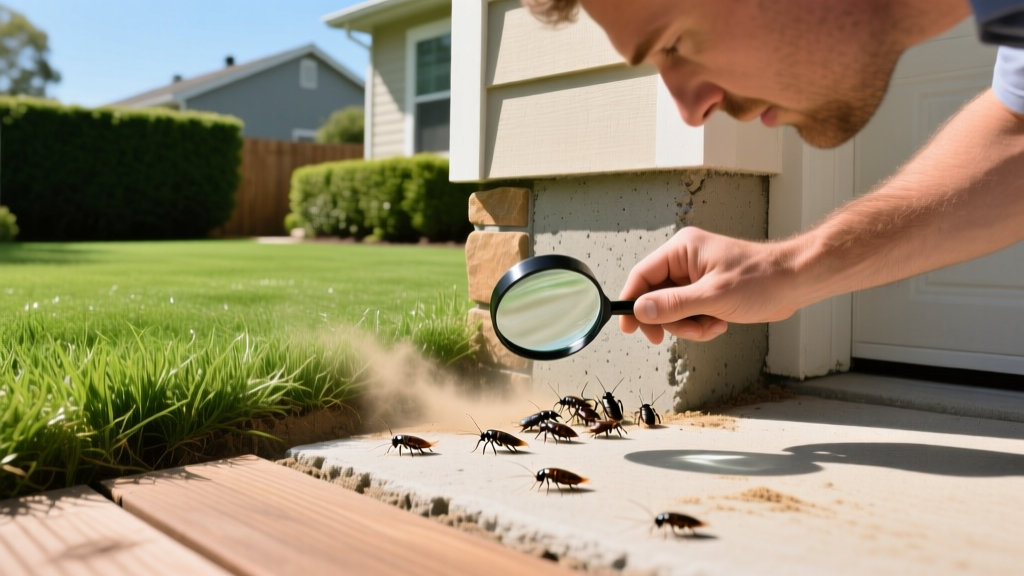
How to Repel Cockroaches From Your Yard and Home Foundation
Most homeowners attempt to fight cockroach infestations inside their kitchens and bathrooms, but by the time you see them indoors, the battle is already half-lost. When learning how to repel cockroaches effectively, the most critical battleground is actually your yard and home foundation. Outdoor-dwelling species—specifically American, Smokybrown, and Oriental cockroaches (often called peridomestic roaches)—breed in mulch, woodpiles, and damp soil, migrating indoors when temperatures drop or moisture levels shift.
Establishing a robust exterior perimeter defense prevents these pests from ever crossing your threshold. This guide details the exact landscaping modifications, chemical barriers, and structural sealing techniques required to make your yard inhospitable to cockroaches in 2026.
The Perimeter Defense Matrix: Identifying Yard Vulnerabilities
Before applying any treatments, you must identify the specific micro-environments in your yard that harbor roaches. Use the matrix below to audit your property and apply the corresponding corrective actions.
| Yard Zone | Primary Attractant | Required Repellent Action |
|---|---|---|
| Foundation Mulch Beds | Moisture retention and decaying organic matter | Implement the 12-inch bare soil rule; switch to inorganic or cedar mulch |
| Woodpiles & Debris | Shelter and cellulose food sources | Relocate minimum 20 feet from home; elevate on metal racks |
| Gutter Downspouts | Localized soil saturation and standing water | Install 4-foot rigid downspout extenders to divert water away |
| AC Condensate Lines | Constant drip creating perpetual mud/moisture | Reroute PVC piping to drain into a dry well or French drain |
| Weep Holes in Brick | Dark, humid entry points directly into wall voids | Insert stainless steel mesh inserts (never block completely) |
Landscaping & Mulch Modifications to Deter Roaches
Thick, moisture-retaining mulch pushed directly against your siding is a premier cockroach breeding ground. Smokybrown cockroaches, in particular, thrive in the humid microclimate created by pine straw and shredded hardwood.
The 12-Inch Bare Soil Rule
Pull all organic mulch, leaf litter, and dense groundcover back at least 12 inches from your foundation. This creates a dry, exposed barrier that cockroaches are highly reluctant to cross due to the lack of cover and higher UV exposure. If you must use a groundcover in this 12-inch zone, opt for decorative gravel, crushed stone, or river rock, which drain rapidly and offer no nutritional value to pests.
Selecting the Right Mulch
If you are replacing mulch in beds just outside the 12-inch perimeter, avoid pine bark and straw. Instead, use cedar or cypress mulch. These woods contain natural oils (like thujone) that act as mild insect repellents. While they won't eliminate an existing infestation, they significantly reduce the attractiveness of the bed to foraging roaches. Alternatively, high-density rubber mulch provides the aesthetic of wood without retaining the moisture that roaches require to survive.
Chemical vs. Botanical Perimeter Barriers
When establishing an outdoor chemical barrier, the goal is repulsion and immediate knockdown. This is a crucial distinction from indoor treatments, where non-repellent slow-acting chemicals are preferred to allow roaches to carry the poison back to the nest. Outdoors, you want a repellent that stops them from crossing the property line.
Expert Note: Repellents vs. Non-Repellents
Indoor cockroach control relies on non-repellents (like Fipronil or Imidacloprid) so roaches don't avoid the treated area. However, for your exterior foundation, highly repellent pyrethroids (like Bifenthrin or Permethrin) are the superior choice because their primary function is to create an invisible 'fence' that pests refuse to cross.
Conventional Synthetic Barriers
The industry standard for exterior cockroach repulsion is Bifenthrin 7.9% (commonly sold under brand names like Talstar P or Bifen IT).
- Mixing Rate: 1 fluid ounce per gallon of water.
- Coverage: 1 finished gallon treats approximately 1,000 square feet.
- Application: Spray a continuous 3-foot wide band on the soil extending outward from the foundation, and a 3-foot high band up the foundation wall.
- Cost & Longevity: A quart costs roughly $45 to $55 in 2026 and yields enough mixture to treat the perimeter of an average home 15 to 20 times. When applied to exterior soil and shaded foundation areas, the residual repellent effect lasts 60 to 90 days.
Botanical and Organic Alternatives
For homeowners near sensitive waterways or those preferring organic yard care, botanical sprays utilizing d-limonene (citrus oil) or peppermint/rosemary oils (such as EcoSmart or Zevo outdoor sprays) offer strong repellent properties. However, botanical oils degrade rapidly under UV light and wash away easily. You must reapply these products every 14 to 21 days, or immediately after heavy rainfall, to maintain an effective barrier.
Step-by-Step Foundation Sealing & Moisture Control
Chemical barriers are only half the equation. If your home's physical envelope is compromised, roaches will eventually find a way inside. Follow this structural sealing protocol:
- Audit the Perimeter: Walk the exterior at night with a high-lumen flashlight. Look for gaps around HVAC lines, plumbing penetrations, and where the siding meets the foundation.
- Stuff Large Voids: For gaps larger than 1/4 inch, do not use spray foam alone (roaches can chew through it). Pack the void tightly with Stuf-Fit Copper Mesh or stainless steel wool. A 30-foot roll of copper mesh costs about $18 and is impervious to rodent and insect mandibles.
- Seal with Polyurethane: Once the mesh is packed, cap it with a high-quality polyurethane sealant like Sikaflex 1A ($12-$15 per tube). Unlike cheap silicone, polyurethane adheres to masonry, wood, and vinyl, and expands/contracts with seasonal temperature shifts without cracking.
- Protect Weep Holes: Brick veneer homes have weep holes to allow moisture to escape. Never seal these with caulk. Instead, purchase pre-cut stainless steel weep hole mesh inserts. Avoid copper mesh for weep holes, as copper oxidation will cause permanent green staining on your brickwork.
FAQ: Outdoor Cockroach Repellent Myths
Does Diatomaceous Earth (DE) work outdoors?
No. While DE is highly effective in dry, indoor environments, it is virtually useless outdoors. Diatomaceous earth requires physical contact and a dry environment to abrade the insect's exoskeleton. The moment DE gets wet from rain, irrigation, or morning dew, it clumps and loses all insecticidal properties.
Will yard treatments get rid of German Cockroaches?
No. It is vital to correctly identify your pest. Penn State Extension notes that German cockroaches are strictly indoor pests that do not survive in outdoor environments. If you are dealing with German roaches, yard treatments will not help; you must use indoor gel baits and insect growth regulators (IGRs). Yard defense specifically targets American, Oriental, and Smokybrown species.
Do ultrasonic pest repellents work in the yard?
Ultrasonic devices are entirely ineffective for outdoor cockroach defense. According to entomological research cited by the EPA, cockroaches do not possess the auditory receptors required to be deterred by ultrasonic frequencies. Furthermore, high-frequency sound waves cannot penetrate solid objects like bushes, fences, or exterior walls, rendering them useless in an open yard environment.
By combining strict landscaping boundaries, targeted pyrethroid barriers, and rigorous physical sealing, you create a multi-layered defense system. This proactive approach ensures that when peridomestic cockroaches forage near your home, they find an environment that is dry, exposed, and chemically hostile, forcing them to move on to easier targets.

