
Pest Control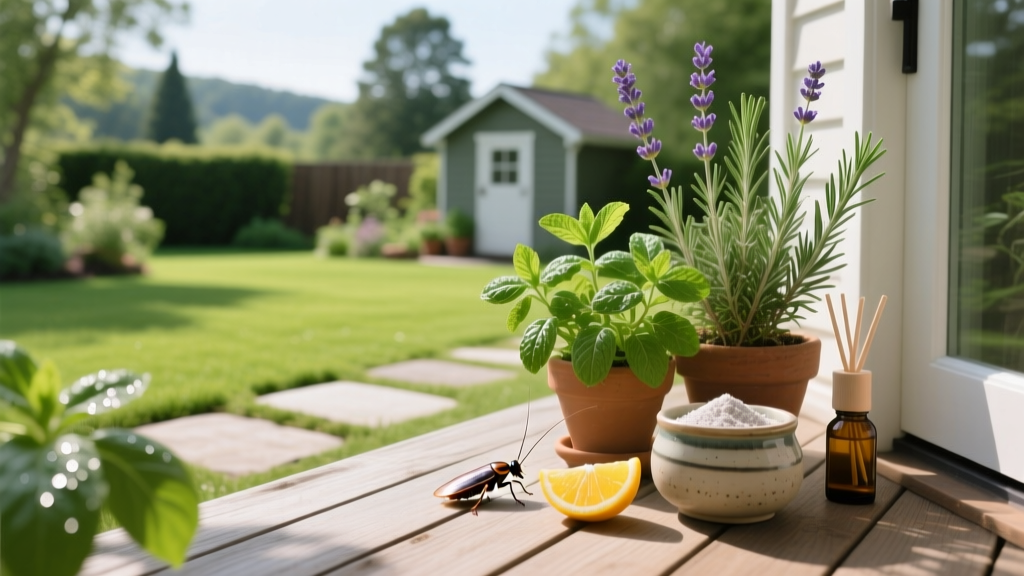
How to Repel Roaches Naturally: Organic Home & Garden
The Garden-to-Home Pipeline: Understanding Roach Migration
When homeowners ask how to repel roaches naturally, they often focus solely on indoor baseboards and kitchen cabinets. However, effective organic pest control requires addressing the garden-to-home pipeline. Species like the American cockroach (Periplaneta americana) and the Smokybrown cockroach (Periplaneta fuliginosa) thrive in outdoor leaf litter, mulch beds, and sewer lines, migrating indoors only when outdoor temperatures drop or moisture levels fluctuate. Conversely, the German cockroach (Blattella germanica) is strictly an indoor dweller. To build a chemical-free defense, you must disrupt the olfactory trails and physical pathways that outdoor populations use to breach your home's envelope.
According to the University of California Integrated Pest Management (UC IPM) program, sanitation and exclusion are the foundational pillars of cockroach management, rendering chemical sprays largely unnecessary when physical and botanical barriers are correctly deployed.
Botanical Repellents: Essential Oils That Actually Work
Essential oils repel roaches by overwhelming their antennal olfactory receptors, disrupting their ability to locate food and follow pheromone trails. However, simply spraying undiluted oil is ineffective and wasteful. You must formulate a stable emulsion using a surfactant to ensure the oil binds to water and adheres to porous surfaces like wood and concrete.
Formulating a 2% Botanical Emulsion
To create a professional-grade organic repellent, mix 120 drops (approximately 1.2 teaspoons) of essential oil with 1 teaspoon of liquid Castile soap (the surfactant) in a 16-ounce spray bottle filled with distilled water. The soap breaks the water's surface tension, allowing the oil to disperse evenly rather than floating to the top.
| Active Botanical | Primary Compound | Best Application Zone | Reapplication Frequency |
|---|---|---|---|
| Peppermint Oil | Menthol / Menthone | Door thresholds, window sashes, pipe penetrations | Every 3-5 days indoors |
| Cedarwood Oil | Cedrol / Thujopsene | Foundation perimeter, baseboards, attic vents | Every 7-10 days outdoors |
| Neem Oil | Azadirachtin | Garden mulch, compost bins, shrubbery bases | Every 14 days or after rain |
Expert Insight: Cedarwood oil is particularly lethal to roach nymphs. While it acts primarily as a repellent for adults, the cedrol compound disrupts the molting process in juvenile roaches, making it a dual-action treatment for garden perimeters where breeding occurs.
Physical & Organic Barriers for the Perimeter
Botanical sprays degrade under UV light and wash away in the rain. For long-term, weather-resistant exclusion, you must integrate physical and mineral barriers into your landscape and home exterior.
Diatomaceous Earth (DE): The Microscopic Razor
Food-grade Diatomaceous Earth consists of fossilized diatoms with microscopic, razor-sharp silica edges. When roaches crawl over DE, the particles lacerate their waxy exoskeleton cuticle, causing fatal dehydration. According to the National Pesticide Information Retrieval System (NPIRS), DE is highly effective but entirely dependent on correct application.
Warning: The DE Clumping Failure Mode
The most common mistake homeowners make is applying DE too thickly or in damp areas. If applied thicker than 1/8 of an inch, roaches will simply walk around it. If it gets wet, the electrostatic charge that binds the dust to the roach's legs is neutralized, and it clumps into useless paste. Apply a barely visible dusting using a professional bellows duster, and only in dry, protected zones like under appliances, behind cabinets, and in attic eaves.
The most common mistake homeowners make is applying DE too thickly or in damp areas. If applied thicker than 1/8 of an inch, roaches will simply walk around it. If it gets wet, the electrostatic charge that binds the dust to the roach's legs is neutralized, and it clumps into useless paste. Apply a barely visible dusting using a professional bellows duster, and only in dry, protected zones like under appliances, behind cabinets, and in attic eaves.
Copper Mesh for Weep Holes and Vents
Steel wool rusts and degrades within months when exposed to exterior moisture. Instead, use 16x16 weave copper mesh to stuff weep holes in brick veneer, dryer vents, and plumbing penetrations. Copper oxidizes slowly and creates a physical barrier that roaches cannot chew through or bypass. Cut the mesh into 3-inch strips, roll them tightly, and pack them into gaps using a flathead screwdriver.
Habitat Modification: Starving the Colony
Repellents will fail if your property offers an irresistible harbor. Roaches require three things: warmth, moisture, and decaying organic matter. Implementing the following landscape modifications removes the biological incentives for roaches to colonize your yard.
- The 6-Inch Mulch Rule: Never allow mulch, soil, or vegetation to touch your home's siding or brick. Maintain a strict 6-inch gap between the foundation and any organic material. This creates a dry, exposed 'no man's land' that roaches are hesitant to cross.
- Grade and Drainage Correction: American and Oriental cockroaches seek out moisture. Ensure your soil grades away from the foundation at a minimum slope of 1/4 inch per foot. Extend downspouts at least 4 feet away from the house to prevent pooling near basement walls.
- Compost Bin Containment: If you compost, use a fully enclosed, tumbling bin rather than an open ground pile. Open piles generate the exact ambient heat (110°F to 140°F) and moisture levels that trigger rapid roach breeding.
Decision Matrix: Repel vs. Eradicate
Knowing how to repel roaches naturally is only half the battle. You must know when repellents are insufficient and when to switch to organic eradication methods like baiting. Use this framework to decide your next step.
| Scenario | Recommended Tactic | Specific Organic Action |
|---|---|---|
| Occasional large roaches near doors/windows | Repel & Exclude | Apply cedarwood oil spray and install copper mesh in weep holes. |
| Roaches active in garden beds and mulch | Habitat Modification | Pull mulch back 6 inches from foundation; apply neem oil soil drench. |
| Small, fast-moving roaches in kitchen/bathroom | Eradicate (Baiting) | Use a boric acid and powdered sugar bait (1:1 ratio) placed in tamper-resistant stations. Repellents will only scatter German roaches deeper into walls. |
| Heavy infestation with visible egg cases (oothecae) | Professional Intervention | Natural methods are too slow for active breeding colonies. Consult an eco-certified pest control operator for targeted IGR (Insect Growth Regulator) treatments. |
By combining botanical olfactory disruptors, precise physical exclusion, and strict moisture management, you can maintain a roach-free environment without introducing synthetic pyrethroids or toxic baits into your living space. For more comprehensive guidelines on minimizing pesticide use around the home, refer to the EPA's Safe Pest Control resources.

