
Pest Control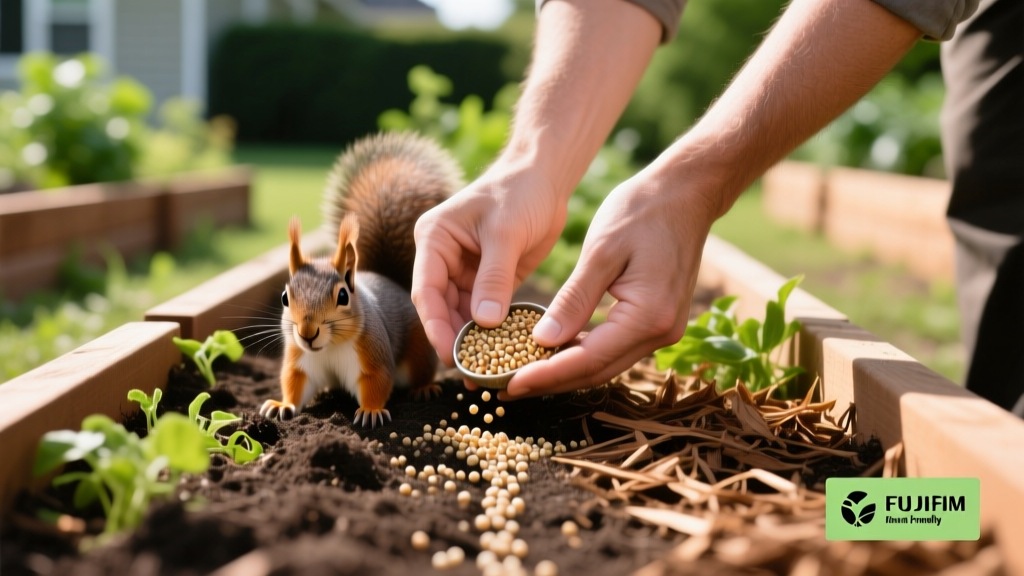
How to Repel Squirrels From Garden Beds: Expert Deterrent Guide
The Squirrel Foraging Matrix: Understanding the Threat
Eastern gray squirrels (Sciurus carolinensis) and fox squirrels (Sciurus niger) are opportunistic foragers with highly developed spatial memory. When learning how to repel squirrels from garden spaces, homeowners often fail because they rely on single-point deterrents. Squirrels adapt rapidly; a strategy that works in May may be ignored by August. According to UC Agriculture and Natural Resources, effective management requires a layered approach combining physical exclusion, chemical repellents, and habitat modification.
| Foraging Behavior | Primary Trigger | Garden Impact | Optimal Countermeasure |
|---|---|---|---|
| Caching (Burying) | Soft, freshly turned soil | Uprooted seedlings, stolen bulbs | 1/2-inch hardware cloth overlays |
| Gnawing | Need for dental wear / moisture | Stripped bark, chewed drip lines | Capsaicin bark wraps, metal flashing |
| Fruit/Veg Sampling | High water content / ripening sugars | Hollowed tomatoes, bitten squash | Motion-activated sprinklers |
| Nesting Material | Soft plant fibers, mulch | Destroyed ornamental grasses | Botanical deterrence, coarse gravel |
Physical Exclusion: Hardware Cloth and Baffles
Physical barriers are the only 100% reliable method for protecting high-value garden beds. Chicken wire (1-inch hexagonal mesh) is entirely ineffective; squirrels easily squeeze through the gaps or chew through the thin, ungalvanized wire. Instead, use 19-gauge, 1/2-inch by 1/2-inch galvanized hardware cloth.
The L-Footer Trenching Technique
To stop squirrels from burrowing under raised beds or ground-level fences, implement an L-footer design:
- Dig a trench 6 inches deep and 12 inches wide along the perimeter of the garden bed.
- Cut the hardware cloth to a height of 24 inches.
- Bend the bottom 12 inches of the mesh at a strict 90-degree angle.
- Place the mesh in the trench so the 12-inch flange points away from the garden bed. Squirrels dig at the base of the fence, hit the horizontal wire, and cannot figure out how to back up and dig further away.
- Backfill the trench and secure the vertical 12-inch section to your wooden bed frame using galvanized U-nails.
Cost Note: As of 2026, a 25-foot roll of 19-gauge hardware cloth averages $35 to $45 at major home improvement centers.
Active Deterrence: Motion-Activated Sprinklers
For open garden plots where fencing is impractical, motion-activated water jets provide excellent coverage. The Orbit 62100 Yard Enforcer remains the industry standard, utilizing an infrared sensor to detect animal body heat and movement up to 40 feet away.
Pro Tip: Sensor Placement and Calibration
Squirrels move close to the ground. Angle the Yard Enforcer's sensor downward to intersect a 1-to-2-foot height plane. Set the unit to 'Day Only' mode if you live in an area with high nocturnal foot traffic to avoid false triggers. Ensure your water pressure sits between 40 and 80 PSI; below 30 PSI, the water jet lacks the kinetic force to startle a determined squirrel.
Chemical Deterrence: Capsaicin and Methyl Anthranilate
Taste and olfactory repellents must be reapplied frequently, especially after rainfall. The two most effective active ingredients for mammalian deterrence are capsaicin (hot pepper) and methyl anthranilate (grape extract).
- Capsaicin (0.05% to 0.1% concentration): Many commercial 'hot pepper' sprays contain only 0.02% capsaicin, which merely irritates rather than deters. Purchase horticultural capsaicin concentrates (like Miller Hot Sauce Animal Repellent) and mix to a 0.05% solution. Apply directly to plant foliage and soil surfaces.
- Methyl Anthranilate: Found in products like Bonide Repels-All, this compound triggers the trigeminal nerve in mammals, causing a severe but temporary sensory overload. It costs approximately $18 per gallon and lasts up to 3 weeks on dry foliage.
Warning: Capsaicin Safety Protocols
When mixing and applying capsaicin concentrates, always wear nitrile gloves and a P100 respirator mask. Aerosolized capsaicin can cause severe respiratory distress and corneal damage. Never apply capsaicin sprays to plant parts you intend to harvest and eat within 14 days, as the oil binds to plant waxes and resists standard washing.
Botanical Defense: Squirrel-Resistant Bulbs and Plants
Squirrels rely heavily on their sense of smell to locate buried food. By interplanting highly aromatic or toxic bulbs, you create an olfactory smokescreen. Penn State Extension notes that squirrels actively avoid plants containing calcium oxalate crystals or potent alkaloids.
The 'Toxic Perimeter' Planting List
- Allium species: Ornamental onions like Allium 'Purple Sensation' emit a strong sulfur compound that masks the scent of nearby vulnerable bulbs.
- Narcissus (Daffodils): Contains lycorine, a toxic alkaloid. Squirrels will dig them up, take one bite, and discard them. Plant Narcissus 'King Alfred' densely around tulip beds.
- Fritillaria meleagris: The snake's head fritillary produces a skunky odor at the root level that repels rodents.
- Hyacinths: The dense calcium oxalate crystals in the bulbs cause immediate oral irritation to foraging mammals.
Seasonal Implementation Timeline
To maintain a squirrel-free garden, align your deterrent strategies with their biological cycles:
- Early Fall (September - October): Install hardware cloth over newly planted bulb beds. Squirrels are in hyper-foraging mode, caching food for winter. Apply a heavy layer of coarse crushed gravel (not smooth river rock) over soil to discourage digging.
- Early Spring (March - April): Deploy motion-activated sprinklers as seedlings emerge. Squirrels are emerging from winter lethargy and seeking high-moisture food sources.
- Mid-Summer (June - July): Switch to capsaicin and methyl anthranilate sprays to protect ripening tomatoes, eggplants, and strawberries. Reapply every 7 days or immediately after 1/4 inch of rainfall.
Frequently Asked Questions
Do ultrasonic squirrel repellents actually work in gardens?
No. Independent testing by wildlife biologists consistently shows that ultrasonic devices fail in open outdoor environments. High-frequency sound waves degrade rapidly over distance, are blocked by dense foliage, and do not penetrate solid objects. Furthermore, squirrels habituate to the noise within 48 to 72 hours, rendering the $30-$50 devices useless. The Humane Society of the United States advises against relying on sonic deterrents for wildlife management.
Can I use mothballs to keep squirrels out of my garden beds?
Using mothballs (naphthalene or paradichlorobenzene) outdoors is illegal in the United States and highly dangerous. These chemicals are registered pesticides strictly for indoor, airtight use. In an open garden, mothballs rapidly leach toxic compounds into the soil, contaminating groundwater and posing severe neurological risks to pets, children, and local wildlife. Stick to EPA-registered horticultural repellents.
How do I stop squirrels from running along the top of my fence to access the garden?
Squirrels use fences as highways. To break this transit route, install a 2-inch diameter PVC pipe over the top rail of your wooden fence. Cut the pipe lengthwise, snap it over the fence rail, and secure it. When a squirrel attempts to run across, the PVC pipe spins freely, causing the squirrel to lose its balance and drop to the ground outside the garden perimeter.

