
Pest Control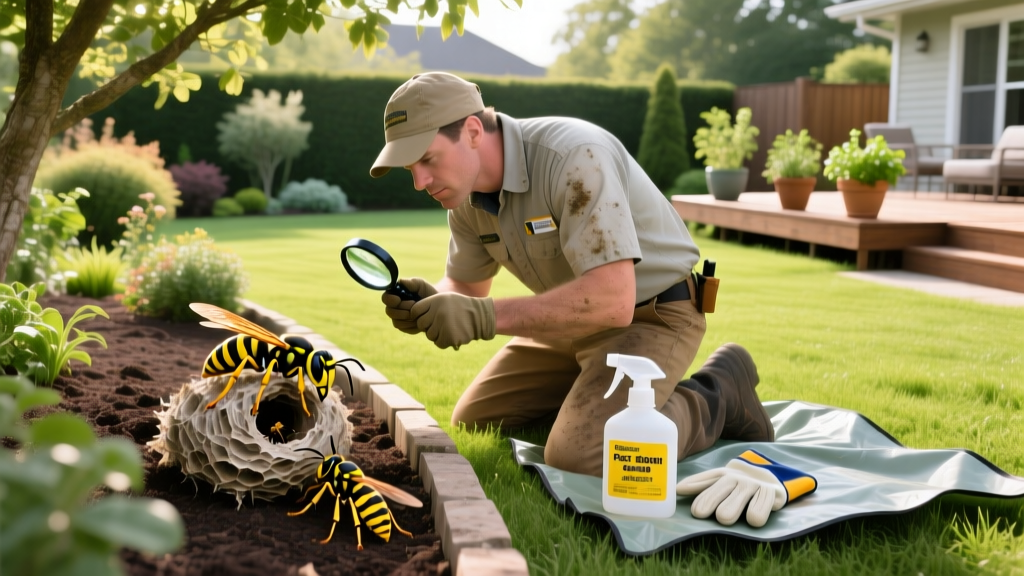
How to Repel Yellow Jackets: Diagnosis & Rescue Fixes
Symptom Diagnosis: Are You Dealing with Yellow Jackets?
Before deploying repellents, accurate identification is critical. Yellow jackets (Vespula and Dolichovespula species) are frequently misidentified as honeybees or paper wasps, leading to ineffective treatment strategies. Unlike the fuzzy, docile honeybee, yellow jackets are hairless, feature stark black and bright yellow banding, and possess a distinct V-shaped stinger that allows them to sting repeatedly without dying.
⚠ Warning: The Wall Void Trap
If you see yellow jackets entering a small gap in your home's siding or soffit, do not seal the hole. According to Penn State Extension, sealing an active entry point traps the colony inside. They will follow the light and chew through the interior drywall, resulting in a massive indoor infestation. Always treat the void with insecticidal dust first, wait 72 hours for activity to cease, and then seal.
If you see yellow jackets entering a small gap in your home's siding or soffit, do not seal the hole. According to Penn State Extension, sealing an active entry point traps the colony inside. They will follow the light and chew through the interior drywall, resulting in a massive indoor infestation. Always treat the void with insecticidal dust first, wait 72 hours for activity to cease, and then seal.
Nest Location Profiling
Yellow jackets build papery nests, but their placement dictates your rescue strategy. Approximately 70% of human encounters involve subterranean nests. Look for a 1-inch diameter hole in the soil, often surrounded by a small mound of loose dirt, resembling a chipmunk burrow. Aerial nests are typically found under eaves, inside shed rafters, or suspended from dense shrubbery.
The Attractant Audit: Why They Invaded Your Yard
Yellow jackets forage up to 1,000 feet from their colony. To repel them effectively, you must eliminate the specific pheromone and scent trails drawing them to your patio. Their dietary needs shift drastically as the season progresses, which explains why a yard that was pest-free in June becomes overrun by August.
| Season | Colony Phase | Primary Craving | Common Yard Attractants |
|---|---|---|---|
| Spring / Early Summer | Brood Rearing (Growth) | Protein & Fats | Pet food, grill grease, compost meat scraps, dead insects |
| Late Summer / Fall | Colony Peak (1,000-5,000 workers) | Sugars & Carbohydrates | Open soda cans, fallen fruit, nectar, trash cans, aphid honeydew |
According to the University of California Agriculture and Natural Resources (UC ANR), late-season colonies stop producing larvae. Without larvae to secrete a sugary nectar that feeds the adult workers, the adults become hyper-aggressive foragers, aggressively seeking out human food and beverages.
Rescue Fixes: How to Repel Yellow Jackets Immediately
When yellow jackets crash your outdoor gathering, you need immediate, non-lethal rescue fixes to clear the airspace without triggering a mass stinging event.
1. The Territorial Bluff: Decoy Nests
Yellow jackets are fiercely territorial and will avoid building nests or foraging heavily within 200 feet of a rival colony. You can exploit this biology using commercial decoys. The Rescue Yellowjacket Repeller (approx. $12-$15) mimics the shape and size of a mature bald-faced hornet nest. Deployment Rule: Hang the decoy at least 6 feet high and 20 feet away from your primary seating area. If hung too close to the table, foraging scouts may investigate the decoy and end up on your patio anyway.
2. Olfactory Disruption: Essential Oil Barrier Sprays
Yellow jackets rely heavily on olfactory receptors to locate food and communicate danger. Strong, volatile essential oils overwhelm these receptors. Create a high-potency repellent spray using the following ratio:
- 16 oz of water
- 2 tablespoons of liquid dish soap (acts as a surfactant to bind oils to water)
- 15 drops of Peppermint essential oil (Mentha piperita)
- 10 drops of Clove essential oil
- 10 drops of Lemongrass essential oil
Application: Spray this mixture around the perimeter of your patio furniture, umbrella poles, and the rims of outdoor trash cans. Reapply every 48 hours or immediately after rainfall. The soap component also ensures that if a wasp is directly sprayed, the surfactant breaks down their exoskeleton's waxy cuticle, killing them on contact.
3. Aerodynamic Disruption: High-CFM Box Fans
Yellow jackets are relatively weak fliers compared to larger hornets. They struggle to navigate in sustained winds exceeding 10 to 12 mph. Positioning a 20-inch box fan (rated for at least 1,500 CFM) on high speed, pointed slightly upward toward the seating area, creates a localized wind tunnel that physically prevents them from landing on food and disrupts their flight path.
When Repellents Fail: Safe Eradication Protocols
If the colony is rooted on your property and repellents are insufficient, targeted eradication is required. The National Pest Management Association (NPMA) strongly advises against using blunt-force methods like fire or water, which guarantee mass retaliation.
💡 Pro-Tip: The Red Light Technique
Yellow jackets cannot see red light well. When treating a nest at night, wrap your flashlight lens in red cellophane or use a headlamp with a dedicated red LED mode. Shining a standard white beam directly on the nest will trigger an alarm response, causing hundreds of guards to fly directly at the light source (and you).
Yellow jackets cannot see red light well. When treating a nest at night, wrap your flashlight lens in red cellophane or use a headlamp with a dedicated red LED mode. Shining a standard white beam directly on the nest will trigger an alarm response, causing hundreds of guards to fly directly at the light source (and you).
Ground Nest Treatment: Insecticidal Dusts
Liquid sprays often fail to penetrate deep into subterranean tunnels. Instead, use a quick-acting dust like Tempo 1% Dust (approx. $25 for a 1 lb shaker). Protocol: At dusk, when temperatures drop below 65°F and all foragers have returned, gently puff the dust directly into the entrance hole using a hand duster. Do not plug the hole. The workers will track the dust deep into the brood chambers on their legs, eliminating the queen and the entire colony within 24 to 48 hours.
Aerial Nest Treatment: Rapid-Knockdown Foams
For nests hanging under eaves, use a jet-stream foaming aerosol like Zevo Wasp & Hornet Foaming Spray (approx. $8-$10). The foam expands to encapsulate the nest, trapping the insects inside and preventing them from flying out to sting. Spray from a safe distance of up to 15 feet, completely saturating the nest opening. Leave the foam-covered nest intact for 24 hours before knocking it down with a long pole.
Prevention Matrix: Long-Term Yard Sanitation
Repelling yellow jackets requires ongoing environmental management. Implement these structural and botanical defenses to make your yard inhospitable to future queens scouting for nesting sites in the spring.
- Trash Can Protocols: Wash the interior and exterior of outdoor bins weekly with a bleach solution (1 part bleach to 10 parts water) to destroy residual food pheromones. Ensure lids have tight-fitting, locking seals.
- Botanical Repellents: Plant Cymbopogon (citronella grass), Mentha spicata (spearmint), and Artemisia (wormwood) around patio borders. These plants emit volatile organic compounds (VOCs) that mask human food scents.
- Protein Baiting (Spring Only): In April and May, hang commercial traps baited with heptyl butyrate or meat-based lures 20 feet away from the house. Catching the overwintered queens before they establish a colony is 100x more effective than trapping workers in the fall.
- Aphid Control: Yellow jackets harvest the sugary 'honeydew' excreted by aphids on ornamental shrubs. Treat aphid infestations with insecticidal soap or neem oil to cut off this hidden sugar supply.

