
Pest Control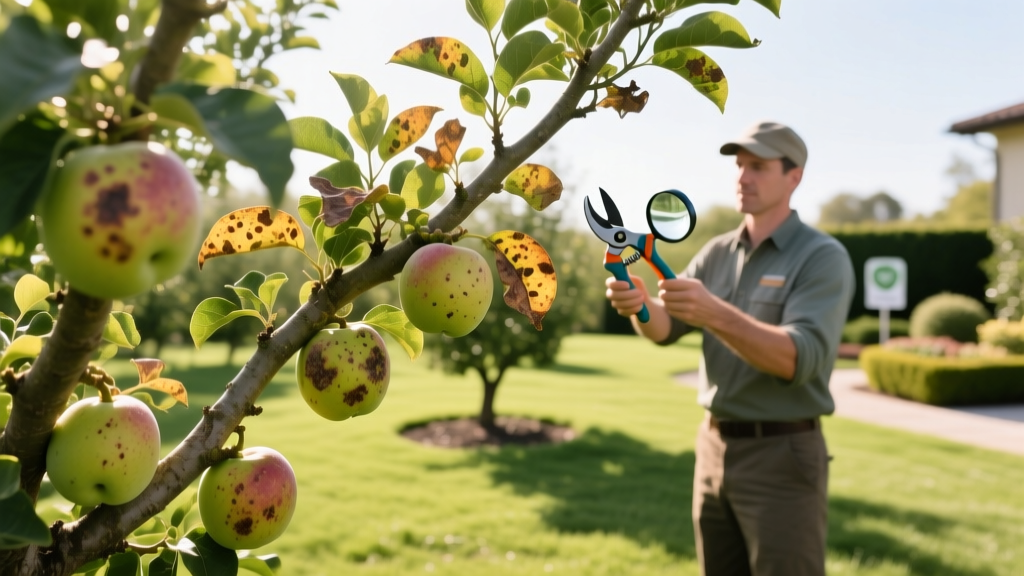
Disease Resistant Fruit Trees Showing Symptoms? Rescue Fixes
The Resistance Myth: Why 'Immune' is a Marketing Term
Homeowners routinely invest $40 to $85 per bare-root or potted 'disease resistant' fruit tree—such as Liberty apples or Moonglow pears—expecting a completely spray-free, zero-maintenance orchard. When black spots, oozing cankers, or premature defoliation appear, the immediate assumption is that the nursery mislabeled the stock. In reality, plant pathology is an evolutionary arms race. 'Resistant' does not mean 'immune.' It means the plant possesses specific genetic barriers that slow or limit pathogen replication under normal conditions. When environmental stress, pathogen mutation, or improper horticultural practices overwhelm those barriers, your resistant tree will show symptoms just like a susceptible one.
Diagnosing why a genetically resistant tree is failing requires looking beyond the leaves. Below is a clinical breakdown of the most common resistance failures in home orchards and the exact rescue protocols required to save the tree and your harvest.
Resistance Breakdown Matrix: Triggers and Failure Modes
| Pathogen | Common Host & Resistant Variety | Genetic Barrier | Primary Failure Trigger |
|---|---|---|---|
| Apple Scab (Venturia inaequalis) | Apple ('Liberty', 'Enterprise') | Vf gene (from Malus floribunda) | Emergence of Race 5 fungal strains; prolonged leaf wetness (>9 hours) |
| Fire Blight (Erwinia amylovora) | Pear ('Harrow Sweet', 'Moonglow') | Polygenic tolerance / bark thickness | Excessive nitrogen fertilization; severe hail/wind damage during bloom |
| Cedar Apple Rust (Gymnosporangium) | Apple ('Redfree', 'Williams Pride') | Hyper-sensitivity response (leaf shedding) | High spore load from Eastern Red Cedar within a 2-mile radius |
| Phytophthora Crown Rot | Apple (Dwarfing rootstocks like M.9) | Rootstock vigor and bark chemistry | Poor drainage; planting graft union below soil line |
Symptom Diagnosis & Targeted Rescue Protocols
1. Apple Scab on 'Liberty' and 'Enterprise' Apples
The Symptom: Olive-green to dark black, velvety lesions on leaves and fruit, leading to severe mid-summer defoliation. The Diagnosis: The Vf gene, introgressed from the Japanese flowering apple, provides excellent resistance to most scab races. However, Michigan State University Extension notes that localized populations of Race 5 scab have evolved to bypass this specific gene. Furthermore, if your tree experiences consecutive days of high humidity and leaf wetness exceeding 9 hours during the primary infection period (pink bud to petal fall), the sheer volume of spores can overwhelm the tree's localized cellular defenses.
The Rescue Fix: You must intervene with a systemic fungicide to halt the sporulation cycle. Apply Myclobutanil (commonly sold as Immunox Multi-Purpose) at a rate of 1.4 fluid ounces per 3 gallons of water. Target the immediate post-rainfall window. For a long-term organic rescue, apply Bacillus subtilis (Serenade Garden) at 2 to 4 ounces per gallon every 7 days during wet spring cycles. Rake and destroy all fallen leaves by late November to eliminate the overwintering pseudothecia.
2. Fire Blight on 'Harrow Sweet' and 'Moonglow' Pears
The Symptom: Blossoms turn black and shrivel; shoot tips bend into a characteristic 'shepherd's crook'; amber-colored bacterial ooze appears on bark.
The Diagnosis: Pears are inherently more susceptible to Erwinia amylovora than apples. While 'Harrow Sweet' exhibits strong field tolerance, this tolerance collapses if the tree is pushed into excessive succulent growth. Homeowners often over-fertilize young fruit trees with high-nitrogen synthetic fertilizers (like 10-10-10) to force rapid growth. This creates soft, water-rich tissue that the blight bacteria easily penetrate during warm, wet spring blooms.
The Rescue Fix: Fire blight cannot be cured with fungicides; it requires surgical removal. According to Penn State Extension, you must prune at least 12 to 15 inches below the lowest visible margin of the canker into healthy, white wood. Do not prune during wet weather. Immediately after the cut, paint the pruning wound with a 70% isopropyl alcohol solution to kill surface bacteria. Halt all nitrogen fertilization for the remainder of the season and switch to a low-nitrogen, high-potassium organic fertilizer (like kelp meal) to harden the wood.
3. Cedar Apple Rust on 'Redfree' Apples
The Symptom: Bright orange-yellow spots on the upper leaf surface, with tube-like projections (aecia) on the underside, eventually causing premature leaf drop.
The Diagnosis: Rust diseases require two distinct hosts to complete their life cycle. Your resistant apple tree is the secondary host; the primary host is the Eastern Red Cedar (Juniperus virginiana). If a neighbor or a nearby woodlot has junipers infected with brown, golf-ball-sized galls, those galls will extrude orange, gelatinous 'horns' during spring rains, releasing billions of spores that can travel up to two miles on the wind. No genetic resistance in an apple tree can withstand a direct, massive spore bombardment from a nearby primary host.
The Rescue Fix: Source reduction is mandatory. Inspect all junipers within a 300-yard radius in late winter. Prune off and destroy any brown galls before the spring rains trigger the orange horns. If source reduction is impossible due to neighboring property lines, apply a protective spray of Chlorothalonil (Daconil) or Propiconazole (Banner Maxx) to the apple tree at the tight-cluster bud stage, just before the pink blooms open. A single well-timed application costs roughly $15 and provides a 21-day protective barrier.
Step-by-Step Tool Sterilization Protocol
When performing rescue pruning on symptomatic trees, your tools become the primary vector for spreading the disease to healthy tissue. The common advice of 'dipping tools in bleach' is outdated and highly corrosive to high-carbon steel bypass loppers.
WARNING: The Bleach Myth
Never use a 10% bleach solution on pruning saws or loppers. Sodium hypochlorite causes rapid micro-pitting in steel blades, creating microscopic grooves where bacteria like Erwinia amylovora hide and survive, rendering your sterilization useless. Furthermore, bleach degrades the pivot bolts of your tools.
Never use a 10% bleach solution on pruning saws or loppers. Sodium hypochlorite causes rapid micro-pitting in steel blades, creating microscopic grooves where bacteria like Erwinia amylovora hide and survive, rendering your sterilization useless. Furthermore, bleach degrades the pivot bolts of your tools.
- Initial Wipe: Use a stiff wire brush and a rag soaked in mineral spirits to remove all sap, wood dust, and bacterial ooze from the blade and pivot point.
- Chemical Bath: Submerge or heavily spray the cutting edges with 70% Isopropyl Alcohol (rubbing alcohol) or a commercial quaternary ammonium disinfectant (like Lysol Concentrate diluted at 1:64).
- Dwell Time: Allow the chemical to remain wet on the blade for a minimum of 60 seconds. Wiping it off immediately reduces efficacy by up to 80%.
- Re-Lubrication: 70% alcohol strips natural oils. After sterilization, apply 2 drops of 3-in-One tool oil or camellia oil to the pivot bolt and wipe the blade to prevent flash rusting.
The Rootstock Factor: Hidden Susceptibility
When diagnosing a failing 'disease resistant' tree, homeowners almost exclusively focus on the scion (the fruiting variety grafted on top). However, the rootstock dictates the tree's overall vigor, water uptake, and systemic stress tolerance. Many modern resistant apples are grafted onto M.9 or Budagovsky 9 (B.9) dwarfing rootstocks to keep them under 10 feet tall for backyard spaces. While these rootstocks induce early fruiting, they possess shallow, brittle root systems that are highly susceptible to Phytophthora crown rot in heavy clay soils. If the rootstock is compromised by poor drainage, the tree enters a state of chronic hydraulic stress. A stressed tree cannot synthesize the secondary metabolites (like phytoalexins) required to power the scion's genetic disease resistance. The Fix: Ensure the graft union is strictly 3 to 4 inches above the soil line. If planting in heavy clay, amend the planting hole with 30% expanded shale or pumice to increase macroporosity, and apply a 2-inch layer of arborist wood chips (keeping them 6 inches away from the trunk) to regulate soil moisture fluctuations.
Rescue Intervention Cost & Efficacy Comparison
| Intervention Type | Active Ingredient / Method | Estimated Cost (Per Season) | Best Use Case |
|---|---|---|---|
| Systemic Fungicide | Myclobutanil (Immunox) | $18 - $25 | Acute Apple Scab / Cedar Rust breakout |
| Biological Control | Bacillus subtilis (Serenade) | $22 - $30 | Preventative organic maintenance |
| Bactericide | Copper Octanoate (Soap Shield) | $15 - $20 | Dormant season Fire Blight suppression |
| Surgical Pruning | Labor + 70% Alcohol + Tool Oil | $10 - $15 (Materials) | Active Fire Blight / Canker removal |
Managing a home orchard requires accepting that genetic resistance is a shield, not an impenetrable vault. By accurately diagnosing the environmental or pathogenic trigger that bypassed your tree's defenses, and deploying targeted, chemically sound rescue fixes, you can halt the infection cycle and restore the tree's natural vigor for the following season.

