
Pest Control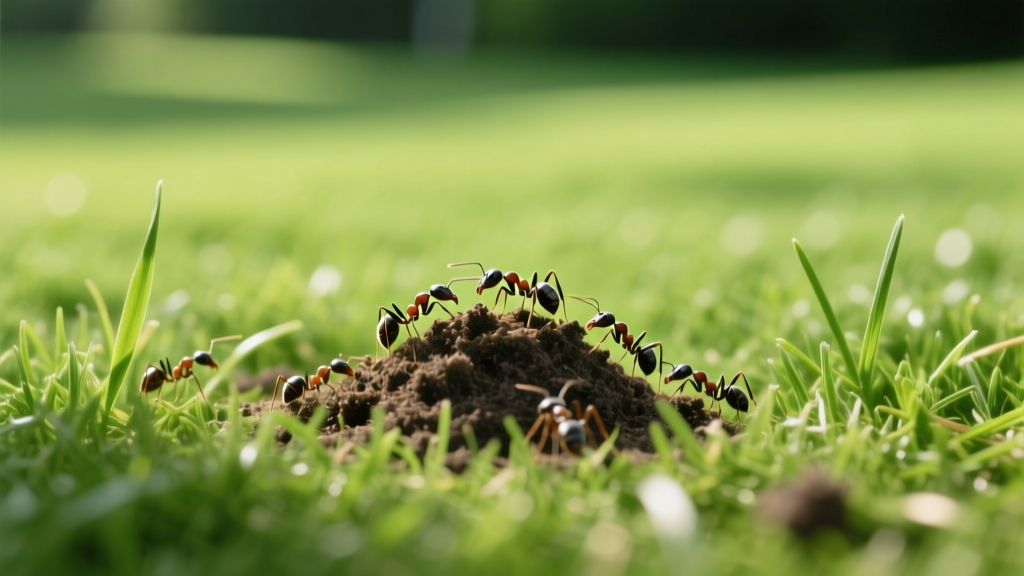
How to Rid Ants From Lawn: Proven Yard Defense Strategies
While a few native ants can beneficially aerate soil and prey on turf-destroying grubs, invasive species like the Red Imported Fire Ant (Solenopsis invicta) are a different story. These aggressive pests build massive, root-choking mounds that smother grass, damage mower blades, and deliver painful, venomous stings. Learning exactly how to rid ants from lawn environments requires moving beyond temporary surface sprays and adopting a systemic, colony-level eradication strategy.
The Hidden Cost of Ant Mounds in Your Turf
A single mature fire ant colony can house up to 500,000 workers and extend its subterranean tunnels up to 18 feet away from the visible mound. When you treat only the surface mound, the queen simply relocates deeper into the soil or triggers 'colony budding'—a survival mechanism where the colony splits into multiple satellite nests, effectively multiplying your infestation. According to the Texas A&M AgriLife Extension, the two-step method remains the most scientifically validated approach to achieving long-term lawn defense against mound-building ants.
⚠️ Yard Defense Warning: Never mow over or physically disturb an active ant mound before applying bait. Disturbing the soil structure alerts the colony to danger, prompting the queen to retreat to satellite nodes and rendering your bait application useless.
Identifying the Invaders: Fire vs. Pavement vs. Carpenter
Before purchasing treatments, confirm which species is colonizing your yard. Misidentification leads to wasted chemicals and persistent infestations.
| Species | Visual Identification | Nest Style & Turf Impact | Threat Level |
|---|---|---|---|
| Fire Ant | Reddish-brown, 1/8 to 1/4 inch, aggressive swarming when disturbed. | Large dome mounds (up to 18" wide) in open sun. Smothers grass roots. | Critical |
| Pavement Ant | Dark brown/black, 1/10 inch, parallel lines on head and thorax. | Small craters near hardscapes and driveways. Minor turf disruption. | Moderate |
| Carpenter Ant | Large (up to 1/2 inch), black or reddish-black, smooth thorax. | Nests in rotting wood/stumps, not soil. Rarely damages living grass. | Low (Turf) |
The Two-Step Method: The Gold Standard for Lawn Eradication
To successfully rid your lawn of ants, you must combine a slow-acting broadcast bait with a targeted contact treatment. This dual approach ensures the queen is eliminated while neutralizing immediate surface threats.
Step 1: Broadcast Baiting (The Colony Killer)
Baits consist of an attractive matrix (usually soybean oil infused into corncob granules) laced with a slow-acting active ingredient. Worker ants carry the bait deep into the mound and feed it to the larvae and queen. As of 2026, the most effective professional-grade bait available to homeowners is Advion Fire Ant Bait (Active ingredient: Indoxacarb 0.04%). Indoxacarb is a pro-insecticide that requires metabolic activation by the ant's internal enzymes, making it highly lethal to the colony but exceptionally safe for mammals and birds.
- Application Rate: 1.5 lbs per acre (approximately 1 ounce per 1,800 square feet).
- Cost: ~$22 for a 1.5 lb jar, treating roughly 4 acres.
- Timing: Apply in the late afternoon when soil temperatures are between 70°F and 85°F and ants are actively foraging. Ensure no rain is forecast for 48 hours.
Step 2: Individual Mound Drenching (The Knockout Punch)
Wait 7 to 10 days after broadcasting the bait. This allows the slow-acting poison to circulate through the colony. After this period, inspect the lawn for any remaining active mounds. Treat these survivors with a liquid drench using a synthetic pyrethroid like Bifenthrin (e.g., Talstar P Professional Insecticide).
- Mixing Ratio: 1 fluid ounce of Talstar P per gallon of water.
- Drench Volume: Apply 1 to 2 gallons of the mixed solution directly onto and around the base of each active mound using a watering can.
- Cost: ~$55 for a 3/4 gallon jug of Talstar P, which yields hundreds of individual mound treatments.
Organic and Pet-Safe Alternatives for Sensitive Yards
For homeowners managing yards with free-roaming pets, children, or organic vegetable gardens adjacent to the turf, synthetic pyrethroids may be undesirable. The University of Florida IFAS Extension recommends utilizing Spinosad-based products for effective, lower-toxicity ant management.
"Spinosad is derived from the soil bacterium Saccharopolyspora spinosa. It disrupts the insect's nervous system but breaks down rapidly in sunlight and soil, making it an excellent choice for sensitive ecological zones when applied as a localized mound drench."
Top Organic Pick: Monterey Lawn & Garden Spinosad Concentrate. Mix 4 tablespoons per gallon of water and drench active mounds. Expect to pay around $25 for a 32 oz bottle. Note that Spinosad is highly toxic to bees when wet, so apply strictly at dusk when pollinators are inactive.
Critical Application Mistakes That Guarantee Failure
Even with premium products, poor execution will result in a resurgent ant population. Avoid these common yard defense errors:
- Watering Immediately After Baiting: The soybean oil matrix that makes bait attractive to ants is water-soluble. If you irrigate your lawn or if it rains within 24 hours of application, the oil washes off the granule, leaving behind a tasteless, ignored pesticide.
- Using Contact Sprays as a First Step: Spraying a visible mound with Raid or a quick-kill bifenthrin spray before baiting kills only the outer foraging workers. The queen detects the chemical threat and immediately initiates colony budding, creating 3 to 5 new mounds in your yard within a week.
- The Boiling Water Myth: Pouring boiling water on a mound will kill the ants it touches, but it rarely penetrates deep enough to reach the queen's chamber (which can be 3 feet underground). Furthermore, boiling water will instantly sterilize the soil and cook your turfgrass roots, leaving a dead, muddy crater in your lawn.
Long-Term Yard Defense: Making Your Lawn Uninviting
Eradication is only half the battle. To prevent re-infestation, you must alter the microclimate of your turf. Ants thrive in environments with thick thatch and inconsistent moisture. Implement a rigorous core aeration schedule every fall to break up soil compaction and reduce the thatch layer to less than 1/2 inch. According to EPA guidelines on integrated pest management, maintaining a dense, vigorously growing turf through proper nitrogen fertilization and deep, infrequent watering creates a root system that naturally outcompetes subterranean pests for space and resources. By combining the two-step chemical method with proactive cultural lawn care, you can maintain a pristine, ant-free landscape year-round.

