
Pest Control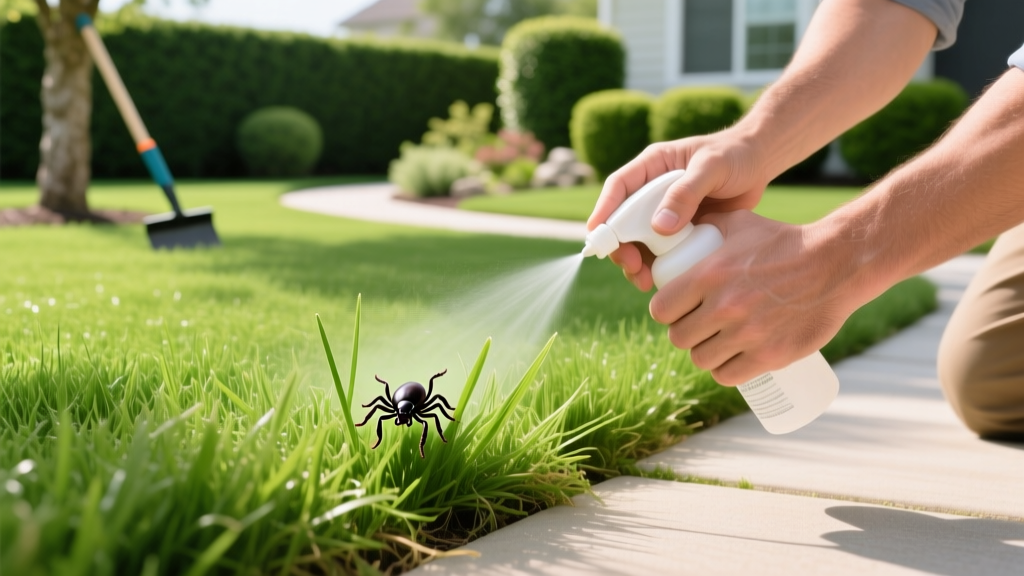
How to Rid Your Lawn of Ticks: Step-by-Step Maintenance Guide
The Microclimate Reality: Why Ticks Invade Your Turf
Ticks do not drop from trees or actively hunt across open grass. Species like the black-legged tick (Ixodes scapularis) and the lone star tick (Amblyomma americanum) require ambient humidity levels above 80% to survive off-host. They 'quest' on the tips of low-lying vegetation, leaf litter, and thatch, waiting for a host to brush past. If you want to know how to rid your lawn of ticks, the solution is not merely spraying chemicals; it is fundamentally altering the yard's microclimate to make it inhospitable to tick survival. According to the Cornell University Integrated Pest Management program, combining physical landscaping barriers with targeted host-interruption techniques reduces tick populations by up to 70% before a single pesticide is applied.
Pro-Tip: The Tick Drag Test
Before beginning maintenance, quantify your infestation. Attach a 1-yard square of white corduroy or flannel to a wooden dowel. Walk slowly through transitional zones (where lawn meets woods or tall brush), dragging the cloth behind you. Inspect the cloth every 10 yards. This establishes a baseline to measure the efficacy of your maintenance protocol.
Phase 1: Physical Habitat Disruption
The first step in tick eradication is removing the humid, shaded refuges they rely on to avoid desiccation. This requires strict adherence to specific turf and landscape maintenance metrics.
1. Precision Mowing and Thatch Control
Ticks thrive in turf that exceeds 3.5 inches in height. Maintain your lawn at exactly 2.5 to 3 inches. This height is short enough to allow UV radiation to penetrate to the soil surface—drying out the thatch layer—while remaining long enough to protect grass roots from drought stress. Furthermore, you must dethatch your lawn if the thatch layer exceeds 0.5 inches. Thatch acts as a moisture sponge, creating the exact humid microclimate ticks require. Rent a power dethatcher (typically $80-$100 per day) in early spring to rip out this layer.
2. Canopy Pruning for UV Penetration
Ticks avoid direct sunlight. Prune lower tree branches up to a height of 6 feet and thin out dense shrubbery along your property's perimeter. This allows morning sun to burn off dew quickly, dropping the localized humidity below the 80% threshold required for tick survival.
3. Total Leaf Litter Removal
Do not mulch leaves into the lawn if ticks are a known issue, and never allow leaf litter to accumulate in garden beds adjacent to the turf. Use a lawn sweeper or commercial-grade blower to remove all organic debris from transitional zones weekly during peak tick seasons (April-June and September-November).
Phase 2: Perimeter Defense and Hardscaping
Ticks rarely cross hot, dry, or abrasive surfaces. You can effectively quarantine the high-risk zones of your property by installing physical barriers.
- The 3-Foot Rule: Create a 3-foot-wide barrier between your lawn and any wooded areas, stone walls, or dense brush.
- Material Selection: Use gravel, river rock, or cedar wood chips. While cedar contains natural repellent oils (thujone), its primary benefit is its dryness and coarse texture, which physically impedes tick movement and accelerates desiccation.
- Maintenance: Rake these barriers monthly to prevent soil and leaf accumulation, which can bridge the gap and create a new micro-habitat.
Phase 3: Chemical and Organic Application Matrix
When physical maintenance is not enough to break the lifecycle, targeted acaricides (tick-specific pesticides) are required. The U.S. Environmental Protection Agency (EPA) advises applying these treatments specifically to the perimeter and shaded transitional zones, rather than broadcasting them across the entire sunlit lawn where ticks do not quest.
| Treatment Type | Active Ingredient / Brand | Cost & Coverage | Residual & Pet Safety |
|---|---|---|---|
| Synthetic Pyrethroid | Bifenthrin 7.9% (Talstar P) | ~$45 / 3/4 gal (Covers ~1 acre) | 30-45 days. Safe for pets once completely dry (approx. 2 hours). |
| Synthetic Pyrethroid | Permethrin (Spectracide Tick Stop) | ~$15 / 20oz concentrate | 14-21 days. Highly toxic to cats until fully dry. |
| Botanical Oil | Cedarwood Oil 34.5% (Wondercide) | ~$35 / 32oz hose-end (Covers 5,000 sq ft) | 7-14 days. Safe for pets and children immediately after application. |
Application Protocol for Synthetics (Bifenthrin)
Mix 1 ounce of Talstar P per gallon of water. Use a pump sprayer with a flat-fan nozzle to treat the 3-foot perimeter barrier, the base of all trees, and the underside of low-hanging shrub leaves. Do not water the lawn for 24 hours post-application to allow the chemical to bind to the foliage and thatch.
Application Protocol for Organics (Cedar Oil)
Botanical oils work by dissolving the waxy cuticle of the tick's exoskeleton, causing rapid dehydration. Because they lack long-term residual binding, you must apply cedar oil treatments every 10 to 14 days during peak nymph season (May and June). Apply during the early evening to prevent rapid UV degradation of the oils.
Phase 4: Host Interruption (Targeting the Reservoir)
Adult ticks feed on large mammals like deer, but the white-footed mouse is the primary reservoir for Borrelia burgdorferi, the bacterium that causes Lyme disease. Nymphal ticks feed on these mice, acquiring the pathogen before dropping into your lawn's leaf litter.
'Eliminating the mouse population is ecologically difficult and often counterproductive. Instead, we treat the mice themselves. By providing permethrin-treated nesting material, we turn the primary disease reservoir into a mobile tick-eradication unit.' — Tick Management Field Guidelines
Deploying Tick Tubes
Products like Damminix Tick Tubes consist of cardboard cylinders filled with permethrin-treated cotton. Mice actively seek out this cotton to line their nests. When the mice groom themselves, the permethrin kills any attached ticks. Deployment Strategy: Place one tube every 10 feet along the perimeter of your property, specifically near stone walls, woodpiles, and dense brush where mice nest. A standard 24-tube pack costs approximately $65 and treats a 1-acre perimeter. Deploy them in late April (before nymphs emerge) and again in late July (to target the larval stage).
Seasonal Maintenance Calendar
To maintain a tick-free lawn, align your maintenance procedures with the tick lifecycle:
- Early Spring (March-April): Dethatch the lawn, prune lower tree canopies, lay down the 3-foot cedar chip barrier, and deploy the first round of tick tubes.
- Peak Nymph Season (May-June): Nymphs are the size of poppy seeds and responsible for the majority of human infections. Mow strictly to 2.5 inches. Apply Bifenthrin or Cedar oil to perimeter zones every 14 days.
- Late Summer (July-August): Larval stage emerges. Deploy the second round of tick tubes. Keep leaf litter completely cleared from garden beds.
- Fall (September-November): Adult ticks quest for larger hosts. Perform a final perimeter spray with a synthetic pyrethroid before the first frost to reduce the overwintering population.
Ridding your lawn of ticks is not a one-time event; it is an ongoing protocol of moisture management, physical barriers, and targeted biological interruption. By systematically removing the humid microclimates ticks require and treating the rodent hosts that carry them, you can reclaim your outdoor spaces safely and effectively.

