
Pest Control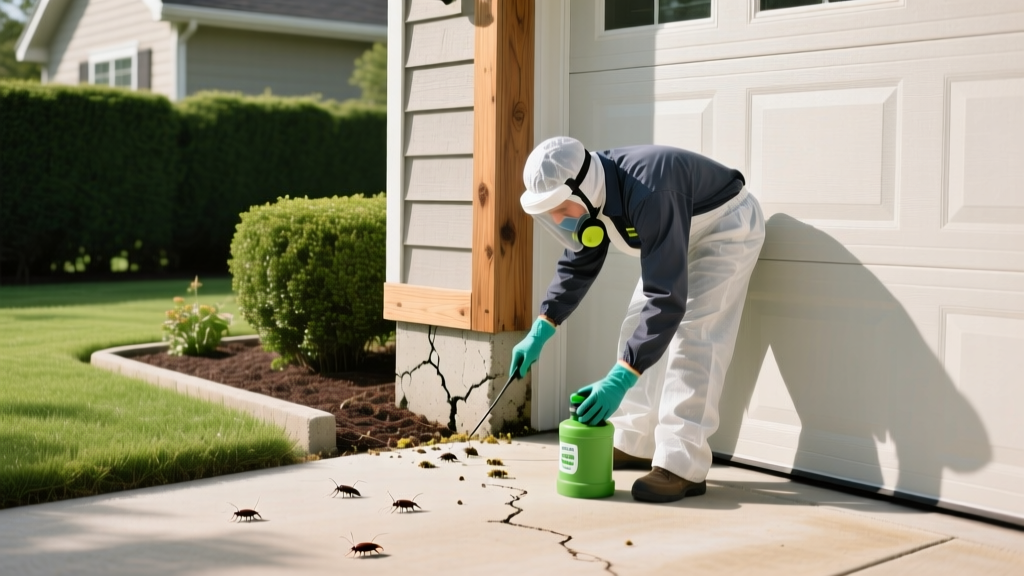
Eradicating Roaches in Garage: Yard Perimeter Defense Guide
The Garage-Yard Connection: Why They Invade
Finding roaches in garage spaces rarely indicates an interior breeding infestation. Instead, it signals a perimeter failure. Garages act as thermal buffers between the outdoor environment and your living space, making them prime staging grounds for peridomestic cockroach species. These insects thrive in yard mulch, leaf litter, and dense vegetation, migrating into the garage when outdoor temperatures drop, when yard populations exceed carrying capacity, or when seeking moisture during drought conditions.
Effective eradication requires shifting focus from reactive indoor spraying to proactive yard defense. By managing the exterior habitat and sealing the garage envelope, you切断 the migration corridor. According to the National Pest Management Association, peridomestic species like the Smokybrown and American cockroach are the primary culprits in outbuildings, requiring vastly different treatment protocols than the indoor-dwelling German cockroach.
Identifying the Invaders: Species Matrix
Before deploying baits, you must identify the species. German cockroaches (indoor breeders) require interior gel baits, while Smokybrown and American cockroaches (yard migrants) require exterior perimeter defense and granular baits. Misidentification leads to wasted chemical applications and continued infestation.
| Species | Size & Color | Primary Habitat | Garage Entry Trigger |
|---|---|---|---|
| Smokybrown | 1.5 inches, uniform mahogany | Tree canopies, mulch beds, ivy | Temperature drops, seeking overwintering shelter |
| American | 1.5-2 inches, reddish-brown with yellow figure-8 | Sewers, drains, damp soil | Heavy rainfall flooding yard burrows |
| Asian | 1 inch, dark brown to black | Leaf litter, compost piles | Attracted to garage security lights at night |
| German | 0.5 inches, tan with twin dorsal stripes | Indoor appliances, cardboard | Brought in via grocery bags or infested appliances |
Phase 1: Yard Perimeter Defense
The first line of defense against roaches in garage environments begins 20 feet away from the structure. Peridomestic roaches require high humidity and organic debris to survive. Disrupting this microclimate forces them to relocate or die off before they reach your foundation.
Moisture and Mulch Management
Wood mulch retains moisture and provides ideal harborage for Smokybrown cockroaches. Replace organic wood mulch within a 3-foot radius of your garage walls with inorganic alternatives like pea gravel, crushed stone, or rubber mulch. If you must use wood mulch, limit the depth to 2 inches and maintain a 12-inch bare-soil gap between the mulch edge and the garage foundation. Ensure downspouts discharge at least 5 feet away from the garage slab to prevent soil saturation near the entry points.
Vegetation Clearance and Lighting Adjustments
Trim tree branches and shrubs to maintain a minimum 3-foot clearance from the garage roofline and walls. Overhanging branches act as aerial bridges for Smokybrown roaches, allowing them to bypass ground-level barriers. Furthermore, standard mercury vapor or bright white LED security lights attract Asian cockroaches from neighboring yards. Swap exterior garage fixtures to yellow sodium vapor bulbs or LEDs with a color temperature below 2700K, which are significantly less attractive to phototactic insects.
Phase 2: Sealing the Garage Envelope
Once the yard perimeter is managed, you must physically block entry points. A standard garage door bottom seal degrades within 3 to 5 years, leaving gaps that easily admit adult roaches and rodents.
- Garage Door Bottom Seal: Inspect the rubber T-bottom or bulb seal. If you can slide a piece of paper under the door when closed, replace it. Use a 1/2-inch or 3/4-inch kerf-in rubber bulb seal, which conforms to uneven concrete slabs better than flat vinyl sweeps. Cost: $25-$45 for a 16-foot roll.
- Service Door Sweeps: Install a heavy-duty aluminum and rubber door sweep on the pedestrian service door, ensuring it makes flush contact with the threshold. Add a 1/2-inch kerf-in weatherstrip around the door jamb.
- Utility Penetrations: Seal gaps around HVAC lines, water spigots, and electrical conduits using Loctite Tite Foam Big Gaps (polyurethane expanding foam). For gaps larger than 2 inches, stuff copper mesh into the void before applying foam to prevent rodents from chewing through the sealant.
⚠️ Warning: Garage Floor Drains
Never spray liquid residual insecticides directly into garage floor drains or utility sinks. These drains often tie into municipal storm sewers or local waterways. Applying chemicals here violates EPA regulations and harms local ecosystems. Instead, use drain-safe enzyme cleaners to remove the organic biofilm that attracts drain flies and American cockroaches.
Phase 3: Targeted Interior Eradication Strategy
If roaches have already established harborage inside the garage, avoid using over-the-counter aerosol sprays (like Raid or Ortho Home Defense). These repellent pyrethroids cause roaches to scatter deeper into wall voids and storage boxes. Instead, deploy a combination of non-repellent transfer toxicants and Insect Growth Regulators (IGRs).
The Professional-Grade Protocol
The EPA recommends targeted baiting over broad-spectrum spraying for sustainable cockroach control. By placing gel baits and IGR discs in specific harborage zones, you exploit the roaches' coprophagic (feces-eating) and emetic (vomit-eating) behaviors, creating a secondary kill effect that wipes out hidden nymphs.
| Product Type | Specific Product & Active Ingredient | Application Strategy | Estimated Cost |
|---|---|---|---|
| Gel Bait | Advion Cockroach Gel (Indoxacarb 0.6%) | Apply 3-5 pea-sized dots in cabinet hinges, behind shelving brackets, and along the garage door track. | $28 (4 tubes) |
| IGR (Growth Regulator) | Gentrol Point Source (Hydroprene 0.36%) | Crack the ampule and place one disc per 75 sq ft. Prevents nymphs from molting into reproducing adults. | $32 (12 discs) |
| Non-Repellent Spray | Alpine WSG (Dinotefuran 40%) | Dissolve 10g per gallon of water. Spray baseboards and lower walls. Roaches cannot detect it and will track it back to nests. | $45 (200g box) |
| Granular Bait | Niban FG (Orthoboric Acid 5%) | Broadcast lightly in dark, dry corners and behind heavy appliances (freezers, water heaters). | $22 (4 lb shaker) |
Storage Habits: Eliminating Interior Harborage
Chemical treatments will fail if the garage provides unlimited shelter and food. Cardboard boxes are a primary attractant; the corrugated layers provide ideal nesting spaces, and the starch-based glues serve as a food source. According to Texas A&M AgriLife Extension, removing cardboard is one of the most effective non-chemical sanitation steps for pest control.
- Transition to Plastic: Move all stored items into heavy-duty, latching polypropylene totes. Avoid using flimsy snap-lid bins, as roaches can easily slip through the lid gaps.
- Elevate Storage: Install wire shelving units. Keep all storage bins, pet food bags, and bird seed at least 18 inches off the concrete floor and 6 inches away from the walls. This removes the dark, undisturbed perimeter zones where roaches prefer to hide and allows for easy inspection and vacuuming.
- Pet Food Management: Never leave bulk bags of dog or cat food in the garage overnight. If you must store pet food in the garage, place the entire paper bag inside a sealed metal galvanized can or a hard plastic bin with a gasket seal.
Ongoing Maintenance Matrix
Long-term defense against roaches in garage spaces requires a seasonal maintenance schedule. Set calendar reminders for the following tasks to prevent population rebounds:
- Monthly: Inspect Advion gel bait placements. If the bait is consumed or has dried into a hard crust, clean the area with a damp cloth and reapply fresh dots. Check IGR discs; they remain active for 90 days.
- Quarterly: Sweep the garage perimeter and apply a fresh band of Niban FG granular bait in the corners and behind the water heater.
- Bi-Annually (Spring & Fall): Inspect and replace degraded garage door weatherstripping. Clear yard mulch and leaf litter away from the foundation walls. Reapply Alpine WSG to the exterior foundation perimeter (3 feet up the wall, 3 feet out on the soil) to intercept migrating insects before they reach the garage.
By integrating yard perimeter management, structural exclusion, and targeted non-repellent chemistry, you create a hostile environment for peridomestic roaches, effectively stopping the migration from the landscape into your garage.

