
Pest Control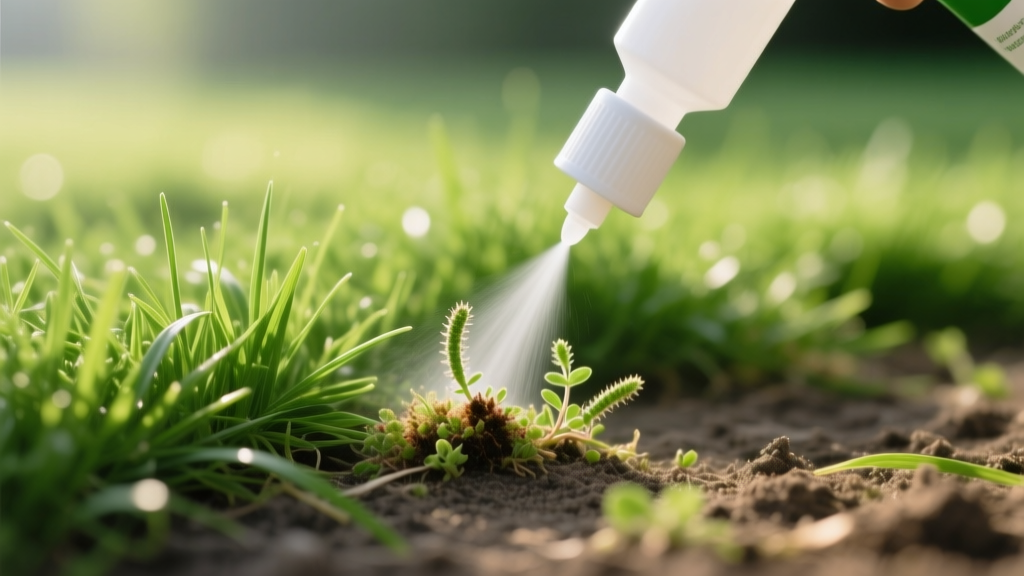
Best Weed Killer for Centipede Grass: Safe Spot Treatments
Centipedegrass (Eremochloa ophiuroides) is prized for its low fertility requirements, slow growth rate, and excellent heat tolerance. However, its unique physiology and shallow root system make it exceptionally sensitive to many common post-emergent herbicides. Applying a standard 2,4-D or dicamba-based 'weed and feed' product to a centipedegrass lawn will cause severe chlorosis, root stunting, and often complete turf death. According to Clemson University Home & Garden Information Center, centipedegrass requires highly selective chemical interventions to manage weed pressure without destroying the turf canopy.
This guide details the exact active ingredients, mixing ratios, and spot-treatment protocols required to safely eliminate weeds in centipedegrass. We focus exclusively on spot-treatment methodologies, which minimize chemical load, reduce the risk of phytotoxicity, and lower overall lawn care costs.
The Centipede Vulnerability Profile
Centipedegrass is highly susceptible to auxin-type synthetic herbicides. These chemicals mimic plant growth hormones, causing rapid, uncontrolled cellular division that tears the plant's vascular system apart. While cool-season grasses and bermudagrass can metabolize these chemicals, centipedegrass lacks the enzymatic pathways to break them down.
⚠️ CRITICAL WARNING: The 'Big Three' to Avoid
Never apply products containing 2,4-D, Dicamba, or MSMA to centipedegrass. Even trace amounts found in combination 'Trimec' products will cause irreversible yellowing and necrosis. Furthermore, avoid any pre-emergent herbicides containing atrazine during the spring green-up phase (March-April), as atrazine severely delays centipedegrass root development when soil temperatures are below 65°F.
Safe Active Ingredients Matrix
When selecting a weed killer for centipede grass, you must rely on specific active ingredients that the turf can safely metabolize. Below is a comparison matrix of the four safest and most effective compounds for spot-treating weeds in centipede lawns.
| Active Ingredient | Target Weeds | Trade Name Examples | Approx. Cost (2026) | Centipede Safety |
|---|---|---|---|---|
| Atrazine | Broadleaf (Clover, Dollarweed), Annual Bluegrass | Hi-Yield Atrazine, Image for Southern Lawns | $25 / 16 oz | Safe (Dormant or below 85°F) |
| Sethoxydim | Grassy Weeds (Crabgrass, Dallisgrass, Torpedograss) | Segment, Vantage, Hi-Yield Grass Killer | $80 / 13 oz | Highly Safe |
| Halosulfuron-methyl | Sedges (Yellow Nutsedge, Purple Nutsedge, Kyllinga) | SedgeHammer, Prosedge | $30 / 13.5g box | Highly Safe |
| Metsulfuron-methyl | Tough Broadleaf (Virginia Buttonweed, Dollarweed) | Manor, MSM Turf | $60 / 2 oz | Safe (Requires strict dosing) |
Spot-Treatment Protocols by Weed Species
Effective spot-treatment requires matching the active ingredient to the specific weed biology. Broadcasting these chemicals over the entire lawn is unnecessary and increases the risk of turf stress.
1. Broadleaf Weeds (Dollarweed, Clover, Virginia Buttonweed)
For standard broadleaf weeds, Atrazine is the most accessible and cost-effective option. However, atrazine is highly volatile at high temperatures. NC State Extension explicitly warns that atrazine applications on centipedegrass must occur when daytime highs are strictly below 85°F. For summer applications when temperatures exceed this threshold, switch to Metsulfuron-methyl (Manor).
- Atrazine Mixing Rate: 0.5 fluid ounces per 1 gallon of water.
- Metsulfuron Mixing Rate: 0.05 ounces (approx. 1/2 teaspoon) per 1 gallon of water. Use the provided measuring spoon; overdosing metsulfuron will cause temporary centipedegrass stunting.
2. Grassy Weeds (Crabgrass, Dallisgrass, Torpedograss)
Grassy weeds are botanically similar to centipedegrass, making them the hardest to kill selectively. Sethoxydim is a cyclohexanedione herbicide that inhibits lipid synthesis in grassy weeds but is safely metabolized by centipedegrass.
- Mixing Rate: 1.5 fluid ounces of Sethoxydim per 1 gallon of water.
- Surfactant Requirement: Sethoxydim requires a non-ionic surfactant (NIS) to penetrate the waxy cuticle of grassy weeds. Add 0.5 ounces of NIS (or 1 teaspoon of mild liquid dish soap in a pinch) to the 1-gallon tank.
- Application Note: Expect the grassy weeds to turn purple and necrotic within 7 to 14 days. A second application is usually required for mature Dallisgrass.
3. Sedges (Yellow and Purple Nutsedge)
Sedges are neither broadleaf nor grassy weeds; they belong to the Cyperaceae family. Standard broadleaf and grassy herbicides will not kill them. Halosulfuron-methyl (SedgeHammer) is the gold standard for nutsedge control in centipede lawns.
- Mixing Rate: One 0.9-gram packet per 1 to 2 gallons of water.
- Timing: Apply in early summer when the nutsedge is actively growing but has not yet produced more than 4 leaves. Once the plant develops underground nutlets, chemical control becomes significantly less effective.
Calibration and Mixing Math for 1-Gallon Spot Sprayers
A common failure mode in spot-treatment is mixing the herbicide based on 'broadcast' rates rather than 'spot' rates. Herbicide labels dictate the amount of chemical required per 1,000 square feet. When using a 1-gallon pump sprayer for spot treatments, you are not covering 1,000 square feet; you are only wetting the target weed.
💡 The Spot-Spray Mixing Rule
To calculate the correct spot-spray concentration, take the label's broadcast rate per 1,000 sq. ft. and divide it by the volume of water you normally use to cover 1,000 sq. ft. (usually 1.5 to 2 gallons). Therefore, mixing the label's 1,000 sq. ft. chemical dose into 1 gallon of water provides the correct concentration. Spray only until the weed leaves are visibly wet and dripping. Do not spray the surrounding centipedegrass soil to avoid root uptake accumulation.
Edge Cases and Phytotoxicity Failure Modes
Even with safe active ingredients, environmental variables can trigger phytotoxicity in centipedegrass. Monitor for the following failure modes:
- Temperature Inversion Drift: Spraying metsulfuron or atrazine during early morning temperature inversions can cause the chemical to settle unevenly, resulting in concentrated 'hot spots' that bleach the centipedegrass. Always spray between 10:00 AM and 4:00 PM when thermal updrafts are active.
- Soil pH Lockout: Centipedegrass thrives in acidic soil (pH 5.0 to 6.0). If your soil pH has drifted above 7.0, atrazine becomes highly active in the soil profile and can cause root pruning. Test your soil pH before applying soil-active herbicides.
- Drought Stress Overlap: Never apply any post-emergent herbicide to a centipedegrass lawn that is showing signs of drought stress (folded leaf blades, bluish-gray tint). The turf lacks the turgor pressure required to metabolize the chemical safely. Irrigate the lawn deeply 24 hours prior to application.
Frequently Asked Questions
Can I use MSMA on centipedegrass to kill crabgrass?
No. MSMA (Monosodium methanearsonate) is highly toxic to centipedegrass and St. Augustinegrass. While it is safe for bermudagrass and zoysiagrass, applying MSMA to centipedegrass will result in severe necrosis and potential turf death. Stick to Sethoxydim for grassy weed control.
How long should I wait to mow after a spot treatment?
Wait at least 48 hours before mowing. This allows the herbicide sufficient time to translocate from the leaf tissue down into the weed's root system or underground nutlets. Mowing too soon removes the treated foliage, rendering the application useless.
Is it safe to mix Atrazine and Sethoxydim in the same tank?
While tank-mixing is common in professional turf management, it is not recommended for homeowner spot-treatments on centipedegrass. Mixing multiple active ingredients increases the chemical load on the turf and elevates the risk of phytotoxicity, especially during environmental stress. Treat broadleaf and grassy weeds in separate applications spaced 10 to 14 days apart.
For comprehensive regional data on centipedegrass maintenance and weed pressure, consult the Texas A&M AgriLife Extension turfgrass databases to ensure your treatment timing aligns with local climate zones.

