
Pest Control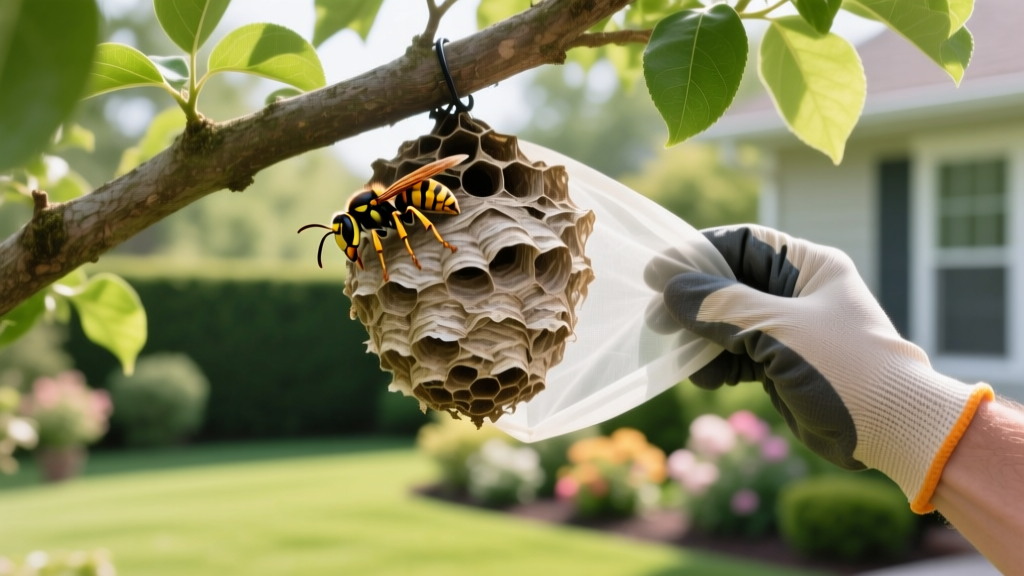
How to Get Rid of Bald Faced Hornets: Safe Nest Removal Guide
Understanding the Bald-Faced Hornet
Despite their common name, bald-faced hornets (Dolichovespula maculata) are not true hornets; they are a large species of yellowjacket. Native to North America, these insects are highly beneficial predators that hunt flies, caterpillars, and other garden pests. However, their tendency to build massive, aerial paper nests in shrubs, trees, and under the eaves of homes makes them a significant hazard when their colony feels threatened.
Unlike ground-dwelling yellowjackets, bald-faced hornets construct enclosed, teardrop-shaped nests made of chewed wood fibers. These nests can grow to the size of a basketball by late summer, housing up to 500 workers. Because the colony defends its nest aggressively, understanding how to get rid of bald faced hornets requires precise timing, the right chemical formulation, and strict safety protocols.
Identification: Are You Dealing with Bald-Faced Hornets?
Misidentifying a stinging insect leads to the wrong treatment strategy. Before attempting removal, confirm the pest matches the University of Minnesota Extension's profile of the bald-faced hornet:
- Appearance: Workers are 12–15 mm long with a black body and distinct white or yellowish-white markings on the face and the tip of the abdomen. Queens are noticeably larger, reaching up to 20 mm.
- Nest Structure: Aerial, enclosed paper envelopes with a single entry/exit hole at the bottom. The exterior is grey or brownish with visible scalloped bands of wood fiber.
- Location: Typically suspended from tree branches, dense shrubs, overhangs, or the corners of sheds. They rarely nest in the ground or inside wall voids.
Stinging Insect Comparison Matrix
| Species | Nest Location | Aggression Level | Colony Peak Size |
|---|---|---|---|
| Bald-Faced Hornet | Aerial (trees, eaves) | High (near nest) | 100 - 500 workers |
| European Hornet | Hollow trees, wall voids | Moderate | 200 - 400 workers |
| Paper Wasp | Aerial (open, umbrella-shaped) | Moderate | 15 - 30 workers |
| Yellowjacket | Subterranean, wall voids | Very High | 1,000 - 4,000 workers |
The Decision Matrix: Treat, Tolerate, or Call a Professional
Not every nest requires immediate chemical intervention. According to the Environmental Protection Agency (EPA), stinging insects should be managed based on the immediate risk they pose to human activity.
Ecological Reality Check
Bald-faced hornets are voracious consumers of nuisance flies and agricultural pests. If a nest is located high in a tree canopy, far from doorways, play areas, or high-traffic walkways, the safest and most ecologically sound decision is to tolerate it. The entire colony will die off naturally after the first hard frost in autumn, and the nest will be abandoned permanently.
When to Treat or Hire a Pro:
- DIY Treatment: The nest is accessible (under 15 feet high), you have proper protective gear, and the nest is located near a high-traffic zone (e.g., above a patio door or playground).
- Call a Professional ($250–$600): The nest is over 15 feet high (requiring ladders), located inside a soffit/wall void, or you have a known allergy to insect venom. Applying treatments while balancing on a ladder in a bee suit is a leading cause of severe injury.
Why Aerosol Sprays Fail on Large Nests
The most common mistake homeowners make when learning how to get rid of bald faced hornets is relying on hardware store aerosol wasp sprays. While these products advertise a "27-foot reach," they are fundamentally flawed for enclosed paper nests.
Bald-faced hornet nests consist of multiple interior layers of hexagonal combs suspended inside the outer paper envelope. The only way inside is a single, dime-sized hole at the very bottom. When you spray an aerosol jet at the outside of the nest, it merely wets the paper shell. Even if you hit the bottom hole, the liquid spray drips downward due to gravity, failing to reach the upper combs where the queen and the majority of the brood reside. The surviving colony will quickly repair the entrance and become hyper-aggressive.
Step-by-Step: The Insecticide Dust Method
To eradicate the colony, you must use a transferable insecticide dust. When workers enter the dusted hole, the powder clings to their legs and bodies. As they navigate the dark interior of the nest, they track the dust across every comb, eventually reaching the queen and causing total colony collapse within 48 to 72 hours.
Step 1: Procure the Correct Equipment
Do not attempt this in daytime clothing. You will need:
- Insecticide Dust: Tempo Dust (0.5% cyfluthrin) or Delta Dust (0.05% deltamethrin). Both are waterproof and highly effective against hymenopterans. Expect to pay $15–$25 for a 1 lb shaker.
- Application Tool: A hand-held bulb duster (e.g., JT Eaton 365 or Harris Bulb Duster, ~$10). This allows you to puff the dust precisely into the entrance hole.
- PPE: A full-body bee suit, thick leather gauntlet gloves, and a mesh face veil. Tuck the pants into your socks and seal the ankle gaps with duct tape.
- Lighting: A heavy-duty flashlight wrapped in red cellophane. Bald-faced hornets cannot perceive red light wavelengths, allowing you to see the nest entrance without triggering a defensive swarm response.
Step 2: Time Your Approach
Wait until at least two hours after sunset, or approach just before dawn. For optimal results, choose a night when the ambient temperature drops below 60°F (15°C). Cooler temperatures render the insects sluggish and drastically reduce their flight response.
Step 3: The Application Technique
- Fill the bulb duster no more than one-third full with Tempo Dust. (Overfilling prevents the air chamber from compressing properly, resulting in clumps rather than a fine cloud).
- Approach the nest slowly from the side, never standing directly underneath the entrance hole.
- Shine your red-filtered light on the bottom of the nest to locate the single entry/exit pore.
- Insert the tip of the duster near the hole and give two or three sharp squeezes to puff a cloud of dust directly into the opening.
- Retreat immediately. Do not linger to observe. The exiting air pressure from the nest will often blow some dust back outward, and disturbed guard flies may emerge within seconds.
Warning: Avoid the "Knock-Down" Trap
Never attempt to knock the nest down on the same night you treat it. The colony is still alive, and physical impact will cause hundreds of enraged hornets to flood out of the broken paper shell. Always leave the treated nest in place for at least 48 hours.
Never attempt to knock the nest down on the same night you treat it. The colony is still alive, and physical impact will cause hundreds of enraged hornets to flood out of the broken paper shell. Always leave the treated nest in place for at least 48 hours.
Cleanup and Disposal
After 48 to 72 hours, observe the nest during the heat of the afternoon. If you see zero flight activity, the colony has been neutralized. Put on your protective gear as a precaution, use a long pole (such as a telescoping pruning saw) to detach the nest from the branch or eave, and drop it directly into a heavy-duty contractor trash bag. Seal the bag and dispose of it in your outdoor waste bin. The paper nest itself is non-toxic and poses no residual chemical hazard to wildlife once the insects are dead.
Debunking Prevention Myths
The internet is saturated with "natural" prevention remedies that lack entomological backing. To effectively defend your yard, you must separate fact from fiction.
Myth: Decoy Nests Prevent Nesting
Commercial "decoy" wasp nests (made of paper or plastic) are marketed on the premise that hornets are territorial and will avoid building near an existing colony. This works poorly for bald-faced hornets. By the time a colony is large enough to be a nuisance in late summer, the territorial instinct has waned, and they are solely focused on foraging. Furthermore, queens select nesting sites in the spring based on structural suitability, not visual deterrence.
Effective Yard Defense Strategies
- Physical Exclusion: In early spring, inspect your eaves, soffits, and sheds. Seal gaps in woodwork and install fine mesh hardware cloth over attic vents to prevent queens from establishing hidden interior nests.
- Protein Management: Bald-faced hornets scavenge heavily for animal protein in late summer to feed developing queens. Keep outdoor trash cans tightly sealed with bungee cords, and ensure pet food is not left outside overnight.
- Sugar Traps (Late Summer Only): If foraging workers are highly active around your patio, deploy a commercial yellowjacket trap baited with heptyl butyrate or a simple mixture of fruit juice and a drop of dish soap. Place traps at the perimeter of your property (at least 20 feet away from seating areas) to draw scouts away from human activity zones.

