
Pest Control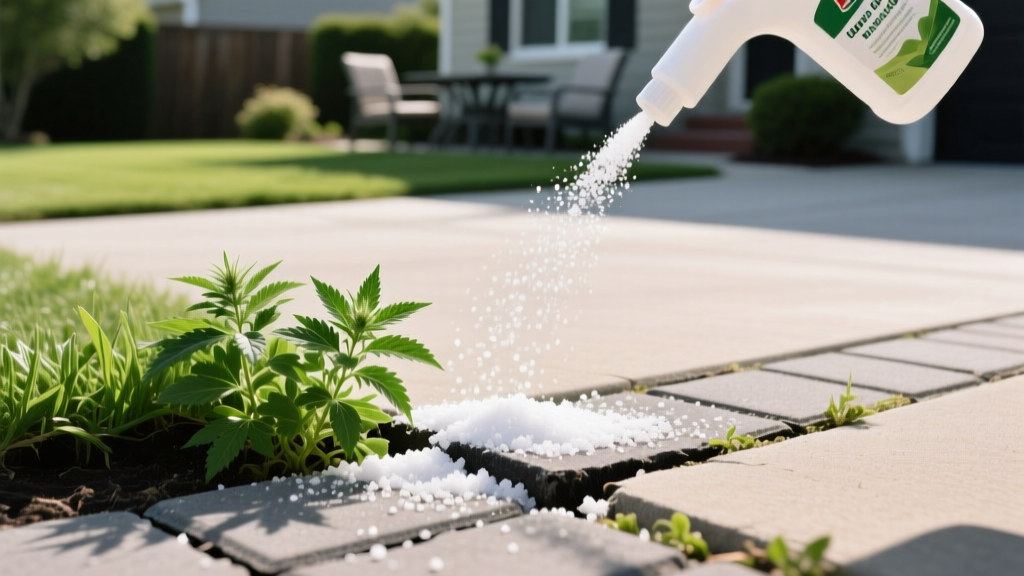
Using Salt Based Weed Killer for Driveway and Paver Weeds
The Science of Osmotic Desiccation in Weed Control
A salt based weed killer operates on a fundamentally different mechanism than systemic synthetic herbicides like glyphosate. Instead of disrupting amino acid synthesis, salt relies on extreme osmotic pressure gradients. When a highly concentrated sodium chloride (NaCl) solution contacts plant tissue, it rapidly draws intracellular water out through the cell membranes. This causes immediate plasmolysis—cellular collapse and desiccation—resulting in visible foliage necrosis within 12 to 24 hours.
However, the efficacy of salt as an herbicide is inextricably linked to its residual soil impact. Sodium ions bind tightly to soil clay particles, destroying soil aggregation, blocking water infiltration, and creating a sterile environment where future seed germination is chemically inhibited. Because of this aggressive sterilization profile, salt based weed killer must be strictly relegated to hardscape spot-treatments.
⚠️ CRITICAL LANDSCAPE WARNING: Never apply sodium chloride solutions to lawn turf, garden beds, or within the drip line of desirable trees. A single application of 20% salinity brine can sterilize topsoil for 3 to 5 years, leading to massive remediation costs. Reserve this treatment exclusively for concrete cracks, gravel driveways, and stone pavers.
Target Weeds for Hardscape Spot-Treatment
Not all weeds respond equally to salt-based desiccation. Broadleaf weeds with shallow root systems succumb rapidly, while deep-taprooted perennials may require secondary applications to exhaust their carbohydrate reserves. Below is a clinical breakdown of target species commonly found in hardscape environments.
| Weed Species | Typical Hardscape Location | Treatment Efficacy | Re-treatment Window |
|---|---|---|---|
| Moss (Bryophyta) | Shaded pavers, retaining walls | High (Complete desiccation) | 7-10 days |
| Creeping Charlie | Driveway edges, gravel beds | Medium-High (Foliage burn) | 14 days |
| Dandelion | Concrete expansion joints | Medium (Taproot may survive) | 21 days |
| Crabgrass | Asphalt cracks, gravel margins | High (Annual lifecycle) | N/A (Seasonal) |
Exact Formulations: Brine vs. Acid-Salt Synergy
Formulating a salt based weed killer requires precise saturation ratios. If the solution is too dilute, it will merely act as a foliar stressor rather than a lethal desiccant. If improperly mixed, the salt will precipitate and clog your sprayer nozzle. Here are the two most effective, field-tested formulations for hardscape use.
Recipe 1: Pure Sodium Chloride Brine (The Sterilant)
This formulation relies purely on osmotic shock and leaves a heavy residual salt crust in the crack, preventing future seed germination.
- Base: 1 Gallon of boiling water (heat is required to achieve maximum saturation).
- Active Ingredient: 3 lbs (approx. 6.5 cups) of pure rock salt or solar salt (NaCl). Do not use iodized table salt, as the anti-caking agents and iodine are unnecessary and more expensive.
- Surfactant: 1 tablespoon of liquid dish soap (reduces surface tension, allowing the brine to coat waxy weed cuticles).
Cost Analysis: At bulk agricultural pricing, 50 lbs of rock salt costs roughly $12. This yields approximately 16 gallons of brine, bringing the cost per gallon to $0.75—a massive reduction compared to $35-$45 per gallon for commercial non-selective herbicides.
Recipe 2: Acetic-Salt Synergistic Mix (The Rapid Burn)
Combining salt with acetic acid (vinegar) creates a dual-action herbicide. The acid strips the protective waxy cuticle from the leaf surface, allowing the salt brine to penetrate the plant tissue almost instantly.
- Base: 1 Gallon of 10% to 20% horticultural vinegar (standard 5% culinary vinegar is too weak for mature weeds).
- Active Ingredient: 1 cup (approx. 0.6 lbs) of rock salt.
- Surfactant: 1 oz of non-ionic surfactant (or 2 tablespoons of methylated seed oil).
Note: Mix the salt into a small amount of warm water first to dissolve it completely before adding it to the vinegar. Adding solid salt directly to cold vinegar will result in a saturated sludge at the bottom of your tank.
Application Protocol for Hardscapes
Even on hardscapes, environmental variables dictate the success of your salt based weed killer. Follow this strict application protocol to maximize efficacy and minimize collateral damage.
- Timing: Apply between 10:00 AM and 2:00 PM on a day with zero forecasted precipitation for at least 48 hours. Sunlight and heat accelerate the desiccation process.
- Nozzle Selection: Use a pin-stream or narrow cone nozzle rather than a wide fan mist. You want to inject the solution directly into the crack or gravel bed, avoiding drift onto adjacent desirable turf or automotive paint (salt spray causes rapid oxidation on vehicle clear coats).
- Volume: Apply to the point of runoff within the crack. For a standard driveway expansion joint, this is roughly 2 to 3 fluid ounces per linear foot.
- Post-Application: Do not sweep or rinse the hardscape for 7 days. Allow the water to evaporate, leaving behind a crystalline salt barrier that acts as a pre-emergent sterilant in the crevice.
Edge Cases: Concrete Spalling and Runoff Risks
While highly effective, sodium chloride is notoriously destructive to certain hardscape materials. Understanding these edge cases is critical for long-term property maintenance.
The Concrete Spalling Hazard
NaCl exacerbates freeze-thaw cycles in porous concrete. When salt brine penetrates the capillary network of a concrete driveway and subsequently freezes, the expansion causes micro-fracturing known as scaling or spalling. Never use sodium chloride brine on concrete that is less than 2 years old, unsealed, or already exhibiting surface degradation. For new concrete, substitute NaCl with Ammonium Sulfate, which acts as a foliar burn agent but is far less aggressive on masonry surfaces.
Groundwater and Runoff
According to environmental guidelines outlined by the EPA regarding safe pest control, preventing chemical runoff into storm drains is a homeowner responsibility. Heavy rainfall immediately after application will wash highly concentrated sodium into local waterways, which is toxic to amphibian life and disrupts municipal water treatment. Always check the 5-day forecast and abort application if heavy rain is imminent.
Soil Remediation: Fixing Accidental Sterilization
If salt based weed killer accidentally oversprays onto lawn turf or garden beds, immediate remediation is required to reverse the cation exchange imbalance. Sodium ions displace calcium and magnesium on soil clay particles, leading to soil dispersion and anoxia.
To reverse this, apply pelletized gypsum (Calcium Sulfate Dihydrate) at a rate of 50 lbs per 1,000 square feet. The calcium in the gypsum will displace the sodium ions through cation exchange. Follow this with deep, prolonged irrigation (at least 2 inches of water) to flush the displaced sodium sulfate salts below the root zone. As noted by soil scientists at the University of Minnesota Extension, flushing saline soils requires adequate subsurface drainage; otherwise, the salts will simply rise back to the surface via capillary action during dry spells.
Frequently Asked Questions
Will Epsom salt kill weeds effectively?
Magnesium sulfate (Epsom salt) causes temporary foliar desiccation but does not sterilize soil. In fact, it provides magnesium and sulfur, which are secondary plant macronutrients. It is a poor choice for long-term hardscape weed control because it will not prevent seed germination in the cracks.
Can I mix salt based weed killer with bleach?
Absolutely not. Mixing sodium chloride solutions with sodium hypochlorite (bleach) and acidic compounds (like vinegar) can generate toxic chlorine gas. Stick strictly to the salt, water, and surfactant formulations provided above.
How long does salt sterilize a driveway crack?
In a protected hardscape crevice where rainfall runoff is minimal, a heavy application of rock salt brine can prevent weed germination for 12 to 18 months. In exposed gravel beds subject to heavy rain, the salt will eventually leach away, requiring reapplication every 3 to 4 months.

