
Pest Control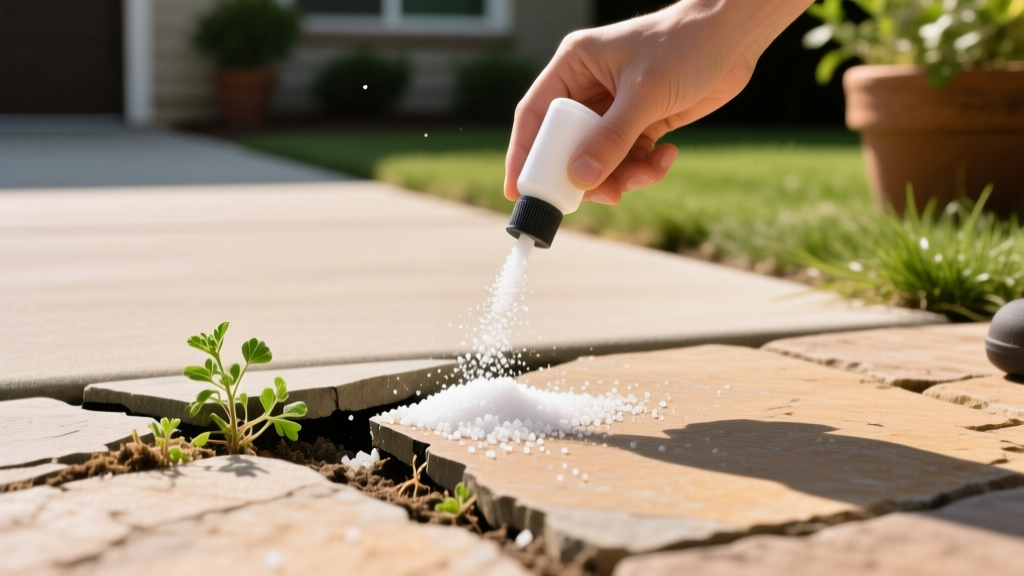
How to Use Salt Weed Killer Safely for Hardscape Cracks
Salt (sodium chloride) is one of the oldest, cheapest, and most misunderstood herbicides in lawn and garden care. While commercial glyphosate or glufosinate concentrates cost $15 to $30 per gallon, a DIY salt weed killer costs mere pennies per batch. However, because salt is a non-selective soil sterilant, using it incorrectly can cause long-term ecological damage to your landscape. This guide details the exact soil science behind salt desiccation, provides a precise mixing formula for hardscape spot-treatments, and outlines remediation steps if accidental overspray occurs.
The Soil Science: Why Salt Sterilizes Ground
To use salt effectively, you must understand osmotic stress and sodium ion toxicity. When a highly concentrated salt solution coats a weed's foliage and penetrates the soil surface, it creates a hypertonic environment. Water is violently pulled out of the plant's root cells via exosmosis, causing rapid cellular collapse and visible wilting within 24 to 48 hours.
However, the residual effect is where salt becomes dangerous. According to research on soil salinity from Penn State Extension, excess sodium (Na+) ions displace essential structural nutrients like calcium (Ca2+) and magnesium (Mg2+) in the soil's cation exchange capacity (CEC). This causes soil particles to disperse rather than flocculate, destroying soil structure, sealing the surface, and rendering the ground completely inhospitable to future plant life.
⚠️ CRITICAL WARNING: Never apply salt weed killer within 3 feet of a lawn edge, garden bed, or desirable tree root zone. Runoff from a single heavy rainstorm can carry sterilizing levels of sodium into adjacent topsoil, killing turfgrass and shallow-rooted shrubs.
Where to Use Salt Weed Killer (And Where to Avoid)
Because of its sterilizing properties, salt is strictly a hardscape and perimeter herbicide. Use the decision matrix below to determine if salt is the appropriate spot-treatment for your specific weed problem.
| Application Zone | Suitability | Rationale & Edge Cases |
|---|---|---|
| Concrete Driveway Cracks | Excellent | Keeps cracks clear for years; no soil biology to harm. |
| Brick Patio Paver Joints | Good | Effective, but repeated use may cause efflorescence (white mineral staining) on clay bricks. |
| Gravel Driveways | Caution | Will wash into the sub-base with heavy rain; avoid near adjacent lawn borders. |
| Fence Lines (Wire/Metal) | Avoid | Salt accelerates oxidation and rust on metal fence posts and wire mesh. |
| Lawn Edges & Garden Beds | NEVER | Will permanently sterilize topsoil and kill desirable turf via root uptake. |
The Exact DIY Salt Weed Killer Recipe
Commercial herbicides rely on proprietary surfactants to penetrate the waxy cuticle of weed leaves. You can replicate this efficacy at home using a precise ratio of sodium chloride, thermal energy, and a lipid-based surfactant (dish soap).
Ingredients & Costs
- 1 Cup Rock Salt or Iodized Table Salt: (~$0.25). Rock salt dissolves slower but is cheaper in bulk; table salt dissolves instantly.
- 2 Cups Boiling Water: (~$0.02). Thermal energy helps dissolve the salt completely and provides an initial thermal burn to the weed foliage.
- 1 Tablespoon Liquid Dish Soap: (~$0.10). Acts as a non-ionic surfactant, breaking the surface tension of the water and dissolving the weed's protective leaf cuticle.
Mixing and Application Steps
- Dissolve: Pour the boiling water into a heat-safe glass or metal bowl. Stir in the salt continuously until the water is completely clear and no granules remain at the bottom.
- Cool & Add Surfactant: Allow the solution to cool to room temperature. Stir in the liquid dish soap gently to avoid creating excessive suds.
- Transfer: Pour the mixture into a dedicated 1-gallon pump sprayer or a targeted squeeze bottle with a narrow stream nozzle.
- Apply: Spray the weed foliage until it is thoroughly wet, and drench the immediate soil/crack base. Timing is critical: Apply only on dry, sunny days when temperatures exceed 80°F (26°C). The sun accelerates the desiccation process.
Target Weed Species for Salt Spot-Treatment
Salt is highly effective on shallow-rooted annuals and broadleaf weeds trapped in hardscapes, but it fails against deep-rooted perennials where the rhizomes extend far below the salt penetration zone.
- Annual Bluegrass (Poa annua): Highly susceptible. Shallow fibrous roots desiccate completely within 48 hours of application.
- Prostrate Knotweed (Polygonum aviculare): Thrives in highly compacted hardscape edges. The surfactant-soap combination is required here, as knotweed has a tough, wiry stem that repels plain water.
- Common Dandelion (Taraxacum officinale): Effective for top-growth burn in patio cracks. However, if the taproot extends deep into the sub-base gravel, the crown may resprout, requiring a second application.
- Avoid Using On: Field Bindweed (Convolvulus arvensis) or Japanese Knotweed. Their root systems can extend 10+ feet deep, far beyond the reach of topical salt treatments. Use a systemic translocated herbicide for these species instead, following EPA guidelines for safe pest control.
Remediation: What If Salt Spills on Your Lawn?
Accidental overspray or wind drift can deposit salt onto desirable turfgrass. If this occurs, immediate remediation is required to save the soil's cation exchange capacity.
✓ Step 1: Flush the Zone. Immediately apply 1.5 to 2 inches of fresh water via a garden hose to the affected turf. This dilutes the sodium concentration and begins pushing it down the soil profile.
✓ Step 2: Apply Gypsum (Calcium Sulfate). Broadcast pelletized gypsum (calcium sulfate dihydrate) over the affected area at a rate of 50 lbs per 1,000 square feet. The calcium ions in the gypsum will aggressively displace the sodium ions bound to the soil clay particles.
✓ Step 3: Leach the Sodium. Water the gypsum in heavily. The displaced sodium forms sodium sulfate in the soil solution, which is highly soluble and will safely leach out of the root zone with subsequent rainfall or irrigation.
✓ Step 2: Apply Gypsum (Calcium Sulfate). Broadcast pelletized gypsum (calcium sulfate dihydrate) over the affected area at a rate of 50 lbs per 1,000 square feet. The calcium ions in the gypsum will aggressively displace the sodium ions bound to the soil clay particles.
✓ Step 3: Leach the Sodium. Water the gypsum in heavily. The displaced sodium forms sodium sulfate in the soil solution, which is highly soluble and will safely leach out of the root zone with subsequent rainfall or irrigation.
Frequently Asked Questions
Will rain wash the salt weed killer away before it works?
Yes. If rain occurs within 12 hours of application, the salt will dilute and wash into the sub-base, drastically reducing foliar efficacy. Always check the weather forecast and ensure a minimum 24-hour dry window post-application.
Is salt bad for concrete or asphalt?
Salt can cause "spalling" (surface flaking) in unsealed or low-quality concrete over time due to freeze-thaw cycles and chemical reactions. It does not harm asphalt, but it can accelerate the corrosion of steel rebar embedded within concrete driveways.
Can I add vinegar to the salt recipe for extra power?
While adding 1 cup of 30% horticultural vinegar increases the immediate foliar burn (acidic desiccation), it does not improve the long-term soil sterilization effect in cracks. Furthermore, handling 30% acetic acid requires heavy PPE (goggles, respirator), negating the safety and simplicity of a basic saltwater solution.

