
Pest Control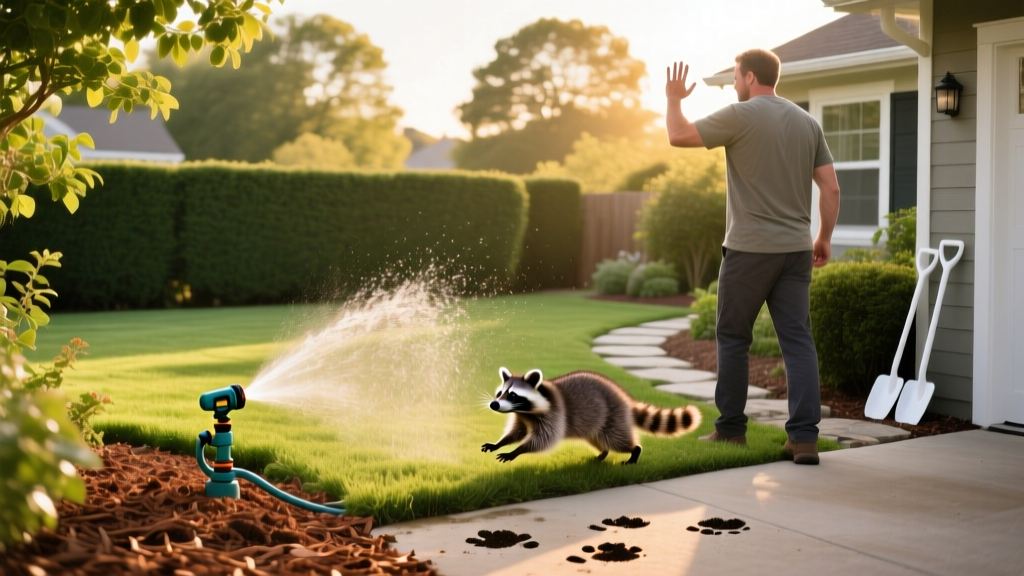
How to Scare Raccoons Away: Proven Deterrents & Yard Defense
The Behavioral Baseline: Why Raccoons Target Your Yard
Raccoons (Procyon lotor) are not merely opportunistic scavengers; they are highly intelligent foragers with exceptional spatial memory and dexterous front paws capable of manipulating complex latches. When a raccoon enters your lawn, it is typically driven by two factors: high-calorie food sources (like Japanese beetle grubs or unsecured compost) and safe, concealed transit routes. To effectively figure out how to scare raccoons away, you must disrupt their risk-reward calculus. Static deterrents fail because raccoons quickly habituate to non-threatening stimuli. Successful deterrence requires randomized, multi-sensory disruption combined with physical exclusion.
The 3-Tier Raccoon Deterrence Matrix
Before purchasing products, evaluate your yard against this matrix. Relying on a single method almost guarantees failure due to habituation or environmental degradation.
| Deterrent Category | Specific Product / Method | Estimated Cost | Habituation Risk | Efficacy Rating |
|---|---|---|---|---|
| Sensory (Water/Sound) | Motion-Activated Sprinkler (Orbit 62100) | $65 - $80 | Low | High |
| Sensory (Light) | Randomized Strobe / Predator Eye Lights | $30 - $50 | Medium | Medium |
| Physical (Exclusion) | 19-Gauge Hardware Cloth (L-Footer) | $40 - $60 | None | Very High |
| Physical (Active) | 2-Wire Solar Electric Fence (Zareba) | $120 - $160 | None | Very High |
| Habitat (Biological) | Hb Nematodes (Grub Eradication) | $30 - $50 | None | High (Long-term) |
Tier 1: Sensory Deterrents That Actually Work
The Startle Response: Motion-Activated Sprinklers
The most reliable non-lethal sensory deterrent is the sudden combination of water, sound, and movement. The Orbit Yard Enforcer (Model 62100) utilizes a passive infrared (PIR) sensor to detect animal body heat. When a raccoon crosses the 70-degree detection zone, the valve snaps open, delivering a sharp, pulsating burst of water accompanied by a loud mechanical click.
- Placement Strategy: Position the sprinkler at the entry point of your garden or near the compost bin, not in the center of the yard. Raccoons travel along established fence lines and shrub borders.
- Sensor Configuration: Set the dial to 'Night Only' to conserve water and battery life, and adjust the sensitivity to 'High' to ensure the PIR sensor triggers on low-to-the-ground mammals rather than wind-blown foliage.
- Failure Mode: If left in the exact same spot for more than two weeks, raccoons will map the blind spots. Move the unit 10 feet every few days.
Why Static Lights and Ultrasonic Repellents Fail
Many homeowners attempt to use static floodlights or ultrasonic pest repellers. According to the Internet Center for Wildlife Damage Management (ICWDM), ultrasonic devices are largely ineffective outdoors because high-frequency sound waves attenuate rapidly when they hit foliage, fences, and solid structures. Similarly, static floodlights do not scare raccoons; they simply learn to forage in the shadows or ignore the light entirely. If you must use light, opt for randomized, motion-activated strobe lights that mimic the eyes of a predator, though these should only be used as a supplement to physical barriers.
Warning: The Ammonia Rag Myth
Do not soak rags in ammonia and place them in your yard. Ammonia evaporates rapidly in outdoor conditions, rendering it useless within 24 hours. Furthermore, it poses a severe respiratory hazard to pets, children, and local wildlife, and can burn your turfgrass. It is an outdated, ineffective tactic that modern wildlife biologists strongly advise against.
Do not soak rags in ammonia and place them in your yard. Ammonia evaporates rapidly in outdoor conditions, rendering it useless within 24 hours. Furthermore, it poses a severe respiratory hazard to pets, children, and local wildlife, and can burn your turfgrass. It is an outdated, ineffective tactic that modern wildlife biologists strongly advise against.
Tier 2: Physical Exclusion & Electric Fencing
When sensory deterrents are insufficient, physical barriers provide absolute exclusion. Raccoons are exceptional climbers and diggers, meaning standard chicken wire and shallow fences are easily bypassed.
The 2-Wire Electric Fence Setup
For high-value areas like sweet corn patches or koi ponds, a low-impedance electric fence is the gold standard. You do not need a massive agricultural charger; a compact solar unit like the Zareba 10-Mile Solar Low Impedance Charger (approx. $120) is more than sufficient.
- Wire 1 (Snout Height): String the first poly-wire or aluminum wire exactly 6 inches above the ground. This targets the raccoon's nose as it sniffs the perimeter.
- Wire 2 (Back Height): String the second wire at 12 inches above the ground. This catches the animal if it attempts to step over or push under the first wire.
- Voltage Requirement: Ensure the fence maintains a minimum of 3,000 to 4,000 volts. Use a fence tester to verify the charge weekly, as vegetation touching the wire will drain the current.
The L-Footer Digging Barrier
If raccoons are digging under sheds or decks, use 19-gauge, 1/2-inch hardware cloth (not chicken wire, which they can tear apart). Dig a trench 12 inches deep along the perimeter. Bury the hardware cloth vertically, but bend the bottom 6 inches outward into an 'L' shape facing away from the structure. When a raccoon digs at the base, its paws hit the horizontal wire mesh, preventing further excavation.
Tier 3: Eradicating the Food Source
Deterrents are temporary if the caloric reward remains. Raccoons tearing up your lawn in large, rolled-back patches are almost always hunting for white grubs (the larvae of Japanese beetles and June bugs).
Biological Grub Control
Instead of using broad-spectrum chemical insecticides that harm pollinators, apply Heterorhabditis bacteriophora (Hb) beneficial nematodes. These microscopic worms actively seek out and destroy grub larvae in the soil.
- Application Timing: Apply when soil temperatures are consistently above 60°F (usually late spring or early fall).
- Hydration: Nematodes require moisture to move through the soil profile. Water the lawn deeply before application and keep the soil moist for 7 to 10 days afterward.
- Cost: A package treating 3,000 square feet typically costs between $30 and $45.
Securing Waste and Compost
Standard bungee cords are easily defeated by raccoon paws. Upgrade to certified bear-proof trash receptacles, such as the Toter Bear-Proof 64-Gallon Cart (approx. $150), which features a heavy-duty latch mechanism requiring human-level opposing thumb pressure to open. For compost, avoid adding meat, dairy, or sweet fruits, and use a fully enclosed tumbling composter raised at least 24 inches off the ground.
Raccoon Deterrence Decision Tree
Use this framework to diagnose and solve your specific raccoon problem:
Scenario A: Raccoons are rolling back your sod.
Action: Apply Hb nematodes immediately to kill the grub food source. Install Orbit Yard Enforcer sprinklers at the lawn's edge to disrupt nocturnal foraging.
Scenario B: Raccoons are raiding your garden or compost.
Action: Install a 2-wire electric fence (6' and 12' heights) around the perimeter. Upgrade to a locking, bear-proof compost bin.
Scenario C: Raccoons are nesting under your deck or shed.
Action: Wait until you are certain no kits (babies) are present (usually late summer). Install a one-way exclusion door for 48 hours, then permanently seal the entry point with 19-gauge L-footer hardware cloth.
Health and Safety Considerations
When managing raccoon populations, prioritize human and pet safety. Raccoons are the primary host for Baylisascaris procyonis (raccoon roundworm). The University of California Agriculture and Natural Resources (UC ANR) notes that raccoons tend to use specific, elevated sites as communal latrines (such as roofs, large stumps, or hay bales). If you find a latrine in your yard, do not sweep it dry, as this aerosolizes the eggs. Instead, wear rubber gloves and an N95 mask, soak the area with boiling water or a 10% bleach solution, and dispose of the feces in sealed plastic bags. For comprehensive safety guidelines, always consult resources from The Humane Society of the United States before attempting to trap or relocate wildlife, as relocation is often illegal and spreads disease to new territories.

