
Pest Control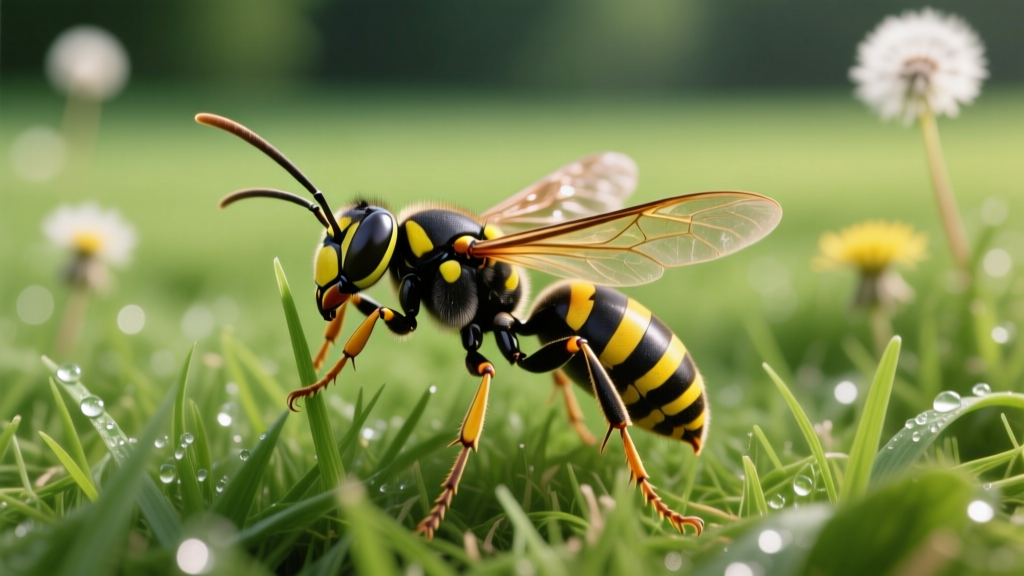
Scoliid Wasp Identification and Natural Lawn Grub Control Guide
The Misunderstood Scoliids: Pest or Lawn Savior?
In late summer and early fall, homeowners frequently spot large, dark wasps flying in a rapid, zig-zagging pattern just inches above the turf. The immediate instinct is often to reach for a broad-spectrum insecticide, assuming these insects pose a stinging threat to children and pets. However, misidentifying the scoliid wasp can lead to disastrous consequences for your yard's ecological balance and long-term turf health.
Scoliids wasps (family Scoliidae) are solitary, non-aggressive insects that serve as one of nature's most effective biological control agents against destructive scarab beetle grubs, including the Japanese beetle (Popillia japonica) and the green June beetle (Cotinis nitida). Rather than viewing them as a yard threat, professional turf managers recognize scoliids as a free, highly targeted pest management service.
Quick Identification Facts
- Size: 0.5 to 0.75 inches (12-19 mm) in length.
- Coloration: Metallic blue-black wings and bodies, typically featuring two distinct yellow or orange transverse bands on the abdomen.
- Body Texture: Noticeably hairy or velvety, unlike the smooth exoskeleton of common pest wasps.
- Flight Pattern: Erratic, low-altitude zig-zagging directly over the grass canopy.
Scoliid Wasp vs. Aggressive Yard Wasps: Identification Matrix
Accurate identification is the cornerstone of integrated pest management (IPM). Before deploying any yard defense chemicals, use this comparison matrix to distinguish beneficial scoliids from genuinely aggressive species that may require professional intervention.
| Species | Aggression Level | Nesting Habit | Primary Diet / Target |
|---|---|---|---|
| Scoliid Wasp | Very Low (Solitary) | Underground burrows (individual) | Scarab beetle grubs |
| Yellowjacket | Extremely High (Colonial) | Paper nests in ground or eaves | Insects, human food, sweets |
| Cicada Killer | Low (Solitary, but territorial) | Large U-shaped dirt mounds | Adult cicadas |
| Bald-Faced Hornet | High (Colonial) | Large aerial paper nests | Flies, yellowjackets, caterpillars |
According to entomologists at the University of Florida IFAS, the blue-winged wasp (Scolia dubia) is frequently confused with the cicada killer due to size, but scoliids lack the massive dirt mounds and possess distinct yellow banding rather than pale yellow markings on a black thorax.
Biological Warfare: How Scoliids Eradicate White Grubs
When you observe a female scoliid wasp hovering just above the turf, she is actively utilizing olfactory cues to detect the specific pheromones and microbial scents emitted by scarab beetle grubs feeding on your grassroots beneath the soil surface. This targeted hunting behavior makes them vastly more efficient at locating grub hotspots than broadcast chemical applications.
The Parasitization Process
- Detection: The female wasp hovers 1 to 3 inches above the grass, sensing grub activity in the top 2 to 4 inches of the soil profile.
- Excavation: Upon locating a target, she burrows directly into the thatch and soil, leaving a minimal, easily overlooked hole.
- Paralysis: She delivers a precise sting to the grub's ventral nerve cord, permanently paralyzing the pest without killing it immediately, which preserves the meat for her offspring.
- Oviposition: A single egg is laid on the paralyzed grub's abdomen.
- Consumption: The hatched wasp larva consumes the grub over 10 to 14 days, eventually spinning a cocoon in the soil to overwinter and emerge as an adult the following August.
"A single female scoliid wasp can parasitize dozens of grubs over her brief three-week adult lifespan. In heavily infested lawns, natural scoliid populations can reduce Japanese beetle grub densities by up to 60% without a single drop of synthetic pesticide."
— Adapted from integrated pest management research on biological control agents in turfgrass systems.
Adjusting Your Yard Defense Strategy: The Pesticide Paradox
The presence of scoliid wasps is a definitive bio-indicator that your lawn currently harbors a grub population. However, reaching for a curative chemical treatment at this stage is often a costly mistake that disrupts your yard's natural defense grid.
As of 2026, a standard 15-pound bag of curative trichlorfon (commonly sold under brand names like Dylox) costs between $55 and $75, covering roughly 4,000 square feet. If you apply this broadcast insecticide in late August while scoliids are active, you achieve two negative outcomes:
- Food Source Elimination: You kill the grubs that the wasp larvae rely on for overwintering survival, collapsing the local scoliid population for the following year.
- Non-Target Mortality: Broad-spectrum neurotoxins inadvertently kill beneficial ground-nesting bees and predatory beetles that manage other turf pests.
Instead, adopt a threshold-based approach. Clemson University Extension recommends treating for grubs only when populations exceed the economic threshold—typically 8 to 10 grubs per square foot. To verify this, use a standard bulb planter or a 6-inch diameter coffee can with both ends removed to extract a soil core. Count the grubs. If you find fewer than 8 per square foot, allow the scoliid wasps to manage the population naturally. The minor root pruning caused by low-level grub feeding is easily outgrown by healthy turf with a robust root system.
Safe Coexistence and Lawn Management Tips
Because male scoliid wasps lack stingers entirely, and females are solitary and highly reluctant to sting unless physically crushed or trapped in clothing, the risk to humans is negligible. To maintain a safe yard while leveraging their biological control, implement these specific cultural practices:
Mowing and Irrigation Adjustments
- Raise the Mowing Deck: Set your mower blade to 3.0 or 3.5 inches during late summer. Taller grass shades the soil, making it harder for adult female beetles to lay eggs in the first place, while simultaneously hiding the low-flying scoliid wasps from view, reducing homeowner anxiety.
- Deep, Infrequent Watering: Scarab beetle eggs require consistent moisture in the top inch of soil to hatch. Watering deeply (0.5 to 0.75 inches per session) but infrequently forces turf roots deeper while allowing the soil surface to dry out between cycles, naturally desiccating newly laid beetle eggs.
- Thatch Management: Core aerate your lawn in early fall (after wasp activity ceases). A thatch layer thicker than 0.5 inches creates an ideal microhabitat for grubs and makes it physically difficult for scoliid wasps to penetrate the soil to reach their prey.
When to Use Preventive Controls
If your lawn has a documented history of severe grub damage exceeding the 10-grub threshold, shift to a preventive strategy using chlorantraniliprole (e.g., Scotts GrubEx). Apply this targeted anthranilic diamide insecticide in early June. It binds to the soil and only activates when ingested by early-instar grubs, meaning it has a highly favorable environmental profile and minimal impact on adult scoliid wasps flying above the turf later in the season. Always consult Penn State Extension guidelines for precise application timing based on your specific hardiness zone.
By recognizing the scoliid wasp as an ally rather than an enemy, you transition from a reactive, chemical-heavy yard defense strategy to a proactive, ecologically balanced turf management system. The next time you see these blue-black, yellow-banded insects patrolling your grass, put down the sprayer and let nature's biological warfare work on your behalf.

