
Pest Control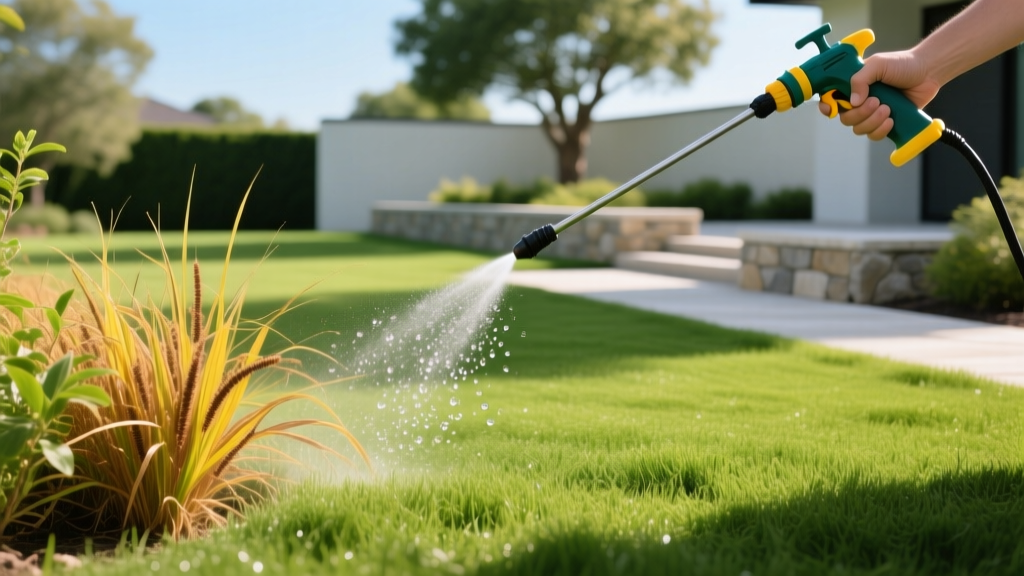
Best Sedge Weed Killer for Spot-Treating Nutsedge in Lawns
Homeowners frequently mistake nutsedge for a stubborn grassy weed, leading to months of ineffective treatments with standard post-emergent herbicides like 2,4-D or quinclorac. Nutsedge is not a grass; it is a sedge, belonging to the Cyperaceae family. The defining characteristic—summarized by the old agronomic rhyme 'sedges have edges'—is its solid, triangular stem. More importantly, nutsedge reproduces primarily through underground tubers (nutlets) and rhizomes, making it highly resistant to superficial contact herbicides. To eradicate it, you must use a specialized sedge weed killer capable of systemic translocation down to the root zone and dormant nutlets.
Identifying the Target: Yellow vs. Purple Nutsedge
Before selecting an active ingredient, you must identify which species is invading your turf. While both thrive in poorly drained, compacted soils, their growth habits and chemical vulnerabilities differ slightly. According to the UC Statewide IPM Program, accurate identification dictates your long-term management strategy.
| Characteristic | Yellow Nutsedge (Cyperus esculentus) | Purple Nutsedge (Cyperus rotundus) |
|---|---|---|
| Seedhead Color | Yellow to light brown | Reddish-brown to dark purple |
| Tuber Structure | Single tubers at the end of short rhizomes | Chains of tubers connected by long rhizomes |
| Leaf Tip | Gradually tapering to a sharp point | Abrupt, blunt tip |
| Growth Height | Grows taller than surrounding turf quickly | Tends to grow lower, spreading laterally |
Purple nutsedge is significantly more difficult to eradicate due to its chained tuber system. If a systemic herbicide fails to translocate through the entire rhizome chain, the next dormant tuber in the sequence will simply activate and push a new shoot to the surface within three to four weeks.
The Chemistry of Sedge Weed Killers: Active Ingredients That Work
Effective sedge control relies on specific modes of action, primarily ALS (Acetolactate synthase) inhibitors and PPO (Protoporphyrinogen oxidase) inhibitors. Here is a breakdown of the three most reliable active ingredients for spot-treatment in residential lawns, including current market pricing and turfgrass safety profiles.
1. Halosulfuron-methyl (The Systemic Standard)
Halosulfuron is an ALS inhibitor that stops the synthesis of branched-chain amino acids, slowly starving the plant from the inside out. It is highly systemic, meaning it translocates effectively down to the nutlets. Visible yellowing occurs in 7 to 14 days, with complete necrosis taking 3 to 4 weeks.
- Common Products: SedgeHammer+, Prosedge
- Mix Rate: One 13.5-gram water-soluble packet per 1,000 square feet (mixed in 1 to 2 gallons of water).
- Cost: Approximately $28 for a 5-pack of SedgeHammer+ (as of 2026).
- Turf Safety: Safe for almost all warm-season and cool-season grasses, including Bermuda, Zoysia, St. Augustine, Kentucky Bluegrass, and Tall Fescue.
Critical Surfactant Requirement: Halosulfuron-methyl requires a Non-Ionic Surfactant (NIS) at a rate of 0.25% v/v (roughly 1 teaspoon per gallon of water) to penetrate the waxy cuticle of the sedge leaf. The '+' version of SedgeHammer includes a built-in surfactant, but if you buy generic Prosedge, you must add NIS separately or the treatment will fail.
2. Sulfentrazone (The Fast-Acting Contact/Systemic Hybrid)
Sulfentrazone is a PPO inhibitor that causes rapid cell membrane disruption (contact burn) combined with moderate root absorption. It provides visible browning in just 3 to 5 days, which is highly satisfying for homeowners, but it may require a second application to kill the deepest nutlets of purple nutsedge.
- Common Products: Dismiss NXT, Blindside
- Mix Rate: 0.09 to 0.18 fluid ounces per 1,000 square feet.
- Cost: Approximately $95 for an 8 oz bottle of Dismiss NXT.
- Turf Safety: Excellent safety profile across most turf types, but can cause temporary tip-burn on St. Augustinegrass if applied during high heat (above 85°F).
3. Imazaquin (The Slow-Burn Warm-Season Specialist)
Imazaquin is another ALS inhibitor, but it acts much slower than halosulfuron and has significant soil residual activity, preventing new nutlets from germinating for up to 90 days.
- Common Products: Image Kills Nutsedge Concentrate
- Mix Rate: 3.5 fluid ounces per 1,000 square feet.
- Cost: Approximately $22 for a 32 oz concentrate bottle.
- Turf Safety: WARNING: Imazaquin is highly toxic to cool-season grasses. Do not use on Tall Fescue, Kentucky Bluegrass, or Perennial Ryegrass. It is strictly for warm-season lawns (Bermuda, Zoysia, Centipede, St. Augustine).
Step-by-Step Spot-Treatment Protocol
Spot-treating requires precise calibration to avoid over-applying, which can stunt the surrounding desirable turf, or under-applying, which will only burn the sedge leaves without killing the nutlets. Follow this protocol for a 1-gallon handheld pump sprayer.
- Calculate the Area: Measure the infested patch. If the patch is roughly 10 feet by 10 feet, you are treating 100 square feet (10% of the standard 1,000 sq ft label rate).
- Calibrate the Sprayer: Fill your 1-gallon sprayer with plain water and spray a 100 sq ft test area at a normal walking pace. If you empty half the tank (0.5 gallons) covering that area, you know your sprayer outputs 0.5 gallons per 100 sq ft.
- Mix the Solution: For a 100 sq ft area using SedgeHammer+, you would use 1/10th of a 13.5g packet. Because measuring 1.35 grams of powder is impractical, mix one full packet in 2 gallons of water, then pour exactly 0.2 gallons (roughly 25 ounces) into your 1-gallon sprayer for the 100 sq ft patch. Store the remainder in a sealed, opaque jug for up to 14 days.
- Add Surfactant and Dye: Add the required NIS and a few drops of blue turf marking dye. The dye ensures you do not accidentally double-spray the same patch, preventing localized turf phytotoxicity.
- Apply to Foliage: Spray until the sedge leaves are uniformly wet, but not to the point of runoff dripping onto the soil.
Why Spot Treatments Fail: Edge Cases and Fixes
According to NC State Turfgrass Weed Management guidelines, herbicide failure with nutsedge is rarely due to chemical resistance; it is almost always an application error. Avoid these common pitfalls:
- Mowing Too Soon: Halosulfuron requires 3 to 5 days to translocate from the leaf blade down to the rhizome. Mowing 24 hours after application physically removes the herbicide before it reaches the root zone. Wait at least 4 days to mow after treatment.
- Treating Drought-Stressed Sedge: When soil moisture is low, nutsedge closes its stomata to conserve water, and its internal vascular system slows down. Systemic herbicides will stall in the leaf tissue. Irrigate the lawn deeply 24 hours before application to ensure the sedge is actively growing and translocating nutrients downward.
- Ignoring the Second Flush: Even with a perfect application, the chemical may not reach the tertiary nutlets in a purple nutsedge chain. Expect a second, smaller flush of shoots 3 to 4 weeks after the initial treatment. You must apply a follow-up spot treatment to this second flush to exhaust the tuber bank.
- Pulling by Hand: Hand-pulling snaps the stem at the soil line, leaving the nutlets intact. Furthermore, pulling stimulates dormant buds on the remaining rhizomes to break dormancy, actually accelerating the infestation.
Post-Treatment Lawn Recovery and Prevention
Nutsedge is an indicator weed. It thrives in areas where the soil is compacted, the drainage is poor, and the desired turfgrass is thin. Once the sedge weed killer has eradicated the visible shoots, address the underlying environmental conditions. Core aerate the treated zone in the fall (for cool-season grasses) or late spring (for warm-season grasses) to alleviate compaction. Top-dress with coarse sand if drainage remains an issue, and increase your turf's mowing height by 0.5 inches to promote a denser canopy that shades out future sedge seedlings.

