
Pest Control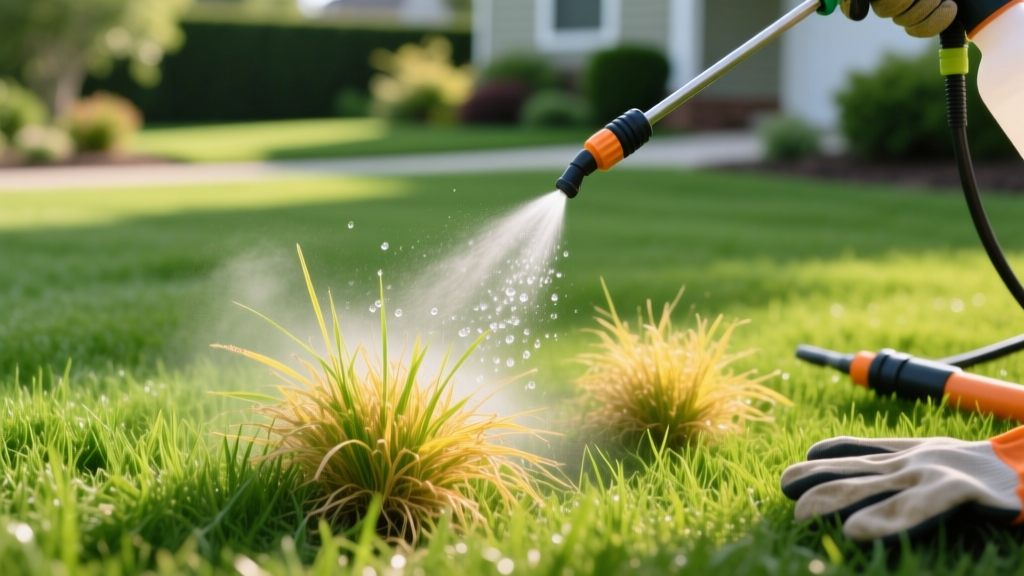
Selective Dallisgrass Herbicide Spot-Treatment Strategies
The Dallisgrass Dilemma: Why Standard Weed Killers Fail
Dallisgrass (Paspalum dilatatum) is widely considered one of the most stubborn perennial grassy weeds in turf management. Unlike broadleaf weeds, dallisgrass is biologically similar to your desirable lawn grass, meaning standard broadleaf herbicides (like 2,4-D or Dicamba) will not affect it. Furthermore, its leaves feature a thick, waxy cuticle that repels water-based sprays, and its deep, fibrous root system allows it to recover rapidly from superficial chemical burns.
Finding an effective dallisgrass herbicide requires matching the active ingredient to your specific turfgrass species. Applying the wrong selective herbicide will not only fail to kill the weed but can severely stunt or destroy your existing lawn. According to the University of California Statewide Integrated Pest Management Program, successful eradication relies on a multi-phase approach combining targeted post-emergent spot treatments with strict pre-emergent seed bank management.
Selective vs. Non-Selective Dallisgrass Herbicide Matrix
The following matrix outlines the primary chemical options available in 2026 for spot-treating dallisgrass. Pricing reflects current professional and high-end consumer market rates.
| Active Ingredient | Trade Name Example | Safe For Turf Types | Mix Rate (per 1,000 sq ft) | Est. Cost per 1k sq ft |
|---|---|---|---|---|
| Fluazifop-P-butyl | Ornamec 170 | Tall Fescue, Zoysia | 0.3 - 0.7 oz | $12.50 - $16.00 |
| Foramsulfuron | Revolver | Bermuda, Zoysia | 0.1 - 0.3 oz | $35.00 - $42.00 |
| Topramezone | Pylex | Kentucky Bluegrass, Tall Fescue | 0.05 - 0.1 oz | $18.00 - $24.00 |
| Glyphosate (41%) | Roundup Pro / Ranger | All (Non-Selective) | 2.0 oz (Wick applicator) | $1.50 - $2.50 |
⚠️ Regulatory Warning Regarding MSMA: Historically, Monosodium Methanearsonate (MSMA) was the go-to dallisgrass herbicide for warm-season lawns. As of 2026, the EPA has severely restricted MSMA use. It is no longer legal for residential lawn application and is strictly limited to golf courses, sod farms, and highway rights-of-way. Do not attempt to source agricultural-grade MSMA for home use; it violates federal pesticide laws and poses severe soil toxicity risks.
The 21-Day Selective Eradication Protocol
Selective dallisgrass herbicides do not work in a single application. Because the weed stores massive energy reserves in its rhizomes, you must use a systemic herbicide that translocates down to the roots over time. The industry standard is a three-application cycle spaced exactly 21 days apart.
Phase 1: Preparation and Surfactant Loading
Dallisgrass will shed herbicide droplets if the water surface tension is not broken. You must add a Non-Ionic Surfactant (NIS) to your tank mix.
- Mowing Rule: Do not mow for 3 days before application, and wait at least 2 days after. You need maximum leaf surface area for the chemical to absorb.
- Mixing Ratio: For Ornamec 170, mix 0.5 oz of product + 0.25 oz of NIS per 1 gallon of water. This volume covers exactly 1,000 square feet.
- Calibration: Mark off a 1,000 sq ft test area on your driveway with chalk, fill your sprayer with 1 gallon of water, and spray the concrete to ensure your walking speed and nozzle pressure deliver exactly 1 gallon over that area.
Phase 2: The Application Cycle
- Application 1 (Day 0): Spot-treat the dallisgrass clumps until the leaves are wet, but not dripping. The weed will show no visible signs of stress for the first 7 to 10 days. This is normal; the chemical is moving to the roots.
- Application 2 (Day 21): Reapply the exact same mixture to the same spots. You will notice the new growth in the center of the dallisgrass clump emerging pale green or yellow.
- Application 3 (Day 42): Apply a final spot treatment. By day 60, the dallisgrass rhizomes will be completely necrotic, and the weed will pull out of the soil with zero resistance.
Non-Selective Spot Treatment: The 'Wick and Paint' Method
If you are managing a cool-season lawn where selective options are cost-prohibitive, or if the dallisgrass infestation is isolated to a few massive clumps, a non-selective approach using 41% Glyphosate is highly effective. However, broadcast spraying will kill your desirable turf. Instead, use the wick application method.
Purchase a commercial herbicide wick applicator or use a dense foam paintbrush. Mix 41% glyphosate at a high concentration (4 oz per gallon of water). Put on heavy nitrile gloves, dip the foam brush into the solution, and physically paint the leaves of the dallisgrass. Because dallisgrass grows slightly faster and taller than surrounding turf between mowings, you can also use a rope-wick applicator dragged at a height that only contacts the weed blades. The painted grass will turn completely brown in 5 to 7 days. Once dead, use a hand trowel to dig out the necrotic root mass and drop a pinch of grass seed into the divot.
Pre-Emergent Defense: Starving the Seed Bank
Post-emergent spot treatments are useless if the soil is loaded with dallisgrass seeds. A single mature plant produces thousands of seeds that drop directly at mowing height, bypassing standard mower bags. According to Clemson University Home & Garden Information Center, dallisgrass germinates when soil temperatures consistently reach 60°F to 65°F.
Apply a pre-emergent herbicide containing Prodiamine (e.g., Barricade) or Dithiopyr (e.g., Dimension) in early spring.
- Prodiamine Rate: Apply at 1.15 lbs of active ingredient per acre (roughly 0.4 oz of 65 WDG formulation per 1,000 sq ft).
- Watering: Irrigate with exactly 0.5 inches of water within 48 hours of application to activate the chemical barrier in the top 1 inch of soil.
- Limitation: Pre-emergents will not kill existing dallisgrass plants or rhizomes; they only prevent new seeds from germinating.
Frequently Asked Questions
Why did my dallisgrass turn yellow but start growing back after a month?
This is the most common failure mode in dallisgrass control. The herbicide (often a weak formulation of Fluazifop) burned the top-growth foliage but failed to translocate into the deep rhizomes. This happens if you mow too soon after spraying (removing the chemical before it absorbs) or if you skipped the non-ionic surfactant, causing the droplets to roll off the waxy leaf surface before penetrating the cuticle.
Can I use Foramsulfuron (Revolver) on my Tall Fescue lawn?
No. Foramsulfuron is highly toxic to cool-season grasses, including Tall Fescue and Kentucky Bluegrass. Applying Revolver to a Fescue lawn will result in severe chlorosis, stunting, and likely total death of the turf in the treated areas. Revolver is strictly formulated for warm-season grasses like Bermuda and Zoysia. For Tall Fescue, you must use Topramezone (Pylex) or Fluazifop (Ornamec).
How do I prevent dallisgrass from spreading via my mower?
Dallisgrass seedheads develop rapidly on long stolons. If you mow a lawn with active seedheads, the mower deck will strip the seeds and blow them across the yard via the side-discharge chute. When spot-treating, use a push-mower with a bagging attachment specifically for the infected zones, and immediately dispose of the clippings in sealed landscape bags. Never compost dallisgrass clippings, as standard compost piles do not reach the sustained 140°F+ temperatures required to kill the seeds.
For more comprehensive turf management data and regional weed identification, consult the NC State University TurfFiles extension database. Successful dallisgrass eradication is a marathon, not a sprint; adhere strictly to the 21-day chemical rotation and maintain your pre-emergent soil barriers to achieve a pristine, weed-free lawn.

