
Pest Control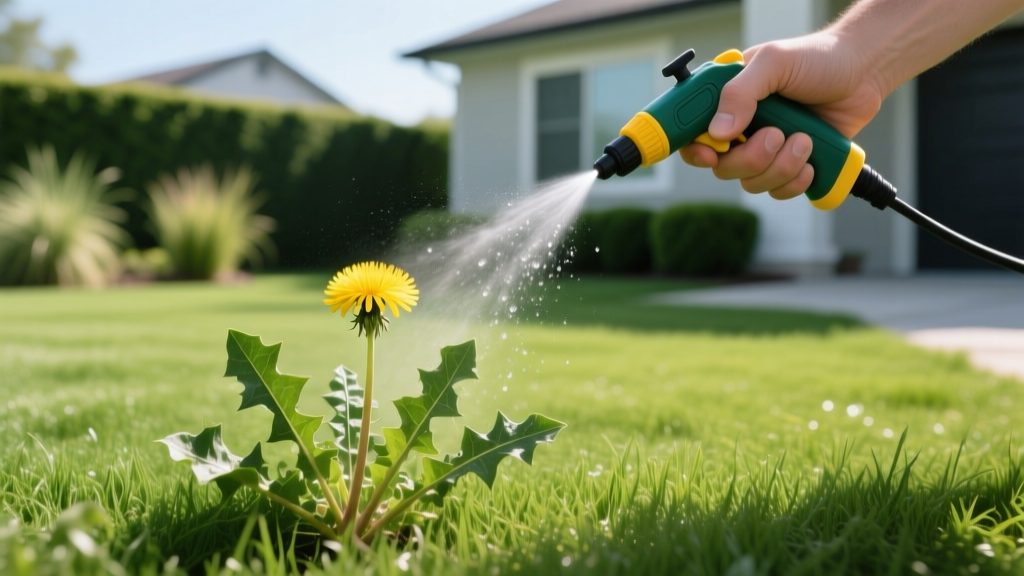
Choosing the Right Herbicide for Dandelion Spot-Treatment
Why Dandelions Demand Targeted Spot-Treatment
Dandelions (Taraxacum officinale) are perennial broadleaf weeds equipped with brittle taproots that can penetrate up to 15 feet into uncompacted soil, though they typically reside in the top 12 to 18 inches of turf profiles. Manual extraction almost always snaps the root crown, guaranteeing rapid regeneration from the remaining tissue. Broadcasting pre-emergent herbicides is equally ineffective, as dandelions primarily spread via wind-borne seeds and root fragmentation rather than germinating from a persistent seed bank in the soil.
Spot-treating with a selective post-emergent herbicide for dandelion control is the most ecologically and economically sound strategy. By targeting only the affected zones, you minimize chemical exposure to your turfgrass, reduce environmental runoff, and save money compared to whole-lawn applications. According to turfgrass research from the University of Minnesota Extension, targeting the weed during its active growth phases in early spring or early fall yields the highest translocation rates of the active ingredient down to the taproot.
Active Ingredients: Decoding the Chemistry
Not all broadleaf weed killers are formulated equally. The efficacy of a herbicide for dandelion eradication depends heavily on the specific active ingredient and its chemical formulation (amine vs. ester). Systemic auxin mimics are required to travel through the phloem and destroy the deep taproot.
| Active Ingredient | Formulation | Mode of Action | Best Use Case | Visual Results |
|---|---|---|---|---|
| 2,4-D | Amine | Systemic Auxin Mimic | Warm weather applications (>75°F) | 7–14 days |
| 2,4-D | Ester | Systemic Auxin Mimic | Cool weather applications (<75°F) | 5–10 days |
| Dicamba | Amine | Systemic, Soil Activity | Stubborn, mature taproots | 10–14 days |
| Carfentrazone-ethyl | Suspension | Contact PPO Inhibitor | Burn-down additive for speed | 24–48 hours |
Top Commercial and Consumer Formulations
Selecting the right product depends on your budget, application equipment, and the scale of the infestation. Below are the top-performing formulations currently on the market.
1. PBI Gordon SpeedZone Lawn Herbicide (Prosumer Choice)
Cost: $45–$55 per gallon
Mix Rate: 1.0 to 1.5 fl oz per gallon of water
SpeedZone is a four-way ester formulation containing 2,4-D ester, MCPP-p, Dicamba, and Carfentrazone-ethyl. The inclusion of Carfentrazone provides a rapid 24-hour visual burn-down, which satisfies homeowners looking for immediate results, while the systemic esters continue to kill the taproot over the next two weeks. Because it uses ester formulations, it is highly effective in cooler spring and fall temperatures when dandelions are actively pulling nutrients into their roots.
2. Trimec Classic Broadleaf Herbicide (Professional Standard)
Cost: $35–$40 per gallon
Mix Rate: 1.5 fl oz per gallon of water
Trimec Classic is the industry-standard three-way amine blend (2,4-D amine, MCPP-p, Dicamba). It is exceptionally safe on most cool-season and warm-season turfgrasses when applied at label rates. Amine formulations are less volatile than esters, making Trimec the safer choice for mid-summer spot treatments when temperatures exceed 80°F, reducing the risk of vapor drift damaging nearby ornamental shrubs.
3. Ortho WeedClear Lawn Weed Killer (Consumer Ready-to-Use)
Cost: ~$15 per 32 oz bottle
Mix Rate: Pre-mixed (No dilution required)
For homeowners dealing with fewer than a dozen dandelions, Ortho WeedClear offers a convenient, pre-mixed solution containing 2,4-D, Quinclorac, and Dicamba. While significantly more expensive per ounce of active ingredient than concentrated prosumer options, the built-in wand and surfactant eliminate the need for calibration and separate mixing equipment.
Crucial Mixing Rule: The Surfactant Multiplier
Dandelion leaves feature a thick, waxy cuticle designed to repel water. If you are mixing a concentrated herbicide like SpeedZone or Trimec, you must add a Non-Ionic Surfactant (NIS). Add NIS at a rate of 0.25% v/v (approximately 1/2 teaspoon per gallon of water). This breaks the surface tension of the spray droplets, allowing the herbicide to spread evenly across the leaf surface and penetrate the plant tissue rather than beading up and rolling off into the soil.
Dandelion leaves feature a thick, waxy cuticle designed to repel water. If you are mixing a concentrated herbicide like SpeedZone or Trimec, you must add a Non-Ionic Surfactant (NIS). Add NIS at a rate of 0.25% v/v (approximately 1/2 teaspoon per gallon of water). This breaks the surface tension of the spray droplets, allowing the herbicide to spread evenly across the leaf surface and penetrate the plant tissue rather than beading up and rolling off into the soil.
Precision Application Protocol
Proper technique is just as critical as the chemical selection. Follow this step-by-step framework to ensure maximum translocation to the taproot.
- Calibrate Your Nozzle: Swap out the standard cone nozzle on your pump sprayer for a flat-fan nozzle, such as the TeeJet 11002. This produces a uniform, fine mist that coats the leaves evenly without drenching the soil.
- Check Environmental Parameters: Apply only when soil temperatures are between 55°F and 85°F. Avoid application if rain is forecasted within 24 hours, or if wind speeds exceed 5 mph to prevent off-target drift.
- Execute the 'Fine Mist' Technique: Hold the wand 12 to 18 inches above the weed. Spray just enough to lightly coat the leaves until they glisten. Do not spray to the point of runoff; excess chemical dripping into the soil is wasted and increases the risk of turf root damage.
- Enforce a Mowing Ban: Do not mow the lawn for at least 48 hours before and 48 hours after application. The dandelion needs maximum leaf surface area to absorb the chemical and time to translocate it down to the root crown.
Troubleshooting Common Treatment Failures
Even with the right herbicide for dandelion control, environmental and mechanical factors can cause treatments to fail. Use this diagnostic guide to identify what went wrong.
- Symptom: Leaves curl and twist, but the weed does not die.
Cause: The auxin mimic is working (causing the characteristic epinasty or 'curling'), but translocation was interrupted. This usually happens if the lawn was mowed too soon after spraying, severing the phloem pathways before the chemical reached the taproot. - Symptom: Leaves turn brown and crispy in 24 hours, but the weed regrows a month later.
Cause: You used a contact-only herbicide (like Diquat or a high-dose pelargonic acid weed killer) instead of a systemic product. Contact herbicides destroy surface tissue but leave the deep taproot entirely unharmed. - Symptom: The dandelion turns purple and stalls, but doesn't completely collapse.
Cause: Application occurred during drought stress. When dandelions are water-stressed, they shut down their vascular systems to conserve moisture, preventing the systemic herbicide from traveling to the roots. Always irrigate the lawn deeply 24 hours before applying systemic herbicides.
According to the EPA's regulatory overview of 2,4-D, when used strictly according to label directions for spot-treatments, systemic auxin herbicides pose minimal risk to non-target organisms and rapidly degrade in the soil environment, making them a highly sustainable choice for integrated pest management.
Mastering dandelion spot-treatment requires moving beyond generic 'weed and feed' products. By selecting the correct amine or ester formulation based on the current temperature, utilizing a non-ionic surfactant, and applying a fine mist with a flat-fan nozzle, you can permanently eradicate taproots while keeping your turfgrass lush, healthy, and chemical-free in non-target zones.

