
Pest Control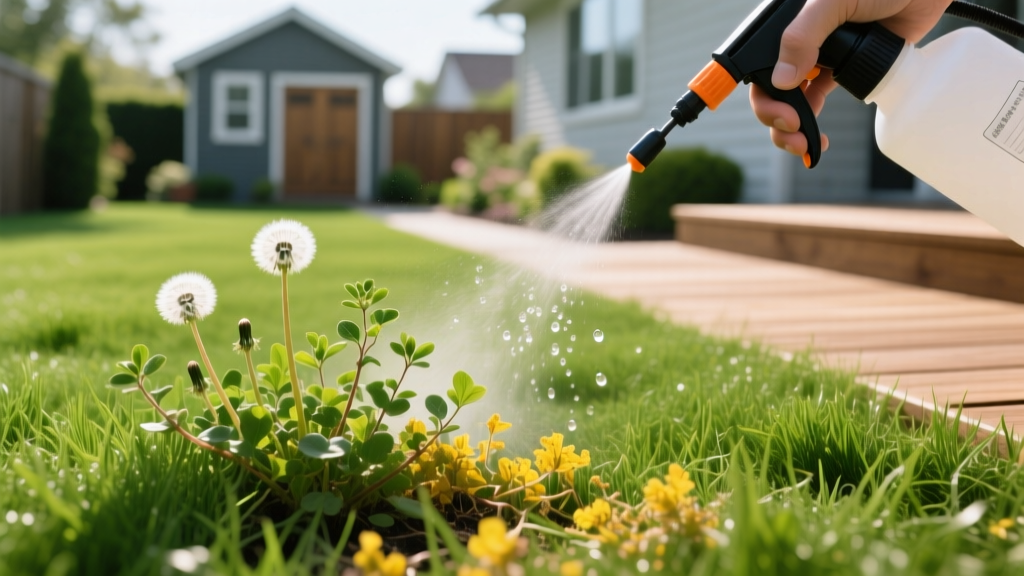
The Best Weed Killer That Won't Kill Grass for Spot Treatments
The Chemistry of Grass-Safe Selective Herbicides
Finding a weed killer that won't kill grass requires understanding the biological divergence between monocots (turfgrasses) and dicots (broadleaf weeds), or leveraging specific metabolic pathways in grassy weeds. Non-selective herbicides like glyphosate destroy the EPSP synthase enzyme, an amino acid production pathway essential to all plants. Selective herbicides, conversely, exploit physiological blind spots.
The most common selective broadleaf herbicides rely on synthetic auxins (2,4-D, dicamba, MCPP, and fluroxypyr). These chemicals mimic indole-3-acetic acid (IAA), a natural plant hormone. Broadleaf weeds absorb the synthetic auxin and experience unregulated, unsustainable cellular growth, leading to vascular system collapse and death. Turfgrasses possess the enzymatic ability to rapidly degrade these synthetic auxins into non-toxic metabolites before they cause systemic damage. For stubborn grassy weeds like crabgrass or nimblewill, the chemistry shifts to HPPD inhibitors (mesotrione) or ALS inhibitors (halosulfuron), which block carotenoid or amino acid synthesis in target weeds while safe grasses metabolize the active ingredient via cytochrome P450 enzymes.
Active Ingredient Matrix: Match the Chemical to the Weed
There is no single 'magic bullet' herbicide. The right weed killer that won't kill grass depends entirely on the specific weed species invading your turf. According to Penn State Extension, misidentifying the weed and applying the wrong active ingredient is the primary cause of treatment failure and wasted chemical.
| Target Weed Category | Primary Active Ingredients | Top Commercial Product (2026) | Avg. Price & Size | Mode of Action |
|---|---|---|---|---|
| Broadleaf (Dandelion, Clover, Plantain) | 2,4-D, Dicamba, MCPP, Carfentrazone | SpeedZone Broadleaf Herbicide | $48 / 1 Gallon | Synthetic Auxin / PPO Inhibitor |
| Grassy Weeds (Crabgrass, Foxtail) | Quinclorac, Fenoxaprop-p-ethyl | Drive XLR8 (Quinclorac 18.9%) | $75 / 1 Liter | Auxin Transport Inhibitor |
| Sedges (Yellow Nutsedge, Purple Nutsedge) | Halosulfuron-methyl, Sulfentrazone | SedgeHammer+ Turf Herbicide | $28 / 13.5g (5 pack) | ALS (Acetolactate Synthase) Inhibitor |
| Complex / Tough Grassy & Broadleaf | Mesotrione | Syngenta Tenacity Turf Herbicide | $62 / 8 oz bottle | HPPD (4-Hydroxyphenylpyruvate dioxygenase) Inhibitor |
The Grass-Type Trap: Compatibility Warnings
A critical caveat in selective weed control is that 'grass-safe' is highly relative to your specific turf species. An herbicide that is perfectly safe for Kentucky Bluegrass can be lethal to St. Augustine or Centipede grass. The Texas A&M AgriLife Extension frequently documents cases of homeowners severely burning warm-season lawns by using standard northern broadleaf formulations.
CRITICAL WARNING: St. Augustine & Centipede Grass
Standard 2,4-D concentrations (above 0.5%) will cause severe leaf curling, stunting, and necrosis in St. Augustine and Centipede grasses. If you have these warm-season turf types, you must avoid standard Trimec or SpeedZone formulations. Instead, use Atrazine-based products (like Image for Southern Lawns) or specific low-2,4-D formulations explicitly labeled for St. Augustine.
Turf Safety Quick-Reference Guide
- Cool-Season Grasses (Fescue, Bluegrass, Ryegrass): Highly tolerant to 2,4-D, Dicamba, Quinclorac, and Mesotrione. Tenacity (mesotrione) is uniquely safe for these grasses and can even be used as a pre-emergent at seeding.
- Bermudagrass & Zoysia: Tolerant to most 2,4-D blends and Quinclorac. However, Mesotrione (Tenacity) will bleach and severely damage Bermudagrass and Zoysia. Never use Tenacity on these warm-season grasses.
- Bahiagrass: Highly sensitive to 2,4-D and Dicamba. Requires specific formulations like Metsulfuron-methyl (Manor) for broadleaf control.
Precision Spot-Treatment Execution Protocol
Spot-treating saves money, reduces chemical load on your soil, and minimizes the risk of turf stress. Follow this exact protocol to ensure maximum efficacy without damaging surrounding grass.
Step 1: Calibration and Mixing
Never 'eyeball' herbicide concentrations. Over-mixing will burn your grass; under-mixing will fail to kill the weed and breed herbicide resistance. For a standard 1-gallon pump sprayer used for spot treatments:
- SpeedZone (Broadleaf): Mix 1.5 fl oz per 1,000 sq ft. For a 1-gallon spot sprayer, use roughly 2 tablespoons (1 fl oz) per gallon of water.
- Tenacity (Complex Weeds): Mix exactly 1/2 teaspoon of Tenacity per 1 gallon of water. Tenacity is highly concentrated; use a dedicated measuring syringe for accuracy.
- SedgeHammer (Nutsedge): Dissolve one 13.5g water-soluble packet into 1 to 2 gallons of water. The packet includes the required surfactant.
Step 2: The Surfactant Mandate
Many weeds feature a waxy cuticle that causes water-based herbicide droplets to bead up and roll off. Unless your product explicitly states 'surfactant included' (like SedgeHammer+), you must add a Non-Ionic Surfactant (NIS). Add 1 to 2 teaspoons of NIS per gallon of mixed herbicide. This breaks the surface tension, allowing the chemical to spread evenly across the leaf surface and penetrate the stomata.
Step 3: Application Technique
Adjust your pump sprayer nozzle to a coarse droplet setting (a flat fan or coarse cone). Fine mist settings increase the risk of wind drift, which can carry synthetic auxins into nearby flower beds or vegetable gardens. Spray the target weed until the leaves are visibly wet but not dripping. Avoid soaking the surrounding soil, as systemic herbicides are primarily absorbed through foliar contact in spot-treatment scenarios.
Environmental & Application Failure Modes
Even with the correct weed killer that won't kill grass, environmental variables can derail your spot treatment. Avoid these common failure modes:
Temperature Volatility & Vapor Drift
Do not apply 2,4-D or Dicamba when ambient temperatures exceed 85°F (29°C). At high temperatures, these chemicals undergo ester volatilization, turning into a gas that drifts through the air. This vapor can warp, cup, and stunt the growth of highly sensitive non-target plants (like tomatoes, hydrangeas, and grapevines) hundreds of feet away. Spray early in the morning when temps are between 65°F and 80°F.
Rainfastness Windows
Herbicides require time to translocate from the leaf surface into the weed's vascular system. SpeedZone and 2,4-D formulations generally require a minimum of 4 hours of dry weather post-application. SedgeHammer and Tenacity require up to 8 hours. If rain is forecasted within this window, delay your application. Washing the chemical off the leaf renders the treatment useless.
Post-Application Expectations and Timelines
Patience is required when using selective systemic herbicides. Unlike contact herbicides that burn foliage in 24 hours, systemic grass-safe weed killers take time to move through the plant's phloem and xylem.
- Days 3–7: Broadleaf weeds will begin to exhibit 'epinasty'—a twisting, curling, and cupping of the leaves and stems as the synthetic auxins disrupt cellular growth.
- Days 7–14: Chlorosis (yellowing) sets in, particularly at the growing points (meristems) of the weed. HPPD inhibitors like Tenacity will cause target weeds to turn stark white as carotenoid production halts and chlorophyll degrades.
- Days 14–28: Complete necrosis (browning and death) of the weed occurs. The root system starves and collapses.
Do not reapply herbicide if the weed hasn't died within the first week. Over-application will overwhelm the turfgrass's metabolic capacity to break down the chemical, resulting in localized grass burn. For stubborn perennial weeds like wild violet or ground ivy, a second application at the standard rate may be required 21 days after the initial treatment.
Frequently Asked Questions
Can I use vinegar or boiling water instead of chemical herbicides?
While horticultural vinegar (20% acetic acid) and boiling water will kill weeds, they are strictly non-selective contact burn agents. They will kill any grass they touch, leaving dead brown spots in your lawn that require overseeding. For a true weed killer that won't kill grass, selective synthetic or chelated iron (FeHEDTA) formulations are required.
Is chelated iron (FeHEDTA) effective for spot treatments?
Yes. Products containing FeHEDTA (such as Fiesta Turf Weeder) are excellent organic-compliant alternatives for broadleaf weeds. Broadleaf weeds absorb and store iron differently than grasses, leading to fatal oxidative stress in the weed while the grass remains unharmed. However, FeHEDTA is less effective on mature, deep-rooted perennial weeds and often requires two applications spaced 14 days apart.
For comprehensive guidelines on handling and storing these chemicals safely, always consult the EPA's Safe Pest Control protocols and adhere strictly to the manufacturer's printed label, which serves as the legal document governing application rates and restrictions.

