
Pest Control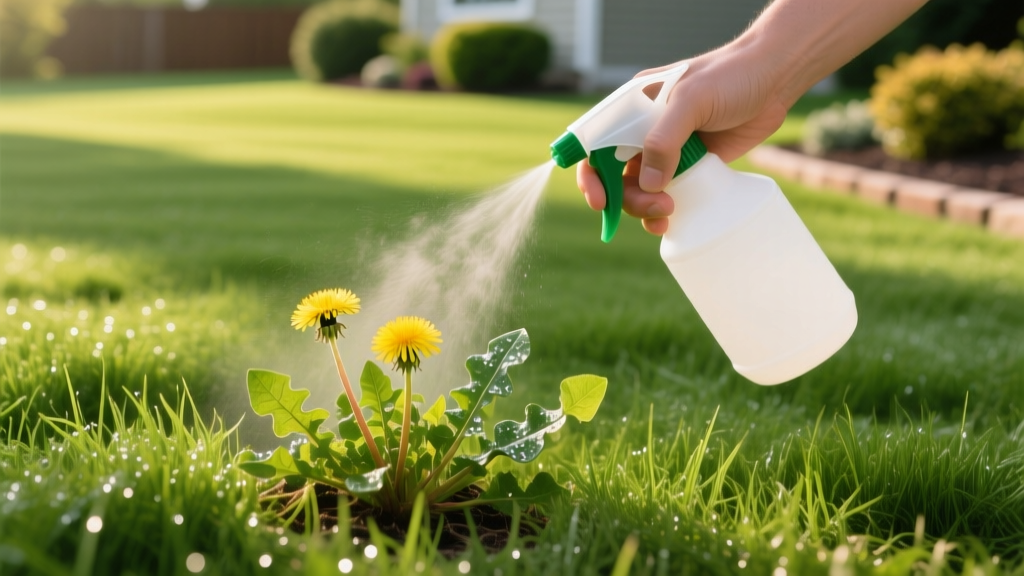
Choosing the Best Selective Weed Killer for Grass Spot-Treatment
The Chemistry of Selective Herbicides: How They Spare Your Turf
Broadcast spraying non-selective herbicides like glyphosate will obliterate weeds, but it will also destroy your turf. A selective weed killer for grass exploits the biological and metabolic differences between monocots (grasses) and dicots (broadleaf weeds), or targets specific enzymatic pathways unique to certain weed species. Understanding these active ingredients is mandatory for effective spot-treatment without causing turf phytotoxicity.
Most consumer-grade selective herbicides rely on synthetic auxins. According to research published by the University of Minnesota Extension, synthetic auxins like 2,4-D and Dicamba mimic natural plant growth hormones. When absorbed by broadleaf weeds, they trigger unregulated, explosive cellular growth that the plant cannot sustain, leading to vascular system collapse and death within 14 to 21 days. Grasses, however, possess a different vascular structure and can rapidly metabolize these chemicals into harmless compounds, allowing the turf to survive.
For grassy weeds like crabgrass, selective control requires a different chemical approach. Quinclorac disrupts cell wall biosynthesis and hormone balance specifically in susceptible grassy weeds, while leaving desirable turfgrass species largely unharmed. For sedges, which are neither true grasses nor broadleaves, Sulfentrazone or Halosulfuron-methyl are required to inhibit protoporphyrinogen oxidase (PPO), an enzyme critical for chlorophyll synthesis in nutsedge.
Matching the Selective Weed Killer for Grass to Your Turf Type
The most common failure in spot-treatment occurs when homeowners apply a standard 3-way herbicide (2,4-D, Dicamba, Mecoprop) to warm-season grasses that lack the metabolic pathways to detoxify these chemicals. St. Augustinegrass and Centipedegrass are notoriously sensitive to synthetic auxins. Applying standard 2,4-D to St. Augustine will result in severe leaf curling, stunting, and potential turf death. The University of Florida IFAS explicitly warns against using high concentrations of 2,4-D on St. Augustine and Centipede lawns, recommending Atrazine or specific low-dose Penoxsulam formulations instead.
| Turfgrass Species | 2,4-D Tolerance | Dicamba Tolerance | Quinclorac Tolerance | Recommended Spot-Treatment Active |
|---|---|---|---|---|
| Kentucky Bluegrass | High | High | High | Standard 3-Way + Quinclorac |
| Tall Fescue | High | High | High | Standard 3-Way + Quinclorac |
| Bermudagrass | High | High | Moderate (Heat stress risk) | Standard 3-Way + Quinclorac |
| Zoysiagrass | Moderate | High | High | Standard 3-Way (Reduced 2,4-D rate) |
| St. Augustinegrass | Very Low (Phytotoxic) | Low | Low | Atrazine or Penoxsulam |
| Centipedegrass | Low | Very Low (Phytotoxic) | Low | Atrazine or Sethoxydim |
Spot-Treatment Application Protocol: Step-by-Step
Spot-treating requires precision. The goal is to wet the weed foliage to the point of runoff without drenching the surrounding soil or desirable grass. Follow this exact protocol to maximize efficacy and minimize turf stress.
- Calculate the Mix Rate: For a standard 3-way selective weed killer for grass (e.g., Ortho WeedClear or BioAdvanced All-In-One), the spot-treatment ratio is typically 2 to 2.5 fluid ounces of concentrate per 1 gallon of water. This volume covers approximately 1,000 square feet, but for spot-treatment, you will only mix what you need for the targeted area.
- Add a Non-Ionic Surfactant (NIS): Weeds like plantain, wild violet, and dandelion have waxy or hairy cuticles that repel water-based sprays. Add 0.5% v/v of a non-ionic surfactant (approximately 1/2 teaspoon per gallon of water). This breaks the surface tension, allowing the herbicide to spread evenly across the leaf surface and penetrate the stomata.
- Calibrate the Nozzle: Adjust your pump sprayer nozzle to a pin-stream or narrow cone setting. A wide fan spray increases drift and unnecessarily coats surrounding desirable turf.
- Apply During Optimal Weather: Spray when temperatures are between 60°F and 85°F. Ensure no rainfall is forecast for at least 24 hours and wind speeds are below 5 mph to prevent physical drift.
- Observe the Mowing Window: Do not mow the lawn for 48 hours before application (to ensure maximum weed leaf surface area) and wait 48 hours after application before mowing again, allowing the herbicide to translocate to the weed's root system.
WARNING: Temperature Volatility and Herbicide Drift
Never apply herbicides containing Dicamba or 2,4-D when ambient temperatures exceed 85°F. At high temperatures, these chemicals undergo volatilization—transforming from a liquid into a gas. This vapor can drift across your property and severely damage sensitive ornamental plants, vegetable gardens, and neighboring landscapes, even if the wind was calm during the initial liquid application.
Troubleshooting Common Spot-Treatment Failures
If your selective weed killer for grass fails to eradicate the target weed, or if it damages your turf, the issue almost always traces back to one of the following mechanical or environmental errors:
- The Weed Turned Yellow but Didn't Die: This indicates insufficient translocation. The herbicide killed the leaf tissue but failed to reach the taproot. This happens when you mow too soon after application, or when the weed is drought-stressed and has shut down its vascular system to conserve water. Always water the lawn deeply 24 hours before applying herbicides to ensure weeds are actively growing and transporting nutrients (and herbicides) to their roots.
- The Surrounding Grass Turned White or Bleached: If you used a product containing Mesotrione (Tenacity) for spot-treating crabgrass or nimblewill, bleaching is a normal mode of action. Mesotrione inhibits HPPD, causing susceptible weeds to turn white and die. However, if applied at too high a rate, it can temporarily bleach desirable turf like Kentucky Bluegrass. Stick strictly to the 5 ml per 1,000 sq ft rate.
- Clover and Chickweed Survived: These weeds have shallow, sprawling root systems and waxy leaves. If they survive a standard 2,4-D application, the mix likely lacked a surfactant, or the application rate was too low. Switch to a formulation containing Dicamba or Fluroxypyr, which are significantly more effective against stubborn broadleaves like clover.
Frequently Asked Questions
Can I use a selective weed killer for grass on newly seeded lawns?
No. Most selective post-emergent herbicides will severely stunt or kill newly germinated turfgrass. You must wait until the new grass has been mowed at least three to four times, indicating that the root system is established and the plant can metabolize the herbicide. For new seedings, rely on pre-emergent controls (like Tenacity, which is safe at seeding) or manual hand-pulling.
How long does it take for a selective herbicide to kill a weed?
Visible symptoms, such as leaf curling and yellowing, typically appear within 48 to 72 hours. Complete plant death, including the root system, takes 14 to 21 days. Patience is critical; applying a second dose before the 21-day mark will not speed up the process and will only increase the risk of soil accumulation and turf phytotoxicity.
Do I need to follow the EPA label instructions if I am only spot-treating a few weeds?
Yes. The Environmental Protection Agency (EPA) mandates that the product label is the law. Deviating from the prescribed mixing ratios, even for small spot-treatments, violates federal regulations and increases the risk of environmental contamination and turf damage. Always measure concentrates with a dedicated dosing cup, never by 'eyeballing' the amount.

