
Pest Control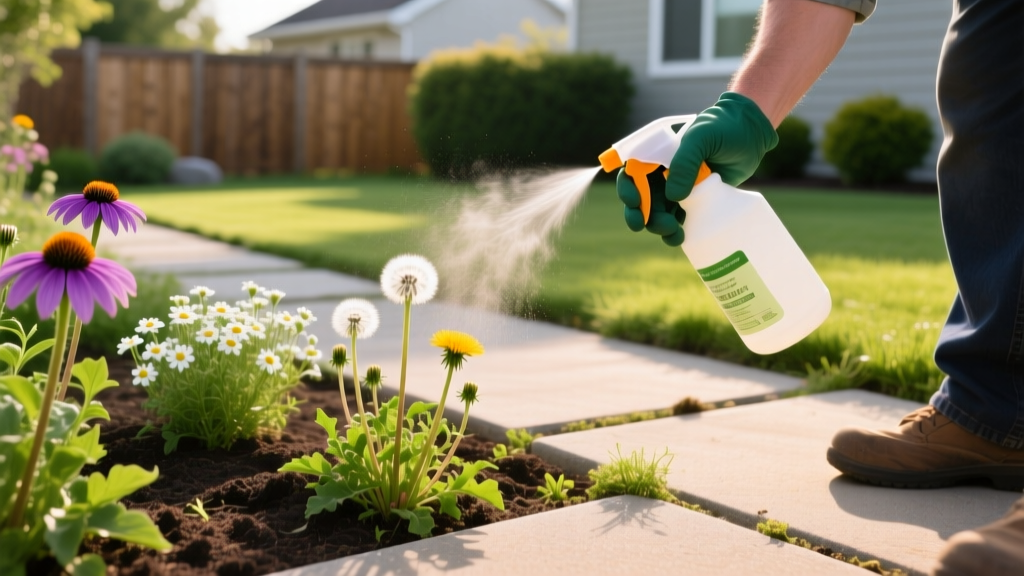
Best Weed Killer That Won't Kill Flowers: Safe Spot Treatments
Homeowners frequently search for a universal weed killer that won't kill flowers, assuming a magic chemical exists that can distinguish between a prized petunia and a pesky dandelion. The botanical reality is far more complex. Most popular garden flowers and most common broadleaf weeds belong to the exact same plant classification (dicots). Because of this shared biology, broadleaf herbicides like 2,4-D and dicamba—the active ingredients in standard lawn weed killers—will rapidly destroy your flower beds.
To successfully eradicate weeds without harming your ornamentals, you must abandon the idea of a single 'safe' spray and instead rely on botanical selectivity, targeted pre-emergents, and precise physical application methods. This guide breaks down the exact chemical and organic spot-treatment protocols for maintaining weed-free flower beds in 2026.
The Botany of Selectivity: Monocots vs. Dicots
Understanding why certain herbicides kill weeds but spare flowers requires a basic grasp of plant taxonomy. Flowering plants are divided into two main groups:
- Monocots (Grasses): Plants with parallel leaf veins and a single seed leaf. Examples include crabgrass, bermudagrass, quackgrass, and ornamental grasses like fountain grass.
- Dicots (Broadleaves): Plants with branching leaf veins and two seed leaves. Examples include roses, marigolds, hostas, dandelions, clover, and chickweed.
According to University of Minnesota Extension guidelines on landscape weed management, selective herbicides only work when the weed and the desired plant belong to different botanical groups. You can safely kill grassy weeds in a broadleaf flower bed, but you cannot chemically kill a broadleaf weed (like a dandelion) in a broadleaf flower bed (like a rose bush) without risking severe damage to the flowers.
CRITICAL WARNING: Never use standard lawn 'Weed and Feed' products or broadleaf herbicides containing 2,4-D, MCPP, or dicamba in or near flower beds. These chemicals are absorbed through the roots and leaves of broadleaf plants and will cause severe leaf cupping, stunting, and death in ornamental flowers.
Chemical Solutions: Matching the Herbicide to the Bed
When chemical intervention is necessary, your choice of active ingredient must be dictated by the specific weed and flower types present in your garden.
1. Grassy Weed Killers for Broadleaf Flower Beds
If your flower bed is overrun by grassy weeds like crabgrass or annual bluegrass, you can use grass-selective herbicides. These target the ACCase enzyme found only in grasses, leaving broadleaf flowers completely unharmed.
- Fluazifop-p-butyl: Sold under brand names like Ortho Grass B Gon. It is highly effective against crabgrass and bermudagrass. In 2026, a 16 oz ready-to-spray bottle costs between $14 and $18. Apply at a rate of 1 oz per gallon of water for concentrate versions.
- Sethoxydim: Found in products like Bonide Grass Beater. Excellent for killing tough perennial grasses in beds of roses, daylilies, and hostas. Expect to pay around $22 for a 16 oz concentrate.
2. Pre-Emergent Preventers for Established Beds
The safest chemical approach is stopping weeds before they germinate. Pre-emergents create a chemical barrier in the top inch of soil that disrupts cell division in germinating weed seeds but does not harm the deep, established root systems of your flowers.
- Trifluralin: The active ingredient in Preen Garden Weed Preventer. It is safe for use around over 200 established broadleaf flowers and shrubs. A 5.6 lb shaker jug costs approximately $16 to $20 and covers up to 2,000 square feet. Apply in early spring before soil temperatures reach 55°F.
- Corn Gluten Meal: An organic pre-emergent alternative that also provides a mild nitrogen boost. Apply at a rate of 20 lbs per 1,000 sq ft. Note that it must be applied before weed seeds germinate and requires a dry period to be effective.
| Active Ingredient | Target Weed Type | Safe For Broadleaf Flowers? | Avg. Cost (2026) |
|---|---|---|---|
| Fluazifop-p-butyl | Grassy Weeds | Yes | $14 - $18 / 16oz |
| Sethoxydim | Grassy Weeds | Yes | $20 - $25 / 16oz |
| Trifluralin | Germinating Seeds | Yes (Established only) | $16 - $20 / 5.6lb |
| 2,4-D / Dicamba | Broadleaf Weeds | NO (Will kill flowers) | N/A |
Non-Selective Spot Treatments: The Wicking and Shielding Method
When dealing with broadleaf weeds inside a broadleaf flower bed, chemical selectivity fails. You must use a non-selective herbicide like glyphosate or glufosinate, but apply it with extreme physical precision to prevent drift. The Environmental Protection Agency (EPA) emphasizes that targeted application minimizes environmental exposure and protects non-target ornamentals.
Step-by-Step Sponge Wicking Technique
Spraying non-selective herbicides near flowers is a recipe for disaster due to microscopic wind drift. Instead, use the 'wicking' method:
- Mix a Low-Concentration Solution: Combine a 41% glyphosate concentrate with water to create a weak 2% to 3% solution. Add a few drops of non-ionic surfactant to help the chemical adhere to the weed leaves.
- Prepare the Applicator: Put on chemical-resistant nitrile gloves. Take a cheap, disposable paintbrush or a thick cellulose sponge.
- Wipe, Don't Spray: Dip the brush or sponge into the solution, wiping off excess so it is damp but not dripping. Physically paint the leaves of the target weed from top to bottom.
- Isolate the Weed: If the weed is tangled in your flower, gently pull the weed's foliage away from the flower's leaves before wiping. If they are too close, use a piece of stiff cardboard as a physical shield between the plants while you apply the solution.
Organic Burn-Downs: Horticultural Vinegar and Clove Oil
For gardeners who refuse to use synthetic herbicides near their edible flowers or pollinator gardens, organic contact burn-downs are the primary alternative. These do not translocate to the roots, meaning they only kill the top growth they touch. Perennial weeds will likely require multiple applications.
20% Acetic Acid (Horticultural Vinegar)
Standard 5% kitchen vinegar is ineffective against mature weeds. You must use 20% to 30% horticultural vinegar. In 2026, a 1-gallon jug of 20% acetic acid costs between $25 and $35.
- The Recipe: Mix 1 gallon of 20% horticultural vinegar with 1 oz of liquid dish soap (the surfactant breaks the weed's waxy cuticle) and 1 cup of table salt (to desiccate the plant tissue).
- Application: Spray only on hot, sunny days when temperatures exceed 80°F. The heat accelerates the acid's cell-destroying properties. Avoid spraying near the base of your flowers, as repeated salt accumulation will alter soil pH and harm flower roots.
Eugenol (Clove Oil) Extracts
Products containing high concentrations of eugenol (clove oil) and citric acid disrupt plant cell membranes on contact. They are highly effective on young, tender broadleaf weeds under 4 inches tall. Expect to pay around $18 for a 24 oz ready-to-use spray bottle. These are safe to use around flowers provided you use a targeted stream nozzle and avoid coating the flower petals.
Troubleshooting Common Herbicide Drift Failures
Even with careful application, homeowners frequently experience accidental flower damage. Here are the most common failure modes and how to avoid them:
Expert Insight: Herbicide volatilization is a silent killer of flower beds. Ester formulations of broadleaf herbicides can vaporize into a gas when temperatures exceed 85°F and drift onto nearby flowers days after application. Always choose amine formulations over ester formulations when working near sensitive ornamentals, and never apply any herbicide during a heat wave.
- Splashback from Mulch: When spraying weeds near the soil surface, herbicide droplets can bounce off hard-baked mulch or rocks onto the lower leaves of your flowers. Apply a 2-inch layer of soft wood mulch to absorb overspray, or use the wicking method mentioned above.
- Root Uptake from Soil Spills: Non-selective herbicides like glyphosate are deactivated upon contact with soil particles. However, if you spill a concentrated amount directly over the shallow feeder roots of a flower, the plant may absorb a toxic dose before the chemical binds to the soil. Always mix chemicals over a concrete driveway, not over the garden bed.
- Contaminated Equipment: Using the same pump sprayer for lawn broadleaf killers and flower bed treatments is the number one cause of accidental flower death. Even trace residues of 2,4-D left in a sprayer hose will severely distort the new growth of roses and tomatoes. Dedicate one sprayer exclusively for flower-safe applications and label it clearly.
Frequently Asked Questions
Can I use boiling water to kill weeds in my flower bed?
Yes, pouring boiling water directly onto the crown of a weed will cook the plant tissue and kill it instantly. This is highly effective for weeds growing in cracks between paving stones or isolated weeds with clear space around them. However, in a dense flower bed, the risk of splashing boiling water onto your flowers or scalding the beneficial microbes in the top layer of your soil makes this method less practical than sponge wicking.
Will landscape fabric prevent weeds without hurting my flowers?
Landscape fabric blocks weed seeds from reaching the soil, but it also restricts water penetration, gas exchange, and the natural expansion of your flowers' root systems. Over time, soil health degrades beneath the fabric, and weeds will eventually grow in the mulch layered on top of the fabric. For established flower beds, a 3-inch layer of natural arborist wood chips is vastly superior for weed suppression and soil health.
How long after applying a pre-emergent can I plant new flower seeds?
Pre-emergents like trifluralin do not discriminate between weed seeds and flower seeds. If you apply a pre-emergent, you cannot sow new seeds in that bed for at least 8 to 12 weeks. Pre-emergents are strictly for beds containing established, transplanted flowers with mature root systems.

