
Pest Control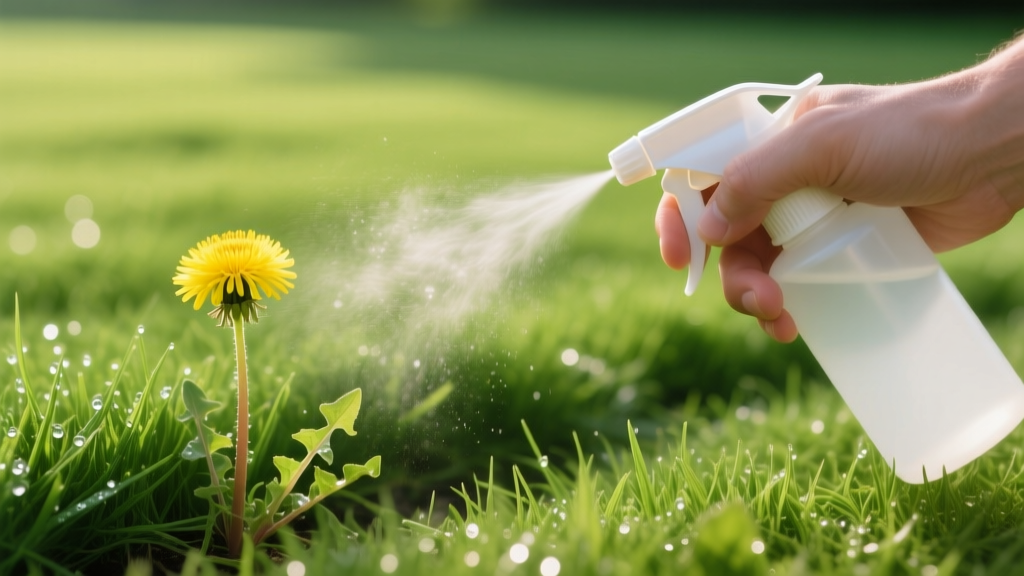
Selective Weed Killer That Won't Kill Plants: A Spot-Treatment Guide
The Challenge of Targeted Weed Control
Finding a weed killer that won't kill plants in your surrounding garden beds or turf is one of the most common dilemmas in residential landscaping. Non-selective herbicides like glyphosate or glufosinate will obliterate any green tissue they touch, making them useless for weeds growing intimately alongside desirable ornamentals or turfgrass. To safely eradicate intruders without collateral damage, you must rely on selective herbicides and precise spot-treatment protocols.
Selective herbicides exploit physiological differences between plant species. Broadleaf plants (dicots) and grasses (monocots) process certain chemicals differently. By understanding these biological pathways, you can apply targeted treatments that disrupt the weed's growth while leaving your prized plants completely unharmed. According to University of Minnesota Extension, proper identification of the weed and the surrounding desirable plants is the mandatory first step before selecting any chemical intervention.
The Chemistry: How Selective Herbicides Spare Your Plants
Selective weed killers generally fall into two primary categories based on the type of weed they target and the desirable plants they protect:
Active Ingredients Matrix: Match the Chemical to the Weed
Choosing the wrong selective herbicide is the primary reason homeowners accidentally damage their landscapes. Use this matrix to match your specific weed problem with the correct active ingredient.
| Active Ingredient | Target Weeds | Safe Around (Desirable Plants) | Estimated Cost (16 oz Concentrate) |
|---|---|---|---|
| 2,4-D Amine | Dandelion, clover, plantain, chickweed | Cool-season & warm-season turfgrass | $15 - $22 |
| Triclopyr | Tough broadleaves: bindweed, wild violet, ground ivy | Cool-season turfgrass (Fescue, Bluegrass) | $25 - $35 |
| Fluazifop-P-butyl | Crabgrass, annual bluegrass, bermudagrass | Most broadleaf ornamentals, flowers, shrubs | $30 - $45 |
| Sethoxydim | Nutsedge, goosegrass, crabgrass | Broadleaf vegetables, ornamental beds | $20 - $28 |
| Quinclorac | Crabgrass, foxtail, specific broadleaves | Established turfgrass (check label for St. Augustine) | $18 - $25 |
The Amine vs. Ester Trap: Avoiding Vapor Drift
When purchasing a 2,4-D based weed killer that won't kill plants in your nearby vegetable garden, the formulation is just as critical as the active ingredient. 2,4-D is sold in two primary forms: Amine and Ester.
Ester formulations are highly effective in cool spring weather because they penetrate waxy weed cuticles faster. However, esters are highly volatile. When temperatures exceed 80°F, ester formulations vaporize into a gas that can drift across your yard and severely damage sensitive broadleaf plants like tomatoes, grapes, and redbud trees. For residential spot-treatments near mixed landscapes, always purchase the Amine formulation. Amines have virtually zero vapor pressure, meaning they stay exactly where you spray them, even on warm summer days.
Step-by-Step Spot-Treatment Protocol
To ensure your selective herbicide remains a precision tool rather than a landscape hazard, follow this exact application workflow.
- Ditch the Hose-End Sprayer: Never use a hose-end sprayer for spot treatments. The high water volume dilutes the chemical improperly and causes massive runoff. Use a dedicated 1-gallon or 2-gallon pump tank sprayer.
- Calibrate the Mix: For a standard 2,4-D Amine concentrate, mix exactly 1.5 fluid ounces of herbicide per 1 gallon of water. This covers approximately 400 square feet. For Fluazifop (grass killer), the rate is typically 0.5 to 0.75 fluid ounces per gallon.
- Add a Non-Ionic Surfactant (NIS): Selective herbicides often bead up and roll off waxy leaves. Add 1 teaspoon (approx. 0.25% v/v) of a high-quality non-ionic surfactant to your tank. This breaks the surface tension, ensuring the chemical spreads evenly across the weed's foliage.
- Employ a Physical Shield: When treating weeds at the base of desirable plants, use a piece of corrugated cardboard or a specialized plastic spray shield. Place it between the weed and the desirable plant to block accidental physical drift from the spray nozzle.
- Spray to Wet, Not Dripping: Apply a fine mist until the weed leaves are uniformly wet. If the liquid is dripping off the leaf onto the soil, you have over-applied. Soil residual uptake is not the goal for most foliar selective herbicides and increases the risk of root absorption by nearby desirable plants.
Warning: Temperature and Wind Limits
Do not apply any selective herbicide if the ambient temperature is above 85°F or if wind speeds exceed 5 mph. High heat increases plant stress and chemical volatility, while wind causes physical droplet drift onto non-target species.
Organic and Mechanical Fallbacks
Chemical selective herbicides are not a silver bullet for every species. Some weeds, like mature nutsedge or deep-rooted field bindweed, require multiple applications spaced 21 days apart. If you are managing an organic vegetable garden where synthetic auxins are strictly prohibited, you must rely on alternative spot-treatments.
The NC State Extension Turf Files recommends mechanical extraction for tap-rooted weeds in sensitive beds. Use a specialized weeding tool like the Fiskars Stand-Up Weeder to extract the top 4 inches of the taproot. For organic chemical spot-treatment, horticultural vinegar (20% acetic acid) can be used, but it is strictly non-selective and will burn any plant tissue it touches, requiring meticulous shielded application.
Frequently Asked Questions
Will selective weed killers harm my soil microbiome?
Modern selective herbicides like 2,4-D and triclopyr have relatively short soil half-lives (typically 7 to 14 days). They are broken down rapidly by naturally occurring soil microbes. When used strictly as a spot-treatment at labeled rates, they do not cause long-term detriment to the soil food web or earthworm populations.
Can I use a 'weed and feed' granular product instead of liquid spot-treatment?
Granular 'weed and feed' products broadcast herbicides across your entire lawn. While convenient, they are highly inefficient for spot-treatment and result in unnecessary chemical exposure to the environment. Furthermore, granular broadleaf killers require the weed's leaves to be wet (from dew or rain) so the granules stick to the foliage. Liquid spot-treatment is vastly superior for targeted, environmentally responsible weed control.
How long does it take to see results?
Selective herbicides are generally systemic, meaning they must be absorbed and translocated to the roots. You will typically see leaf curling and epinasty (twisting) within 24 to 48 hours. Complete necrosis (browning and death) of the weed usually takes 10 to 14 days. Do not reapply if the weed looks twisted but is still green; the chemical is actively working.
For more comprehensive data on environmental safety and proper disposal of herbicide concentrates, always consult the EPA's Safe Pest Control guidelines before making bulk purchases for the season.

