
Pest Control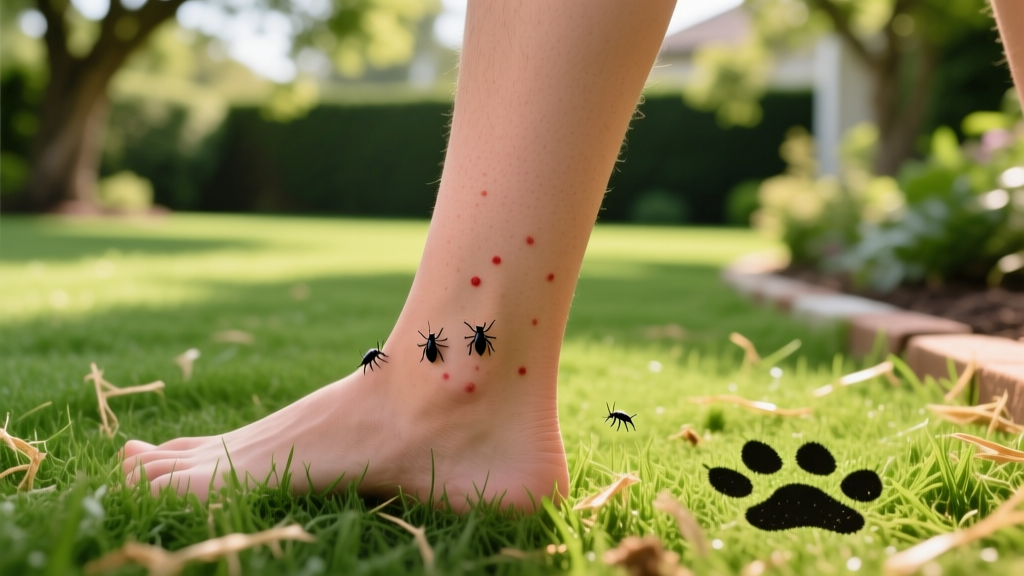
Early Signs of Fleas on Humans: Tracing and Treating Yard Sources
When you notice itchy, red welts on your skin after spending time outdoors, identifying the culprit is the first step toward reclaiming your yard. While mosquitoes and chiggers are common suspects, the specific signs of fleas on humans often point to a much larger, hidden infestation in your landscape. Fleas do not typically live on humans, but they will aggressively bite us when their primary animal hosts are scarce or when an outdoor population explodes. Recognizing these signs is not just a medical necessity; it is a critical diagnostic tool for pinpointing and eradicating the source in your lawn and garden.
Identifying the Culprit: Key Signs of Fleas on Humans
Flea bites on humans present distinct morphological and behavioral patterns that separate them from other biting insects. Because human skin is less ideal for flea habitation than furry hosts, the bites are purely opportunistic and defensive. Look for the following clinical indicators:
- The "Breakfast, Lunch, Dinner" Pattern: Fleas are easily disturbed while feeding. When a human shifts or swats, the flea jumps away, only to return and bite again nearby. This results in clusters or linear rows of three to four bites.
- Papular Urticaria: The bites typically manifest as small, hard, red papules with a central hemorrhagic punctum (a tiny bleeding point). In sensitive individuals, this triggers papular urticaria—raised, intensely itchy hives that can blister.
- Gravity-Dependent Distribution: Yard-acquired flea bites are overwhelmingly concentrated below the knee. The ankles, calves, and feet are the primary strike zones, as adult fleas in the grass rarely jump higher than 6 to 8 inches.
- Immediate Pruritus: Unlike mosquito bites, which may take minutes to itch due to the delayed reaction to anticoagulants, flea saliva often causes an immediate, sharp itching sensation upon injection.
Diagnostic Matrix: Flea Bites vs. Other Yard Pests
Misidentifying the pest leads to wasted money on the wrong yard treatments. Use this comparison matrix to confirm you are dealing with fleas before applying insecticides.
| Feature | Flea Bites | Mosquito Bites | Chigger Bites | Bed Bug Bites |
|---|---|---|---|---|
| Visual Pattern | Clusters or lines of 3-4 | Random, scattered | Dense clusters around tight clothing lines | Linear rows (often on torso/arms) |
| Primary Location | Ankles, lower calves | Exposed skin (arms, neck, face) | Ankles, waistline, behind knees | Shoulders, arms, torso (sleeping) |
| Bite Appearance | Hard red papule with central red dot | Soft, raised, pale swelling | Tiny, intensely red, blister-like | Flat or slightly raised red welts |
| Time of Attack | Day or night (when in yard) | Dusk and dawn | Daytime (tall grass/brush) | Nighttime (in bed) |
The Yard-to-Human Transmission Cycle
"For every adult flea you see or feel biting you, there are roughly 95 more in your yard existing as eggs, larvae, or pupae hidden in the thatch and soil." — Integrated Pest Management Principles, University of Minnesota Extension
Understanding the biology of the cat flea (Ctenocephalides felis)—the most common species infesting North American yards—is vital. Adult fleas make up only 5% of the total population. The remaining 95% are pre-adult stages living in shaded, humid microclimates in your lawn. When wildlife (opossums, raccoons, stray cats) or domestic pets enter these zones, the pupae hatch due to vibrations and carbon dioxide. If a human walks through this area before a pet does, the human becomes the surrogate host. According to the Centers for Disease Control and Prevention (CDC), while fleas prefer animal hosts, they will readily bite humans to survive, and some species can transmit diseases like murine typhus or tapeworms if accidentally ingested.
Perimeter Defense: Eliminating the Yard Source
Treating your skin with hydrocortisone only addresses the symptom. To stop the signs of fleas on humans from recurring, you must break the reproductive cycle in your landscape. This requires a multi-pronged approach combining cultural, chemical, and biological controls.
Step 1: Microclimate Disruption (Cultural Control)
Flea larvae require high humidity (above 70%) and shade to survive; they desiccate rapidly in direct sunlight.
- Adjust Mowing Height: Lower your mower deck to 2.5 inches. This allows UV radiation to penetrate the thatch layer, drying out the soil surface and killing vulnerable larvae.
- Thatch Removal: If your thatch layer exceeds 0.5 inches, perform mechanical dethatching. Thatch acts as an insulating blanket, protecting pupae from both weather and chemical treatments.
- Clear Perimeter Debris: Rake out leaf litter and pine needles from under shrubs and along fence lines, which are prime flea harborage zones.
Step 2: Insect Growth Regulator (IGR) Application
Before killing adults, stop the next generation. Apply an IGR containing Pyriproxyfen or (S)-Methoprene. These synthetic juvenile hormones mimic the insect's biology, preventing larvae from molting into biting adults.
- Application Rate: Mix liquid Pyriproxyfen at a rate of 1 oz per 1,000 square feet of shaded yard space.
- Longevity: Unlike adulticides, IGRs are photostable and can remain active in the thatch for up to 7 months, providing long-term yard defense.
Step 3: Targeted Adulticide Deployment
To eliminate the 5% of adult fleas actively biting humans and pets, apply a fast-acting adulticide. Bifenthrin or Permethrin granules are highly effective for outdoor broadcast applications.
⚠️ CRITICAL WARNING FOR CAT OWNERS: Permethrin and Bifenthrin are highly toxic to felines. If you have outdoor cats, or if neighborhood cats frequent your yard, avoid synthetic pyrethroids. Opt for Spinosad or biological controls instead. Always read the EPA's safe pest control guidelines before application.
Step 4: Biological Control (Organic Alternative)
For an eco-friendly approach, apply beneficial nematodes (Steinernema carpocapsae). These microscopic worms actively seek out and infect flea larvae in the soil, releasing bacteria that kill the host within 48 hours.
- Cost & Coverage: Expect to pay $30 to $45 for a commercial formulation covering 5,000 square feet.
- Application Rules: Apply via hose-end sprayer in the early evening when soil temperatures are above 60°F. The soil must be kept moist for 7 to 10 days post-application to ensure nematode survival.
Expert Troubleshooting: Why Your Yard Treatment Failed
If you have applied treatments but are still experiencing the signs of fleas on humans, you are likely encountering one of these common failure modes:
- The Pupal Window: Flea pupae are encased in a sticky, protective cocoon that is virtually impervious to IGRs and adulticides. It can take 14 to 21 days for all existing pupae to hatch and be exposed to the residual chemicals. You must continue to walk the yard to stimulate hatching via vibration.
- Improper Watering: Granular adulticides and IGRs must be watered in with roughly 0.25 inches of irrigation immediately after application to wash the active ingredients down into the thatch where the larvae live. Surface-level granules degrade in UV light and fail to reach the target zone.
- Wildlife Reintroduction: If your yard borders a wooded area or an alleyway, untreated wildlife will continuously drop new flea eggs onto your lawn. Install physical barriers, use motion-activated sprinklers to deter raccoons and opossums, and secure trash receptacles to remove the food source.
- Neglecting the "Bridge" Zones: Homeowners often treat the open lawn but forget the transition zones. Fleas thrive in the shaded dirt beneath raised decks, inside doghouses, and in the crawlspaces of sheds. These areas require targeted liquid sprays rather than broadcast granules.
By accurately identifying the signs of fleas on humans and executing a targeted, multi-stage yard defense protocol, you can collapse the local flea population and safely reclaim your outdoor living spaces.

