
Pest Control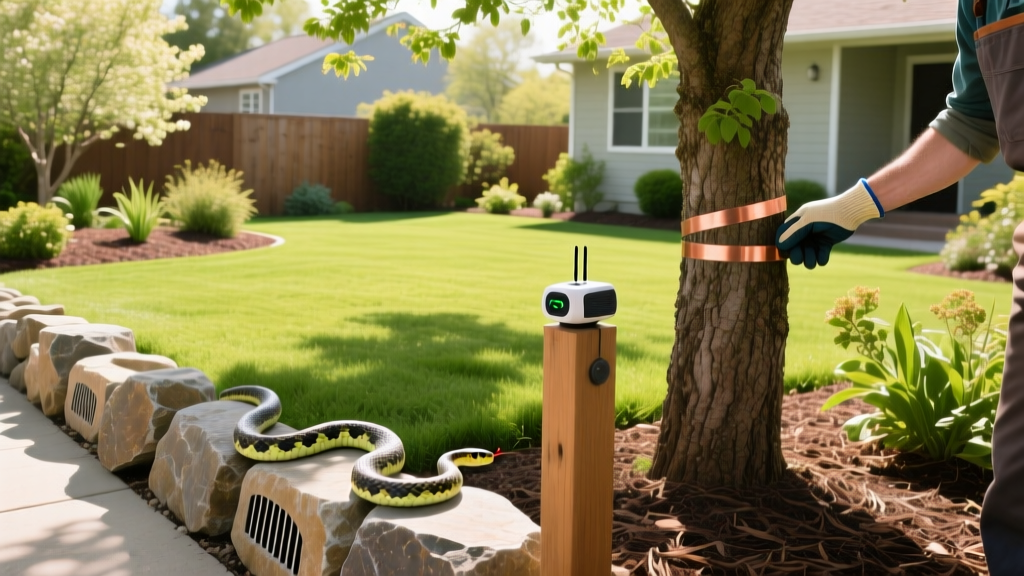
Snake Deterrents Playbook: Proven Yard Defense Strategies
The Reality of Commercial Snake Deterrents
Walk into any big-box garden center, and you will find shelves lined with $20 to $40 products promising to make your yard a snake-free zone. The reality, backed by decades of herpetological research, is that the vast majority of commercial snake deterrents are entirely ineffective. Snakes lack external ears and rely on ground-borne vibrations and chemical cues (smell/taste via the Jacobson's organ) to navigate. Products designed to exploit these senses often fail due to rapid environmental degradation or biological irrelevance.
This playbook cuts through the marketing noise. We evaluate physical barriers, chemical repellents, electronic devices, and habitat modifications based on verifiable efficacy, providing exact specifications and 2026 pricing to help you build a reliable perimeter defense.
Physical Exclusion: The Only Proven Barrier
According to the Clemson University Home & Garden Information Center, physical exclusion is the single most reliable method for keeping snakes out of specific areas like gardens, play zones, or patios. However, standard chicken wire is useless; snakes can easily pass through the hexagonal gaps.
The 30-Degree Angle Trench Method
To stop both ground-crawling species (like copperheads) and climbing species (like rat snakes), you must install a specialized mesh barrier using precise measurements:
- Material: Use 1/4-inch (0.6 cm) galvanized steel hardware cloth. Do not use vinyl-coated mesh, as UV exposure makes it brittle within two seasons.
- Dimensions: Purchase a roll that is at least 30 inches wide.
- Burial: Dig a trench 3 to 4 inches deep along the perimeter. Bury the bottom edge of the mesh to prevent burrowing rodents (and the snakes hunting them) from digging underneath.
- The Angle: Bend the exposed 26 inches of mesh outward at a 30-degree angle away from the protected area. Snakes are poor climbers on overhanging, angled surfaces.
| Material | Mesh Size | Avg Cost (per 25ft) | Durability | Effectiveness |
|---|---|---|---|---|
| 1/4-inch Galvanized Hardware Cloth | 0.25 in | $45 - $55 | 10+ Years | High (if angled) |
| Aluminum Flashing (Solid) | N/A (Solid) | $60 - $80 | 5-7 Years | High (buried 4in) |
| Standard Chicken Wire | 1.0 in | $15 - $20 | 3-5 Years | Very Low |
| Plastic Bird Netting | 0.5 in | $20 - $30 | 1-2 Years | Low (snakes tangle/tear) |
Chemical Repellents: Sulfur, Naphthalene, and Oils
Chemical deterrents attempt to irritate a snake's Jacobson's organ or overwhelm its sensory system. Here is how the three primary chemical categories perform in real-world yard conditions.
Sulfur and Naphthalene Granules
Products like Snake-A-Way rely on sulfur and naphthalene (the active ingredient in traditional mothballs). Penn State Extension notes that while naphthalene can act as a mild irritant, its use outdoors as a pesticide is heavily regulated and often illegal when not applied according to strict EPA labeling. Furthermore, sulfur-based granules wash away after a single heavy rainstorm, requiring constant, expensive reapplication. The smell is also highly offensive to humans and pets.
⚠️ Pet Toxicity Warning: Naphthalene is highly toxic to dogs and cats. Ingestion of granules mistaken for kibble can cause hemolytic anemia and liver damage. Avoid mothball-based deterrents entirely if pets roam your yard.
Essential Oil Blends (Cinnamon, Clove, Peppermint)
Organic sprays utilizing cinnamon and clove oils (eugenol) do cause temporary sensory discomfort to snakes. However, these volatile organic compounds (VOCs) evaporate rapidly in direct sunlight. To maintain a chemical barrier, you must spray the perimeter every 5 to 7 days, and immediately after any irrigation or rainfall. At $25 per 32oz bottle, maintaining a perimeter for a standard 1/4-acre lot will cost upwards of $300 per summer season.
Electronic and Ultrasonic Stakes: The Verdict
Solar-powered ultrasonic stakes claim to emit high-frequency sound waves and ground vibrations that drive snakes away. Herpetologists universally reject these claims for two biological reasons:
- Auditory Anatomy: Snakes do not have external ear openings or eardrums. They cannot hear airborne ultrasonic frequencies. They detect low-frequency ground vibrations (like the heavy footsteps of a predator), but the micro-vibrations produced by a $30 plastic stake are indistinguishable from wind or normal yard activity.
- Habituation: Even if a vibration initially startles a snake, they quickly habituate to non-threatening, repetitive stimuli. Within 48 hours, a snake will ignore the vibration entirely.
Bottom Line: Do not spend money on ultrasonic snake deterrents. They are engineered to exploit human anxiety, not snake biology.
Habitat Modification: The 'Starve and Expose' Protocol
Snakes enter yards for two reasons: prey and shelter. If you remove both, the snakes will bypass your property. This protocol is the most cost-effective, long-term strategy available.
Step 1: Eradicate the Food Source (Rodents)
A yard with a high mouse or vole population is a snake magnet. Implement a strict rodent control program. Use tamper-resistant bait stations (like the Protecta LP) anchored to fences or foundations, baited with diphacinone or bromadiolone blocks. Keep bird feeders clean; spilled seed attracts rodents, which in turn attract rat snakes and copperheads.
Step 2: Eliminate Ground-Level Shelter
Snakes require cover to hide from aerial predators (hawks, owls) and to regulate their body temperature. Execute the following yard modifications:
- Mulch Management: Pull mulch beds back at least 12 inches from your home's foundation. Avoid using large river rock or thick straw bales near the house, as these create ideal micro-climates for rodents and snakes.
- Mowing Height: Maintain turfgrass at a maximum height of 2.5 inches. Tall fescue or overgrown bermudagrass provides perfect cover for ambush predators.
- Debris Clearance: Remove stacked firewood, unused lumber, and piles of leaf litter. If you must store firewood, elevate it at least 18 inches off the ground on a metal rack.
- Foundation Sealing: Inspect your home's exterior. Seal any cracks wider than 1/4 inch in the foundation, around HVAC lines, and under doors using copper mesh and expanding polyurethane foam.
When to Call a Professional (And What It Costs)
If you have confirmed venomous snake activity (e.g., copperheads, rattlesnakes) or a severe rat snake infestation in your crawlspace, DIY methods are insufficient and potentially dangerous. Wildlife control operators (WCOs) offer specialized services.
| Service Type | Description | Average Cost Range |
|---|---|---|
| Emergency Removal | Single snake capture and relocation from yard/home. | $150 - $300 |
| Crawlspace Inspection | Thorough search, capture, and sealing of entry points. | $350 - $600 |
| Perimeter Exclusion | Professional installation of hardware cloth around entire property. | $15 - $25 per linear foot |
Always verify that a WCO is licensed by your state's Department of Natural Resources or Fish and Wildlife agency. Relocation laws vary strictly by state; in many jurisdictions, it is illegal to relocate venomous species, and they must be euthanized or released exactly on the property where they were found.
By abandoning gimmick products and focusing on physical exclusion and habitat denial, you can effectively secure your lawn and garden against unwanted reptilian visitors.

