
Pest Control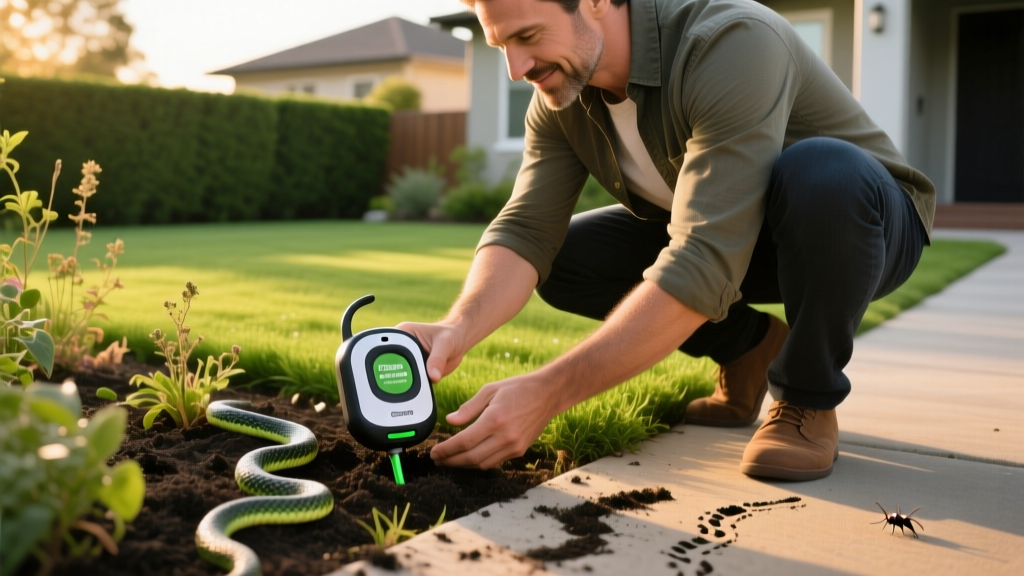
Proven Snake Repellent for Yard: A Step-by-Step Removal Playbook
The Hard Truth About Commercial Snake Repellents
When homeowners search for a reliable snake repellent for yard applications, they are immediately bombarded with two highly marketed but fundamentally flawed solutions: ultrasonic stakes and naphthalene mothballs. Before deploying any removal playbook, it is critical to understand the biological and regulatory reasons these products fail.
⚠️ Regulatory Warning: The Mothball Myth
Using naphthalene mothballs outdoors as a snake repellent is a direct violation of the Federal Insecticide, Fungicide, and Rodenticide Act (FIFRA). Mothballs are a restricted-use pesticide registered only for enclosed spaces. Outdoors, naphthalene dissipates rapidly, fails to reach the concentration required to irritate a snake's Jacobson's organ, and leaches toxic chemicals into your soil and groundwater.
Similarly, solar-powered ultrasonic repellents are biologically useless against serpents. Snakes lack external ear openings and tympanic membranes (eardrums) to detect airborne sound waves. Instead, they rely on their quadrate bone to detect low-frequency ground vibrations. An ultrasonic device emitting high-frequency airborne noise is entirely imperceptible to a snake, making it a wasted investment.
A genuine snake repellent for yard defense requires a multi-tiered playbook focusing on habitat modification, olfactory disruption, and physical exclusion. According to wildlife management protocols outlined by the Internet Center for Wildlife Damage Management, altering the micro-environment is the only permanent deterrent.
Phase 1: Habitat Modification (The Primary Repellent)
Snakes enter yards for two reasons: thermoregulation (seeking warmth or cool shade) and foraging (hunting rodents and insects). If your yard does not provide prey or shelter, snakes will bypass it entirely. This phase costs $0 but requires strict adherence to specific landscaping measurements.
The 18-Inch Foundation Clearance Rule
Snakes utilize the transitional zone between your lawn and your home's foundation as a primary travel corridor. You must establish an 18-inch barren perimeter around all structures.
- Mulch and Groundcover: Remove all wood chips, pine straw, and dense groundcovers (like ivy or pachysandra) within 18 inches of the foundation. Replace this zone with crushed stone or bare, compacted soil.
- Grass Height: Maintain turfgrass at a maximum height of 3 inches. Tall fescue or unmowed margins harbor both snakes and their rodent prey.
- Debris Removal: Clear lumber piles, corrugated metal, and unused terracotta pots. Snakes seek out materials that retain heat overnight or provide tight, compressive hiding spots where their dorsal scales feel secure against a roof.
Rodent Population Suppression
A snake's presence is almost always an indicator of a rodent problem. Deploying tamper-resistant bait stations (such as the Protecta LP Rat Bait Station) along fence lines reduces the mouse and vole populations that draw foraging rat snakes and garter snakes into your yard.
Phase 2: Scent-Based Snake Repellent for Yard Perimeters
Once the habitat is modified, the secondary layer of defense involves disrupting the snake's chemosensory navigation. Snakes use their forked tongues to collect scent particles, transferring them to the Jacobson's organ in the roof of their mouth. Overpowering this organ with specific essential oils creates an avoidance zone.
Clove, Cinnamon, and Cedarwood Oil Formulations
Research and field testing indicate that a combination of clove oil (eugenol), cinnamon oil (cinnamaldehyde), and cedarwood oil acts as an effective olfactory irritant. Commercial granular blends like Snake Shield or Snake Stopper encapsulate these oils in a slow-release clay or cedar shavings base.
📊 Application Specifications for Granular Oil Repellents
- Band Width: Apply a continuous 4-inch wide band. Narrow bands allow snakes to cross without sufficient olfactory exposure.
- Target Zones: Perimeter fence lines, driveway edges, and around detached sheds.
- Reapplication Trigger: Reapply immediately after 1 inch of cumulative rainfall or every 30 days during high-heat summer months, as UV radiation and moisture degrade the volatile oils.
- Cost Expectation: A 4 lb shaker bottle typically costs between $25 and $35, covering approximately 2,000 linear feet of 4-inch banding.
Phase 3: Physical Exclusion Barriers
For yards bordering wooded areas, brushy ravines, or active agricultural fields, scent repellents alone may fail under high migration pressure. Physical exclusion is the ultimate, foolproof snake repellent for yard perimeters. The Penn State Extension recommends specific hardware cloth configurations to prevent burrowing and climbing species from entering.
Installing a 1/4-Inch Hardware Cloth Fence
Standard chicken wire (poultry netting) is entirely ineffective; the hexagonal gaps are large enough for juvenile snakes and slender species like ribbon snakes to pass through. You must use 19-gauge, 1/4-inch (0.6 cm) galvanized steel hardware cloth.
- Trenching: Dig a narrow trench 2 to 4 inches deep along the perimeter where the fence will be installed. Snakes will attempt to burrow under barriers, making sub-surface burial mandatory.
- Mesh Height: Use a roll of hardware cloth that is at least 30 inches tall. This allows for 4 inches of burial and 26 inches of above-ground vertical clearance, which defeats climbing species.
- The 30-Degree Angle: Do not install the fence perfectly vertical. Angle the top 12 inches of the mesh outward away from the yard at a 30-degree angle. Snakes are poor climbers of overhanging, angled surfaces and will abort the attempt.
- Sealing Gaps: Overlap any seams by at least 6 inches and secure them with heavy-duty zip ties or galvanized hog rings. Ensure gates and drainage culverts are fitted with custom-cut mesh grates.
Repellent Efficacy & Cost Matrix
Choosing the right combination of tactics depends on your budget, property size, and the severity of the local snake population. Use the matrix below to plan your investment.
| Repellent Method | Efficacy Rating | Cost per 100 Linear Ft | Longevity & Maintenance |
|---|---|---|---|
| Habitat Modification | High (Long-term) | $0 (Labor only) | Permanent; requires routine mowing and weeding. |
| Clove/Cinnamon Granules | Moderate | $1.50 - $2.00 | 30 days; degrades rapidly with rain and UV. |
| 1/4" Hardware Cloth | Very High (Absolute) | $25.00 - $40.00 | 10+ years; inspect annually for rust or burrow gaps. |
| Ultrasonic Stakes | None (Ineffective) | $15.00 - $30.00 | N/A; biologically imperceptible to snakes. |
| Naphthalene Mothballs | Very Low (Illegal) | $0.50 | Days; toxic to pets, soil, and violates FIFRA. |
Frequently Asked Questions
Will sulfur powder work as a snake repellent for yard use?
Elemental sulfur is frequently recommended in anecdotal gardening forums, but controlled university studies show it has virtually no repellent effect on snakes. Furthermore, applying large quantities of sulfur to your lawn will drastically lower your soil pH, potentially burning your turfgrass and harming beneficial soil microbes without deterring a single snake.
Do snake traps work for yard removal?
Glue traps and minnow-style funnel traps can catch snakes, but they are non-selective and frequently trap beneficial wildlife, birds, and pets. If you must trap a venomous species that has taken up residence under a shed, use a specialized, humane drift fence trap designed by wildlife professionals, and contact local animal control for safe relocation rather than attempting to handle the animal yourself.
Are there specific plants that repel snakes?
No. The idea that plants like marigolds, lemongrass, or garlic repel snakes is a persistent horticultural myth. Snakes do not browse on vegetation, nor are their chemosensory organs deterred by the volatile compounds emitted by these plants when growing in the soil. Rely strictly on physical barriers and essential oil-based granular applications for olfactory deterrence.

