Pest Control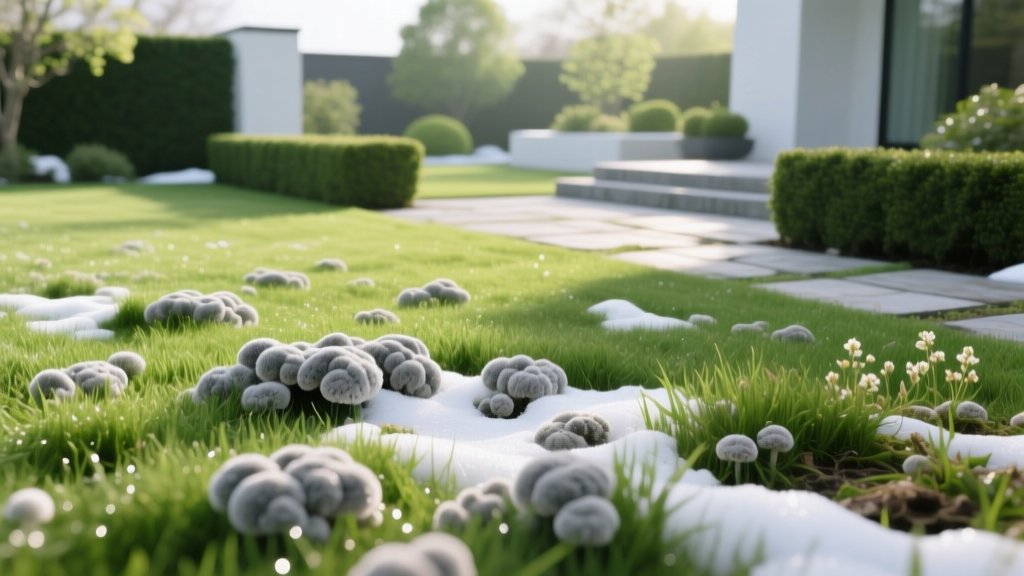
Snow Mold Fungicide: Diagnosis and Rescue Fixes for Spring Lawns
The spring thaw often reveals a frustrating surprise: circular, matted, and crusty patches of dead or dying turf. While winter dormancy is natural, these distinct lesions indicate a fungal pathogen has been actively feeding under the snowpack or in cold, wet conditions. Homeowners frequently rush to apply a snow mold fungicide, but spring rescue treatments require a radically different approach than fall preventatives. Misidentifying the pathogen or using the wrong chemical class will waste money and fail to save the turf crown.
This guide provides a precise diagnostic framework to identify your specific snow mold strain, outlines exactly when a fungicide is warranted, and details the professional-grade active ingredients required for effective spring rescue.
Symptom Diagnosis: Differentiating the Pathogens
Before selecting a treatment, you must accurately identify the pathogen. 'Snow mold' is an umbrella term for two distinct diseases with different biological behaviors, temperature preferences, and damage profiles. According to the University of Minnesota Extension, misdiagnosis leads to improper cultural and chemical interventions.
| Diagnostic Feature | Gray Snow Mold (Typhula Blight) | Pink Snow Mold (Microdochium Patch) |
|---|---|---|
| Pathogen | Typhula incarnata | Microdochium nivale |
| Visual Symptoms | Grayish-white, matted circular patches (6-12 inches). | Pinkish-orange or bronze margins, smaller patches (2-6 inches) that can coalesce. |
| Key Identifier | Presence of sclerotia (hard, mustard-seed-sized reddish-black structures) embedded in leaf tissue. | Absence of sclerotia; often features a visible white-to-pink mycelial web at the patch edges in the morning dew. |
| Temperature Range | Thrives at 32°F to 40°F under continuous snow cover. | Active from 32°F to 60°F; does not require snow, just cold and wet conditions. |
| Crown Damage | Rarely kills the crown; primarily damages leaf blades (cosmetic). | Frequently kills the plant crown and roots, causing permanent turf loss. |
The Rescue Decision Matrix: Do You Need Fungicide?
Not all snow mold requires chemical intervention in the spring. The decision to apply a snow mold fungicide as a rescue treatment depends entirely on the pathogen and the current ambient temperatures.
Scenario A: Gray Snow Mold (Typhula) Diagnosis
Verdict: Skip the Fungicide. By the time you see gray snow mold in the spring, the fungus has already completed its life cycle and is going dormant as temperatures rise above 45°F. Applying a fungicide now will not cure the brown patches. The University of Wisconsin-Madison Division of Extension confirms that spring fungicide applications for Typhula are economically and agronomically unjustified. Focus on gentle raking and nitrogen fertilization instead.
Scenario B: Pink Snow Mold (Microdochium) Diagnosis
Verdict: Immediate Fungicide Rescue Required. Unlike Typhula, Microdochium nivale remains highly active in wet spring conditions up to 60°F. It will continue to rot the turf crowns and spread across the lawn if left untreated. A systemic snow mold fungicide is mandatory to halt the infection and save the surviving grass crowns.
Selecting the Right Snow Mold Fungicide for Active Infections
For active Pink Snow Mold rescue, contact fungicides (like PCNB) are ineffective because the pathogen has already penetrated the plant tissue. You must use systemic fungicides that are absorbed by the plant and translocated to the crown. Below are the professional-grade active ingredients proven for spring rescue.
1. Azoxystrobin (FRAC Group 11 - QoI)
Azoxystrobin is a strobilurin fungicide that offers excellent curative and systemic properties against Microdochium nivale. It is absorbed quickly through the leaves and roots, halting fungal respiration.
- Top Product: Heritage SC (Syngenta)
- Rescue Application Rate: 0.4 to 0.8 fl oz per 1,000 sq ft.
- Estimated Cost: ~$7.50 to $15.00 per 1,000 sq ft (based on a $130/pint retail price).
- Best For: Severe, active infections where immediate curative action is needed.
2. Propiconazole (FRAC Group 3 - DMI)
Propiconazole is a triazole fungicide that inhibits ergosterol biosynthesis in the fungus. It provides strong curative activity and has a slightly longer residual effect in the soil profile than strobilurins.
- Top Product: Banner MAXX II (Syngenta)
- Rescue Application Rate: 4.0 fl oz per 1,000 sq ft.
- Estimated Cost: ~$3.00 to $4.00 per 1,000 sq ft (based on a $110/gallon retail price).
- Best For: Cost-effective rescue treatments and tank-mixing to prevent chemical resistance.
3. Combination Tank Mixes (The Professional Standard)
Turfgrass pathologists strongly recommend tank-mixing a Group 11 and a Group 3 fungicide for spring rescue. This broadens the spectrum of control, accelerates the curative effect, and mitigates the risk of the pathogen developing resistance. A standard rescue tank mix combines Heritage SC (0.4 oz/1,000 sq ft) and Banner MAXX II (2.0 oz/1,000 sq ft).
Step-by-Step Spring Application Protocol
Applying fungicide in early spring requires strict adherence to environmental parameters to ensure the chemical reaches the crown without being washed away or rendered inert.
- Time the Application: Apply when daytime air temperatures are consistently between 45°F and 60°F, and the turf is actively beginning to green up. Do not apply if the soil is still frozen, as the systemic chemical cannot be translocated through dead or frozen root tissue.
- Clear the Debris: Gently rake the matted snow mold patches to break up the fungal mycelium crust. This allows the fungicide spray to penetrate directly to the soil surface and crown rather than getting trapped on dead leaf blades.
- Calibrate for High Volume: Use a flat-fan nozzle (such as a TeeJet 8004) and apply at a minimum of 2.0 to 3.0 gallons of water per 1,000 sq ft. High water volume is critical to wash the active ingredient off the leaf blade and down into the thatch and crown zone.
- Water In Immediately: Unlike foliar diseases, snow mold targets the base of the plant. Apply 0.1 to 0.2 inches of irrigation immediately after spraying to move the systemic fungicide into the root zone.
- Rotate Chemistries: If a second application is required 21 days later due to prolonged cool, wet weather, you must switch to a different FRAC group (e.g., switch from Group 11 to Group 3, or use a Group 7 SDHI like Fluopyram) to prevent pathogen resistance.
Post-Fungicide Lawn Rehabilitation
A snow mold fungicide will halt the spread of Microdochium nivale, but it will not resurrect grass crowns that have already been destroyed. Once the infection is arrested, shift your focus to cultural rehabilitation:
- Targeted Nitrogen: Apply a fast-release nitrogen source (like ammonium sulfate at 0.5 lbs N per 1,000 sq ft) to stimulate the surviving tillers to spread and fill in the damaged areas.
- Overseeding: For patches larger than 6 inches in diameter where the crown is dead, fungicide is only the first step. Wait 14 days after the fungicide application (to ensure no chemical residual inhibits seed germination), then slit-seed or top-dress with a matching cool-season turfgrass blend.
- Avoid Pre-Emergents: If you had to overseed to repair snow mold damage, you cannot apply standard pre-emergent crabgrass preventers (like prodiamine) in the spring, as they will sterilize your new grass seed. Use selective post-emergent herbicides later in the summer instead.
Critical Application Mistakes to Avoid
Warning: The most common failure in spring snow mold rescue is applying contact fungicides like PCNB (Terraclor) or chlorothalonil (Daconil) after the thaw. These chemicals only protect the surface of the leaf blade. By spring, the Microdochium pathogen is already inside the plant vascular tissue. Using contact fungicides at this stage is entirely ineffective and delays proper treatment, resulting in total turf loss in affected patches.
Furthermore, avoid aggressive power-raking or dethatching while the soil is still saturated from snowmelt. The physical trauma to the weakened, waterlogged roots will cause more mechanical damage than the fungus itself. Use a flexible leaf rake to gently lift the matted blades, allowing air circulation and sunlight to reach the soil surface, which naturally accelerates the drying process and suppresses further fungal growth.