
Pest Control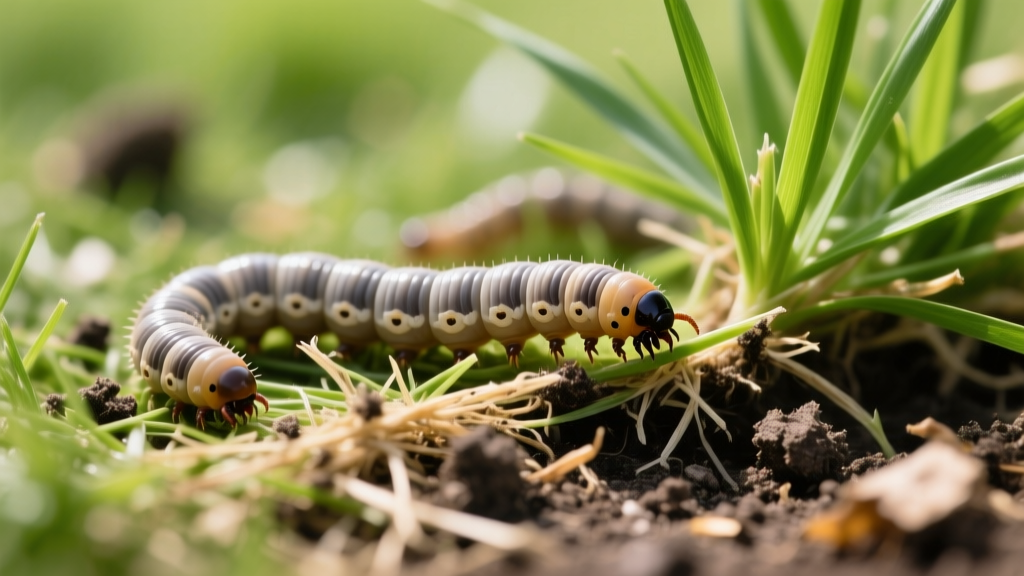
Sod Worms in Lawns: Identification, Treatment, and Recovery
Sod worms, scientifically known as sod webworms (family Crambidae), are the larval stage of small lawn moths. While the adult moths flitting across your grass at dusk are harmless, their larvae are voracious feeders that can decimate both cool-season and warm-season turfgrasses. They chew grass blades off at the crown, leaving behind irregular brown patches, silk-lined tunnels in the thatch, and piles of green fecal pellets (frass). Left unchecked, a severe infestation can strip a lawn to bare soil in a matter of weeks, opening the door for opportunistic weeds and soil erosion.
The Biology of Sod Webworm Damage
Understanding the lifecycle of the sod webworm is critical for timing your interventions. The pest progresses through four stages: egg, larva, pupa, and adult moth. The damage is exclusively caused by the larval stage. These caterpillars are typically 0.5 to 1 inch long, ranging in color from grayish-green to brown, often with dark spots along their bodies.
Unlike grubs that feed on roots beneath the soil surface, sod worms feed on the foliage and the crown of the grass plant. They construct silk-lined burrows in the thatch layer, emerging at night to feed. According to Penn State Extension, healthy, well-irrigated lawns can tolerate low-level feeding, but drought-stressed turf or newly laid sod can suffer catastrophic crown damage, preventing the grass from recovering even after the pests are eliminated.
Diagnostic Shortcut: If you notice small, white or tan moths zigzagging over your lawn just before sunset, they are actively laying eggs. Expect larval feeding damage to peak 10 to 14 days after this moth activity is observed.
Diagnostic Protocol: The Soap Flush Test
Brown patches can be caused by fungal diseases, drought, or dog urine. Before applying any insecticide, you must confirm the presence of sod worms using a soap flush test. The soap irritates the caterpillars' skin, forcing them out of their thatch tunnels and onto the surface.
Step-by-Step Flush Procedure
- Mix the Solution: Combine 2 tablespoons of liquid dish soap (lemon-scented is highly effective due to the d-limonene compound) with 2 gallons of water in a watering can.
- Mark the Area: Delineate a 1-square-yard section (3 feet by 3 feet) at the margin of a damaged brown patch, where the grass is just beginning to thin.
- Apply and Wait: Pour the soapy water evenly over the marked area. Wait 10 minutes.
- Count the Larvae: Inspect the surface and the base of the grass crowns. Count the number of caterpillars that emerge.
Threshold for Treatment: If you count 10 to 15 or more larvae per square yard, treatment is economically and aesthetically justified. If the count is below 10, natural predators (such as ground beetles and parasitic wasps) and robust turf growth can usually manage the population without chemical intervention.
Treatment Matrix: Organic vs. Synthetic Controls
Selecting the right active ingredient depends on your environmental preferences, the severity of the infestation, and the lifecycle stage of the pest. Below is a comparison of the most effective compounds available to homeowners and turf professionals in 2026.
| Active Ingredient | Product Example | Type | Mode of Action | Est. Cost (per 1k sq ft) |
|---|---|---|---|---|
| Bacillus thuringiensis var. kurstaki (Btk) | Monterey B.t., Thuricide | Organic / Biological | Ingestion toxin; destroys larval midgut lining | $0.15 - $0.25 |
| Spinosad | Conserve SC, Captain Jack's | Organic / Biological | Neurotoxin; causes involuntary muscle contractions | $0.20 - $0.35 |
| Bifenthrin (25.1%) | Bifen XTS, Talstar P | Synthetic Pyrethroid | Sodium channel modulator; rapid contact knockdown | $0.05 - $0.10 |
| Chlorantraniliprole | Acelepryn G, Scotts GrubEx | Synthetic Anthranilic Diamide | Ryanodine receptor modulator; preventative residual | $0.12 - $0.18 |
When to Use Btk vs. Pyrethroids
Bacillus thuringiensis var. kurstaki (Btk) is highly specific to caterpillars and will not harm earthworms, bees, or beneficial predatory insects. However, it only works on early-instar (small) larvae and must be ingested. If the sod worms are fully grown (over 0.75 inches), Btk efficacy drops significantly. In cases of severe, late-stage infestations where rapid knockdown is required to save the turf crown, a synthetic pyrethroid like Bifenthrin is the superior choice.
Precision Application Guidelines
Applying the product incorrectly is the leading cause of treatment failure. Sod worms hide deep in the thatch during the day, making coverage and timing critical.
Warning: Never apply liquid pyrethroids like Bifenthrin when temperatures exceed 85°F (29°C) or when the turf is drought-stressed. This combination can cause severe phytotoxicity (chemical burn) to the grass blades.
- Timing: Apply treatments in the late afternoon or early evening. Sod worms are nocturnal feeders; spraying at dusk ensures the chemical residue is fresh when they emerge from their tunnels.
- Mowing Restrictions: Do not mow the lawn for 48 hours before application (to allow maximum leaf surface area for the larvae to ingest the treated foliage) and wait 48 hours after application before mowing again.
- Watering Protocol: For liquid sprays targeting active larvae, do not water the lawn immediately after application. You want the product to remain on the grass blades. However, if using a granular preventative like Acelepryn G, you must irrigate with 0.25 inches of water immediately to move the active ingredient into the thatch layer where the pests reside.
- Dilution Rates: When using a concentrated liquid like Bifen XTS, mix 0.3 to 0.6 fluid ounces per 1,000 square feet. Ensure your pump sprayer is calibrated to deliver at least 1.5 gallons of finished spray solution per 1,000 square feet to achieve adequate penetration into the thatch.
Turf Recovery and Thatch Management
Eliminating the larvae is only half the battle. If the grass crowns have been severed, the turf will not recover on its own. As noted by turf researchers at Texas A&M AgriLife Extension, post-treatment cultural care dictates how quickly the lawn bounces back.
For localized dead patches, rake out the dead debris and overseed with a matching grass cultivar, or lay down fresh sod plugs. Apply a quick-release nitrogen fertilizer (such as urea 46-0-0) at a rate of 0.5 lbs of actual nitrogen per 1,000 square feet to stimulate aggressive lateral growth in the surviving grass crowns.
Finally, address the environment that allowed the infestation to thrive. Sod webworms thrive in thick, dry thatch layers. Maintain your thatch depth below 0.5 inches through annual core aeration and dethatching. Adjust your irrigation schedule to provide 1 to 1.5 inches of water per week, applied in deep, infrequent cycles rather than shallow daily watering, to promote deep root systems that can withstand minor insect pressure.

