
Pest Control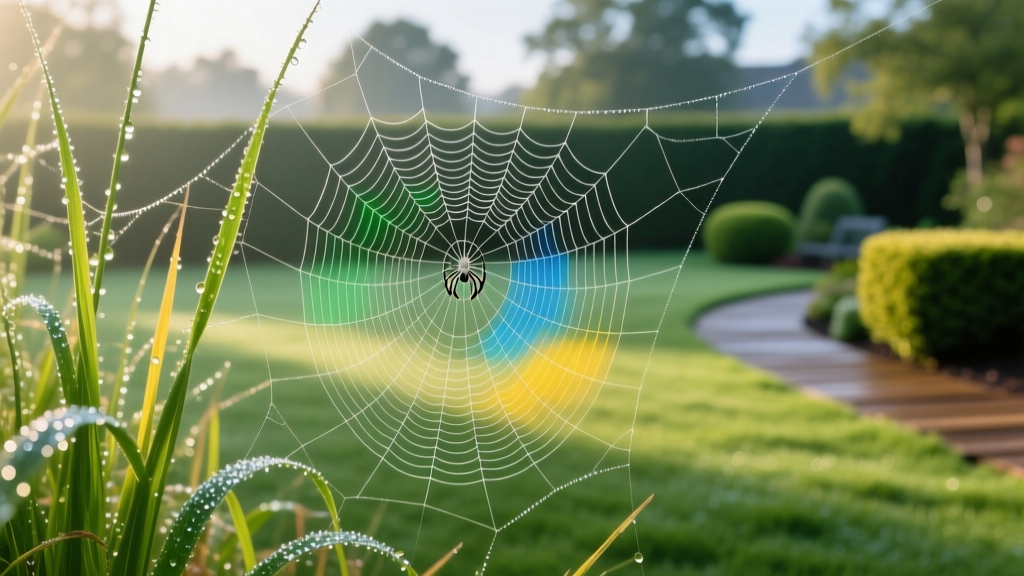
Spider Webs in Grass: Beneficial Yard Defense or Nuisance Pest?
Waking up to a lawn blanketed in silky, dew-covered threads can trigger immediate concern for many homeowners. While spider webs in grass are often viewed as a sign of a pest infestation, they are actually indicators of a complex, active ecosystem operating right beneath your feet. From an insect and rodent yard defense perspective, ground-dwelling spiders are apex micro-predators that play a critical role in controlling populations of ticks, mosquitoes, and agricultural pests.
However, when web density crosses the threshold from natural biological control to a visual nuisance, or when homeowners misdiagnose fungal diseases as spider activity, targeted intervention becomes necessary. This guide provides a definitive framework for identifying the architects behind your lawn webs, distinguishing them from turfgrass diseases, and implementing ecologically sound management strategies.
Identifying the Architects: Common Lawn Spiders
Not all spiders build the same type of web, and identifying the structure is the first step in understanding the spider's role in your yard. The vast majority of spiders found in residential turfgrass are harmless to humans and highly beneficial for pest control.
| Spider Type | Web Structure | Habitat in Lawn | Primary Diet (Yard Benefit) |
|---|---|---|---|
| Funnel Weavers (Agelenopsis) | Dense, horizontal sheet webs with a funnel-like retreat at the edge. | Thatch layer, tall fescue, and perimeter edges. | Leafhoppers, ants, small beetles, and flies. |
| Wolf Spiders (Lycosidae) | Do not build webs to catch prey; use silk for burrow lining and egg sacs. | Burrows in bare soil patches and deep thatch. | Crickets, earwigs, and ground-dwelling insect larvae. |
| Grass Spiders (Tetragnathidae) | Small, delicate, horizontal orb webs close to the soil surface. | Moist areas near irrigation heads and shaded turf. | Mosquitoes, gnats, and midges. |
| Orb Weavers (Araneidae) | Large, vertical, circular webs. | Suspended between tall ornamental grasses and shrub borders, rarely in mowed turf. | Moths, flies, and larger flying insects. |
According to entomologists at Penn State Extension, funnel weavers and grass spiders are the most common culprits behind the "sheet webs" that become highly visible on lawns during late summer and early autumn when morning dew catches the sunlight.
Critical Distinction: Spider Webs vs. Dollar Spot Fungus
One of the most common and costly mistakes homeowners make is applying expensive insecticides to what they believe are spider webs, when they are actually dealing with a severe turfgrass disease. Clarireedia jacksonii, the pathogen responsible for Dollar Spot fungus, produces a white, cobweb-like mycelium that is virtually indistinguishable from spider webs when covered in morning dew.
The Diagnostic Framework
- Timing: Spider webs remain visible throughout the day, though they are most prominent when wet. Dollar Spot mycelium only appears in the early morning while the grass is wet with dew and completely vanishes once the sun dries the turf.
- Pattern: Spider webs are sprawling and random. Dollar Spot mycelium is localized to distinct, silver-dollar-sized circular patches (2 to 6 inches in diameter) of bleached, dying grass.
- Texture: If you touch spider webs, they stick to your skin and stretch. Fungal mycelium feels like a slimy or powdery coating and breaks apart instantly without stretching.
If you confirm the presence of Dollar Spot rather than spiders, you must pivot from pest management to fungicide application (such as active ingredients like propiconazole or azoxystrobin) and adjust your nitrogen fertilization schedule. For more on turf diseases, consult the NC State University TurfFiles database.
The Insect & Rodent Yard Defense Perspective
Before reaching for a pesticide, consider the ecological services these arachnids provide. In the context of holistic yard defense, spiders are a primary biological control agent.
Biological Control Data: A single acre of healthy, undisturbed turfgrass can support over 100,000 spiders. Studies indicate that ground-dwelling spiders consume massive quantities of agricultural and residential pests annually, significantly reducing the need for chemical interventions against crop-destroying insects and disease-vectoring mosquitoes.
Furthermore, by aggressively hunting ground-dwelling insects, wolf spiders and funnel weavers indirectly disrupt the food chain that attracts larger pests. A lawn devoid of spiders often experiences secondary outbreaks of grubs, chinch bugs, and sod webworms, which in turn attract foraging rodents like moles and voles that tear up the turf root system.
Targeted Management: When and How to Reduce Web Density
While beneficial, an overpopulation of funnel weavers can make a lawn feel unusable, especially for children and pets, or trigger arachnophobia. If web density requires management, avoid broad-spectrum chemical eradication and focus on habitat modification and targeted organic repellents.
Step 1: Thatch Reduction and Mowing Adjustments
Spiders require physical anchor points to build horizontal sheet webs. A thick thatch layer (greater than 0.5 inches) provides the perfect structural foundation and retains the moisture spiders prefer.
- Measure Thatch: Use a soil probe or a sharp knife to cut a small wedge into the lawn. If the brown, spongy organic layer exceeds 0.5 inches, schedule core aeration and dethatching.
- Adjust Mowing Height: Temporarily lower your mower deck by 0.5 inches (never scalping below 2 inches for cool-season grasses or 1 inch for warm-season grasses) to physically shear the tops of funnel webs. This forces the spiders to relocate to less manicured perimeter beds.
- Disrupt with Water: A heavy, deep-cycle irrigation in the early afternoon (allowing time for the surface to dry before nightfall) will collapse existing webs and deter daytime web-building activity.
Step 2: Outdoor Lighting Modification
Spiders are opportunistic; they build webs where food is abundant. Standard cool-white LED floodlights (4000K to 5000K color temperature) emit blue-spectrum light that aggressively attracts nocturnal insects. Spiders quickly learn to construct webs directly in the path of these light beams.
The Fix: Replace exterior bulb fixtures with warm amber LEDs (2200K to 2700K) or specialized yellow sodium-vapor "bug lights." By eliminating the insect food source, the spiders will naturally dismantle their webs and move to darker, more productive hunting grounds away from your primary lawn areas.
Step 3: Botanical Repellents for High-Traffic Zones
If you need to clear spiders from specific play areas or patios without harming the local ecosystem, use essential oil-based contact sprays. Products containing peppermint oil, cedarwood oil, or rosemary oil disrupt the spider's chemoreceptors, making the area unappealing.
- Commercial Option: Essentria IC3 (approx. $45 per gallon) utilizes a blend of rosemary, geraniol, and peppermint oils. It leaves no toxic residual and is safe for pets once dry.
- DIY Formulation: Mix 1.5 ounces of pure peppermint essential oil with 1 gallon of water and a few drops of Castile soap (as an emulsifier). Spray directly onto the thatch line and perimeter foundations every 14 days during peak late-summer activity.
Warning Against Pyrethroids: Avoid using broad-spectrum synthetic pyrethroids (like bifenthrin or permethrin) to treat lawn spiders. These chemicals will kill the spiders but leave behind pesticide-resistant pests like aphids and mites, leading to a devastating secondary pest outbreak that will cause far more damage to your turfgrass than the spiders ever could.
Frequently Asked Questions
Are the spiders in my lawn dangerous to my dogs?
The vast majority of lawn-dwelling spiders (funnel weavers, wolf spiders, grass spiders) possess venom that is too weak to penetrate canine skin or cause systemic issues. While a bite may cause localized, temporary swelling similar to a bee sting, they are not considered medically significant to pets. The only exceptions are the Brown Recluse or Black Widow, which typically hide in undisturbed woodpiles or sheds, not out in open, mowed turfgrass.
Why do I only see the webs in the fall?
Spider webs in grass become highly visible in late summer and autumn for two reasons. First, many common lawn spiders reach their peak adult size and maximum web-building capacity during this season to prepare for mating. Second, the cooler autumn air combined with warm soil creates heavy morning dew, which acts as a magnifying glass, making the nearly invisible silk threads suddenly prominent.
Will a lawn roller kill the spiders and flatten the webs?
Using a heavy lawn roller is not recommended. While it may temporarily crush surface webs, it severely compacts the soil beneath the turf, restricting oxygen and water flow to the grass roots. This leads to turf thinning, which ironically creates the bare, dry soil patches that wolf spiders prefer for digging their burrows.

