
Pest Control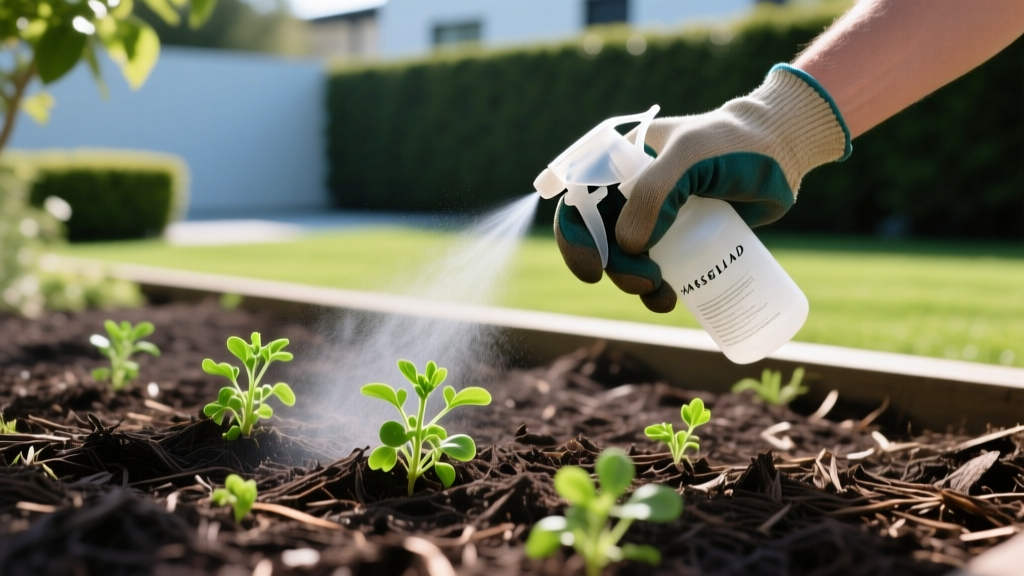
Safe Weed Killer for Mulch: Spot-Treatment Weed Guide
The Mulch Paradox: Why Aggressive Weeds Survive
A properly applied 3-inch layer of hardwood or cedar mulch reduces overall weed germination by up to 90% by blocking photosynthesis and creating a physical barrier. However, the 10% of weeds that successfully penetrate this barrier are typically the most aggressive, deep-rooted, and herbicide-tolerant species in your landscape. When selecting a weed killer for mulch beds, homeowners face a unique challenge: the mulch itself acts as a chemical sink, binding to certain active ingredients and neutralizing them before they reach the target weed, while the proximity of desirable ornamental roots demands extreme application precision.
Standard broadcast sprays often fail in mulched environments. Furthermore, using non-selective, soil-sterilizing herbicides in these zones can lead to catastrophic root uptake by nearby shade trees and shrubs. This guide provides a targeted, species-specific spot-treatment framework to eliminate mulch-infiltrating weeds without compromising your landscape's health.
Weed Species Identification & Spot-Treatment Matrix
Identifying the specific weed species dictates the active ingredient you must use. Broad-spectrum herbicides like glyphosate are often ineffective on mature sedges or perennial grasses hiding under mulch bark. Refer to the matrix below for exact active ingredients and commercial product matches.
| Weed Species | Identification Marker | Active Ingredient | Product Example | Ornamental Safety |
|---|---|---|---|---|
| Yellow Nutsedge | Triangular stem, pale green, grows faster than surrounding plants | Halosulfuron-methyl | SedgeHammer+ | Safe over most broadleaf ornamentals |
| Bermudagrass (Infiltrating) | Wiry stolons, aggressive lateral spread under mulch | Fluazifop-butyl | Ortho Grass-B-Gon | Safe over broadleaf plants; toxic to desirable grasses |
| Prostrate Spurge | Low-growing, mat-forming, bleeds milky sap when snapped | Quinclorac / 2,4-D amine | Bayer BioAdvanced Lawn Weed & Crabgrass Killer | Requires shielded application; risk of drift damage |
| Field Bindweed | Arrowhead leaves, white trumpet flowers, deep taproot | Quinclorac or Glyphosate wipe | Roundup Precision Gel | Wipe application only; extreme root uptake risk |
Step-by-Step Spot-Treatment Protocol
Applying a weed killer for mulch requires a different mechanical approach than treating a standard lawn. Follow this exact protocol to ensure the herbicide penetrates the weed's cuticle without contaminating the surrounding mulch layer or ornamental root zones.
- Wait for the 3-to-5 Leaf Stage: Do not spray weeds immediately as they emerge from the mulch. Wait until the weed has developed 3 to 5 mature leaves. This ensures enough foliar surface area to absorb the systemic herbicide and translocate it down to the root system, which is critical for perennials hiding under bark.
- Mix with a Non-Ionic Surfactant (NIS): Mulch dust and environmental debris coat weed leaves in landscape beds, creating a hydrophobic barrier. Add a non-ionic surfactant at a rate of 0.25% v/v (roughly 1 teaspoon per gallon of mixed solution). This breaks the surface tension, allowing the herbicide to spread evenly and penetrate the leaf cuticle.
- Equip a Shielded Nozzle: Never use a standard fan-tip nozzle in mulch beds. Attach a cone-shaped spray shield (such as the Dramm Color Series Shield) to your wand. This physically blocks micro-droplets from drifting onto the lower leaves of nearby hydrangeas, hostas, or roses.
- Calibrate to Low Pressure (20-30 PSI): High pressure creates fine mist that easily drifts. Pump your tank sprayer only 15 to 20 times to maintain a coarse, heavy droplet size that falls directly onto the target weed rather than floating into the landscape.
Deep Dive: Top Active Ingredients for Mulch Zones
Understanding the biochemical behavior of your chosen herbicide is what separates professional landscapers from amateur gardeners. Here is a breakdown of the two most effective active ingredients for mulch bed spot-treatments.
Fluazifop-butyl (Grass-Specific Systemic)
When invasive grasses like bermudagrass or quackgrass send rhizomes under your mulch, pulling them only breaks the surface network. Fluazifop-butyl is an aryloxyphenoxypropionate herbicide that targets grasses exclusively. It is completely safe to spray directly over the top of broadleaf ornamentals, shrubs, and perennials.
Cost & Availability: Readily available in ready-to-use (RTU) formulations like Ortho Grass-B-Gon for approximately $14 to $18 per 32oz bottle. For larger properties, the concentrate (Envoy Plus) costs around $60 for a 2.5oz bottle, yielding up to 10 gallons of finished solution.
Halosulfuron-methyl (Sedge-Specific ALS Inhibitor)
Yellow and purple nutsedge thrive in the moist, shaded microclimates often found beneath thick mulch layers. Halosulfuron-methyl inhibits the ALS enzyme, stopping cell division in sedges without harming most surrounding woody ornamentals. According to Michigan State University Extension, timing is critical: applications must occur when nutsedge is actively growing and before it produces underground nutlets (tubers), typically in early to mid-summer.
Cost & Availability: SedgeHammer+ is the industry standard, retailing for about $25 for a box of five 13.5g water-soluble packets. Each packet treats up to 1,000 square feet, making it highly cost-effective for targeted spot treatments.
⚠ CRITICAL WARNING: Avoid Soil Sterilants Under Tree Canopies
Many consumer products marketed as "Extended Control" or "GroundClear" weed killers contain Imazapyr or Prometon. These are non-selective soil sterilants. While they will keep your mulch beds weed-free for six months, they are highly water-soluble and leach through the mulch into the soil. If applied within the drip line of desirable shade trees (especially oaks, maples, and pines), the tree roots will absorb the chemical, leading to systemic poisoning and eventual tree death. Never use soil sterilants in mulch beds near desirable root zones.
Integrating Pre-Emergents for Long-Term Mulch Defense
Spot-treating with a post-emergent weed killer for mulch beds only solves the immediate problem. To prevent the next flush of weed seeds from germinating beneath the bark, you must integrate a granular pre-emergent. North Carolina State University Extension recommends applying active ingredients like Prodiamine (Barricade) or Pendimethalin directly over the top of the mulch in early spring (when soil temperatures hit 55°F) and again in early fall.
The Activation Rule: Pre-emergents applied over mulch require immediate activation. You must apply at least 0.5 inches of irrigation immediately after spreading the granules to wash the chemical off the bark and into the soil layer where weed seeds actually germinate. Without this wash-in, the UV radiation from the sun will degrade the herbicide within 48 hours, rendering it useless.
Frequently Asked Questions
Can I use vinegar-based organic weed killers in my mulch beds?
Horticultural vinegar (20% acetic acid) acts as a contact desiccant, burning the foliage of young, annual weeds. However, it does not translocate to the roots. For perennial weeds like bindweed or nutsedge hiding in mulch, vinegar will only burn the top growth, causing the weed to re-sprout from its deep root system within a week. Furthermore, repeated use of high-concentration acetic acid drastically lowers the soil pH in your mulch beds, which can lock out essential nutrients for your ornamental plants.
Will glyphosate (Roundup) harm my mulch or soil microbiome?
Glyphosate binds tightly to the organic matter and phosphorus in wood mulch, which rapidly deactivates it in the soil. While this means it won't sterilize your soil, it also means that if you spray glyphosate and the droplets hit the mulch instead of the weed leaves, the chemical is wasted. Always aim precisely for the weed foliage. Once deactivated in the soil, it has minimal long-term impact on the beneficial mycorrhizal fungi and bacteria breaking down your mulch.
How thick should my mulch be to act as a natural weed barrier?
Maintain a consistent depth of 3 inches. Applying less than 2 inches allows sunlight to penetrate and trigger weed seed germination. Applying more than 4 inches creates a hydrophobic layer that prevents water and oxygen from reaching the roots of your desirable plants, while also creating an ideal, moist breeding ground for fungal diseases and artillery fungus. Keep the mulch pulled back at least 3 inches from the base trunks of trees and shrubs to prevent "mulch volcanoes" that encourage rot and rodent habitation.

