
Pest Control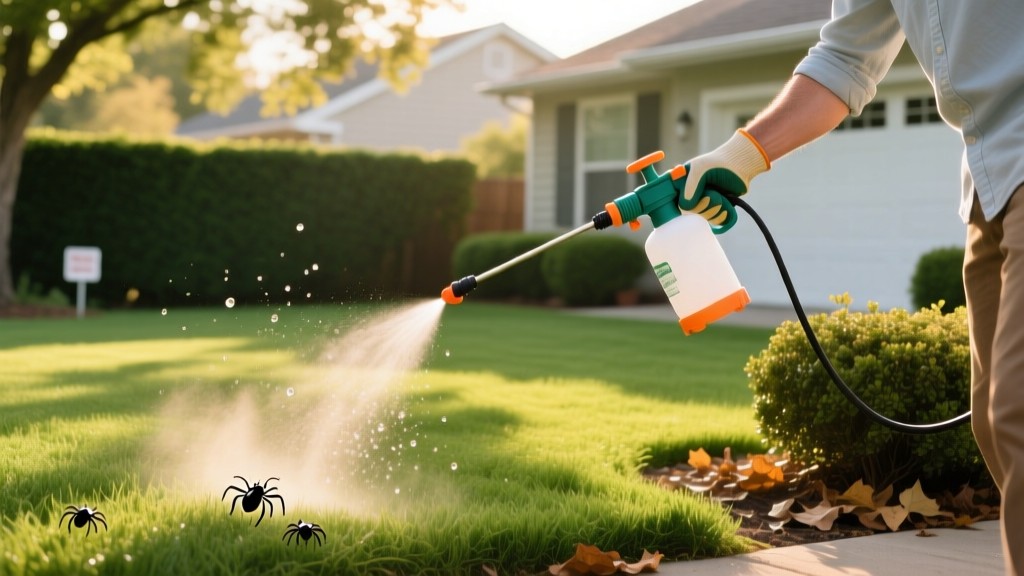
The Complete Guide to Spraying Yard for Ticks: Diagnosis & Fixes
The Tick Threat: Moving Beyond Surface-Level Treatments
Ticks are not merely a nuisance; they are active vectors for Lyme disease, Rocky Mountain spotted fever, and Alpha-gal syndrome. According to the Centers for Disease Control and Prevention (CDC), tick-borne illnesses have doubled over the last decade, making proactive yard management a critical health intervention rather than a simple aesthetic choice. However, simply buying a hose-end sprayer and broadcasting insecticide across your lawn is a highly inefficient use of time and chemicals. Ticks do not hang out in the middle of a sun-baked Bermuda grass lawn. They require high humidity and shade to prevent desiccation. Effective tick control requires precise diagnosis, targeted chemical selection, and strict adherence to application protocols that address the micro-climates where ticks actually thrive.
Diagnosing the Perimeter: The Tick Drag Test
Before mixing any chemicals, you must confirm the presence and density of ticks on your property. The industry standard for this is the tick drag. You can construct one using a 1-square-yard piece of white flannel cloth attached to a wooden dowel with a heavy-duty rope.
How to Execute a Tick Drag
- Timing: Perform the drag in the early morning when dew is still on the grass, or in the late afternoon. Ticks are most active and questing during high-humidity windows.
- Technique: Walk slowly through suspected hot zones—tall fescue edges, leaf litter accumulations, and the first 10 feet of wooded borders. Drag the cloth behind you, allowing it to brush over vegetation.
- Inspection: Stop every 15 feet to inspect the cloth. Nymphal ticks (the size of a poppy seed) are easily missed, so use a magnifying glass if necessary.
- Disposal: Submerge any collected ticks in a sealed jar of isopropyl alcohol. Do not crush them with your fingers.
Active Ingredient Matrix: Synthetic vs. Botanical Sprays
Choosing the right active ingredient depends on your property size, proximity to water sources, and tolerance for synthetic pesticides. The Environmental Protection Agency (EPA) regulates these compounds, and understanding their residual life is crucial for scheduling re-applications.
| Active Ingredient | Common Brand (2026) | Mix Rate (per Gallon) | Residual Life | Cost per 1,000 sq ft |
|---|---|---|---|---|
| Bifenthrin (7.9%) | Talstar P | 1.0 fl oz | 30–45 days | ~$0.04 |
| Permethrin (10%) | Martin's Permethrin 10% | 1.5 fl oz | 21–30 days | ~$0.06 |
| Cedarwood Oil (Botanical) | Wondercide Yard Spray | Ready-to-spray hose-end | 7–14 days | ~$0.18 |
Expert Synthesis: Bifenthrin is the undisputed workhorse for professional and serious DIY tick control. It binds tightly to soil organic matter and leaf litter, resisting wash-off from light rain once it has dried (usually within 2 hours). Permethrin is highly effective but degrades faster under intense UV exposure. Botanical options like cedarwood oil work via octopamine receptor blocking, which desiccates the tick's exoskeleton, but they lack residual efficacy and must be reapplied after every heavy rainfall or every 10 days during peak spring nymph season.
Calibration and Application Protocol
Broadcasting spray over the center of your lawn is a waste of chemical. Ticks quest at ground level in shaded, humid transition zones. Follow this strict protocol for maximum efficacy.
Step 1: Habitat Preparation
Mow the lawn to a height of 2.5 inches. Rake and remove all leaf litter from the perimeter edges. Prune low-hanging tree branches to allow sunlight to penetrate the soil surface, which naturally lowers humidity and deters tick survival.
Step 2: Equipment Calibration
Use a 2-gallon or 4-gallon pump sprayer equipped with a flat-fan nozzle (such as an 8002 tip). This nozzle produces a wide, even sheet of spray that penetrates dense ground cover better than a cone nozzle. Calibrate your sprayer to deliver exactly 1 gallon of mixed solution per 1,000 square feet. Walk at a steady pace of 3 feet per second while maintaining 35 to 40 PSI of pressure.
Step 3: The Perimeter Swath Technique
- The Woodline Penetration: Stand at the edge of your manicured lawn and spray 10 to 15 feet deep into the wooded or overgrown border. Ticks migrate from the woods outward; you must create a chemical barrier in their staging area.
- The Hardscape Edges: Spray a 3-foot band along the edges of stone retaining walls, patios, and foundations. These structures retain moisture and provide ideal micro-habitats.
- Vertical Coverage: Do not just spray the soil. Ticks climb vegetation to quest. Spray the lower 24 inches of all shrubs, ornamental grasses, and perimeter fencing.
Critical Failure Modes to Avoid
- UV Degradation: Never spray synthetic pyrethroids in direct, midday sunlight. The UV radiation will break down the active ingredient before it can bind to the foliage. Spray in the early morning or late evening.
- Rain Wash-Off: Check the weather forecast. Bifenthrin requires a minimum of 2 hours to dry and bind. If rain is expected within 4 hours, delay the application.
- Wind Drift: Do not spray if wind speeds exceed 8 mph. Drift carries the chemical away from the target zone and poses a risk to neighboring properties and non-target organisms.
Pollinator Protection and Ecological Safeguards
WARNING: Bifenthrin and Permethrin are highly toxic to bees and aquatic invertebrates. Never spray directly onto blooming weeds, clover, or flowering ornamentals. If your perimeter contains blooming plants, mow them down immediately before spraying, or switch to a targeted botanical spray for those specific zones.
DIY vs. Professional Application Costs
Deciding whether to spray the yard for ticks yourself or hire a licensed pest control operator depends on your property size and equipment investment. In 2026, a 3/4-quart bottle of Talstar P (7.9% Bifenthrin) costs approximately $55, yielding up to 24 gallons of finished solution. This is enough to treat 24,000 square feet of perimeter area for roughly $0.002 per square foot per application.
Conversely, professional mosquito and tick barrier services typically charge between $85 and $125 per visit for a standard 1/2-acre lot, treating every 21 days from April through October. Over a 7-month season, professional services cost between $600 and $875. DIY spraying requires an initial $120 investment in a quality 4-gallon backpack sprayer (like the Chapin 20090) and PPE, but drops the seasonal chemical cost to under $80.
Integrating Tick Tubes for Long-Term Suppression
Spraying addresses the adult and nymphal ticks currently questing in your yard, but it does not stop the reproductive cycle. White-footed mice are the primary reservoir for the Lyme disease spirochete (Borrelia burgdorferi). Ticks feed on these mice, acquire the pathogen, and transmit it to humans.
To break this cycle, deploy Tick Tubes (cardboard cylinders stuffed with permethrin-treated cotton) along stone walls and woodpiles in late spring and early fall. Mice collect the cotton for their nests, which kills the larval ticks feeding on them. Combining perimeter spraying with tick tube deployment reduces the overall tick population by up to 60% more than spraying alone, according to longitudinal entomological studies. By layering chemical barriers with host-targeted interventions, you create a comprehensive, multi-season defense that secures your outdoor living spaces against severe vector-borne threats.

