
Pest Control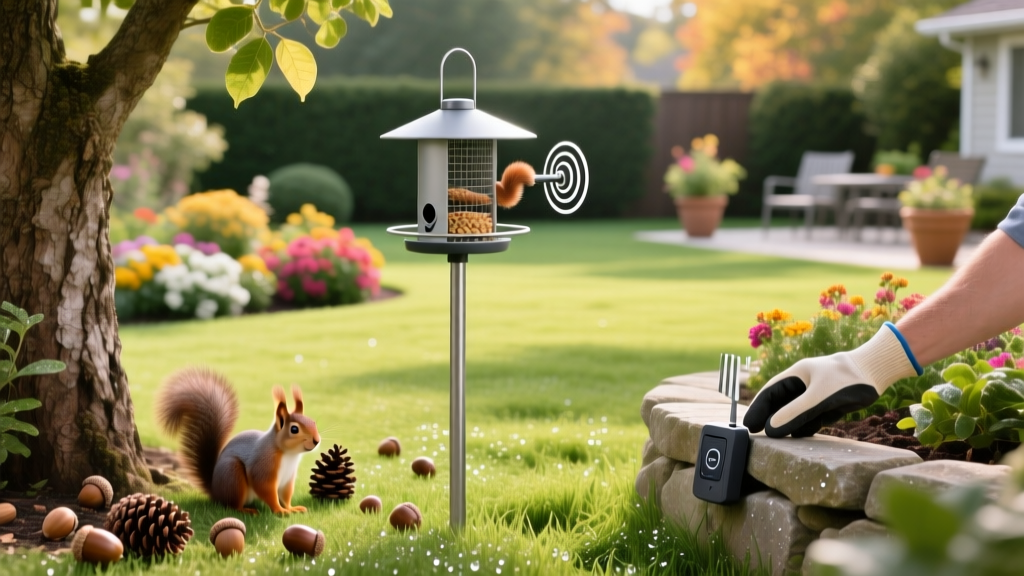
The Ultimate Squirrel Deterrent Guide for Yards and Gardens
The Foraging Instinct: Why Squirrels Target Your Yard
Eastern gray squirrels (Sciurus carolinensis) and fox squirrels are highly adaptable foragers capable of causing significant damage to residential landscapes. A single squirrel can consume and cache up to 30 pounds of acorns, bulbs, and birdseed annually. They strip bark from young deciduous trees to access the nutrient-rich cambium layer, dig up freshly planted spring bulbs, and raid bird feeders with acrobatic precision. According to the Internet Center for Wildlife Damage Management, squirrels rely heavily on spatial memory to locate cached food, meaning once a squirrel identifies your yard as a reliable food source, it will return repeatedly. Effective rodent and mammal deterrence requires moving beyond static scare tactics and implementing a multi-layered defense strategy based on the specific zone of your property you are trying to protect.
The Squirrel Deterrent Decision Matrix
Choosing the right squirrel deterrent depends entirely on the target area. A method that works perfectly for a lawn will fail entirely on a bird feeder. Use this matrix to select the appropriate intervention for your specific problem zone.
| Target Zone | Primary Deterrent Type | Recommended Product / Model | Est. Cost | Effectiveness |
|---|---|---|---|---|
| Lawns & Garden Beds | Motion-Activated Water | Orbit Yard Enforcer (Model 621000N) | $65 - $75 | High (90%+) |
| Bird Feeders | Physical Baffles & Weight-Sensitivity | Woodlink NABAFFLE / Brome Squirrel Buster Plus | $30 - $120 | Very High (95%+) |
| Bulbs & Root Zones | Chemical / Scent Repellents | I Must Garden Squirrel Repellent (32 oz) | $25 | Moderate (70%) |
| Attics & Eaves | Structural Exclusion | 1/2-inch Galvanized Hardware Cloth | $30 / roll | Absolute (100%) |
Motion-Activated Sprinklers: The Heavy Artillery for Lawns
For protecting newly seeded lawns, vegetable gardens, and flower beds, motion-activated sprinklers represent the most reliable non-lethal squirrel deterrent available. The industry standard is the Orbit 621000N Yard Enforcer. This device utilizes an infrared sensor to detect the body heat and movement of mammals within a 35-foot range, triggering a sudden, noisy burst of water that startles the animal without causing physical harm.
Optimizing the Yard Enforcer to Prevent Failure
The most common failure mode with motion-activated sprinklers is battery drain caused by false triggers. If you place the Orbit Yard Enforcer too close to ornamental grasses, wind-blown branches, or high-traffic pedestrian walkways, the sensor will trigger continuously, draining the 3 AA batteries in a matter of days and wasting hundreds of gallons of water.
- Sensitivity Tuning: Set the sensor dial to the 'Day' setting if you only want to deter diurnal foragers like squirrels, preserving battery life by ignoring nocturnal animals like raccoons.
- Placement Height: Mount the unit on a stake so the sensor is exactly 18 to 24 inches off the ground. This aligns the infrared beam directly with the torso of a foraging squirrel.
- Water Pressure Requirements: The unit requires a minimum of 30 PSI to operate the solenoid valve effectively. If your outdoor spigot is on a long, kinked hose, the valve may fail to close completely, resulting in a continuous leak.
Chemical and Scent-Based Repellents: Understanding the Limitations
Chemical repellents rely on irritating a squirrel's highly developed olfactory and gustatory senses. Products containing capsaicin (the active component in chili peppers) or essential oils like peppermint, cinnamon, and rosemary are widely marketed. The I Must Garden Squirrel Repellent utilizes a botanical blend of peppermint and rosemary oils, costing approximately $25 for a 32-ounce ready-to-spray bottle. While effective for treating freshly planted bulbs, chemical repellents have strict environmental limitations.
Critical Limitation: Capsaicin and botanical oil-based repellents are not rainfast. According to research published by the Penn State Extension, liquid repellents lose up to 80% of their efficacy after just 0.5 inches of rainfall or heavy overhead irrigation. If you rely on chemical deterrents for your garden beds, you must reapply the product immediately after every significant rain event, which rapidly increases the seasonal cost of maintenance.
Furthermore, squirrels are highly adaptable. If a food source is valuable enough (such as a mature tomato crop or high-fat sunflower seeds), a hungry squirrel will often tolerate the burning sensation of capsaicin to secure the calories. Chemical repellents are best used as a temporary measure to train squirrels away from a specific area while permanent physical barriers are installed.
Fortifying Bird Feeders: The 8-Foot Rule and Weight-Activated Tech
Bird feeders are the primary attractant for urban and suburban squirrel populations. Squirrels possess astonishing physical capabilities: they can jump up to 8 feet vertically from a flat surface and leap up to 10 feet horizontally from an elevated branch. Therefore, simply hanging a feeder on a shepherd's hook is entirely ineffective.
Implementing the Baffle Strategy
A physical baffle is a smooth, dome-shaped or cylindrical barrier that prevents squirrels from climbing the feeder pole. The Woodlink Audubon NABAFFLE (an 18-inch dark green dome) is a top-tier choice, retailing around $29. For a baffle to work, it must adhere to the strict '8-Foot Rule':
- The bottom of the baffle must be mounted at least 5 feet above the ground to prevent the squirrel from simply jumping past it.
- The feeder pole must be positioned at least 8 feet away from any tree trunk, fence, deck railing, or roofline to eliminate horizontal launch points.
Weight-Activated Feeders
If you cannot meet the 8-foot clearance rule due to yard constraints, you must upgrade to a weight-activated feeder. The Brome Squirrel Buster Plus (Model 1024) costs approximately $115 and features a spring-loaded outer shroud. When a squirrel (which typically weighs over 1.2 lbs) lands on the perch, its weight compresses the spring, pulling the shroud down and completely covering the seed ports. Songbirds, which weigh only fractions of an ounce, do not trigger the mechanism. The University of Minnesota Extension notes that weight-activated feeders are the only reliable solution for feeding stations located directly beneath dense tree canopies.
'Static decoys, such as plastic owls or rubber snakes, provide zero long-term deterrence. Squirrels possess excellent spatial memory and habituate to stationary, non-threatening objects within 48 to 72 hours. Once they realize the decoy does not move or emit sound, they will actively use it as a resting platform.'
Structural Exclusion: Protecting Your Home's Interior
When squirrels transition from yard pests to structural invaders, deterrence must be replaced by absolute exclusion. Squirrels frequently chew through wooden fascia boards, rotting soffits, and unscreened gable vents to nest in attics. A common and disastrous mistake made by homeowners is using chicken wire to patch these entry points. Chicken wire is too flimsy; a determined squirrel can easily bend the thin wire or chew through the large gaps.
For permanent structural exclusion, you must use 1/2-inch or 1/4-inch galvanized steel hardware cloth. Cut the mesh to size using tin snips, ensuring it overlaps the damaged area by at least 3 inches on all sides. Secure the hardware cloth using heavy-duty galvanized staples or exterior-grade screws with fender washers. Before sealing any hole, always verify that no squirrels are currently trapped inside the attic, particularly during the spring and late summer birthing seasons, as sealing a mother outside from her nestlings will result in severe property damage as she attempts to chew her way back inside.
Long-Term Habitat Modification
No squirrel deterrent will remain effective if the surrounding habitat continuously invites foraging. Implement these permanent landscape modifications to reduce your yard's carrying capacity for rodents:
- Canopy Pruning: Trim all tree branches that overhang your roofline to a minimum distance of 8 feet. This disrupts the squirrel's aerial highway to your attic vents.
- Fallen Fruit Management: Squirrels are drawn to the sugar content in fallen apples, pears, and persimmons. Install fruit-catching nets beneath orchard trees or commit to raking fallen fruit twice a week during the autumn harvest.
- Downspout Baffles: If squirrels are using your vinyl or aluminum downspouts as climbing routes to access the roof, wrap the lower 4 feet of the downspout with a smooth, 24-inch wide sheet of aluminum flashing. The lack of friction will cause them to slide back down, effectively breaking the climbing route.
By combining physical barriers, targeted motion-activated defenses, and rigorous habitat modification, you can establish a highly effective, long-term squirrel deterrent strategy that protects both your landscape investments and your home's structural integrity.

