
Pest Control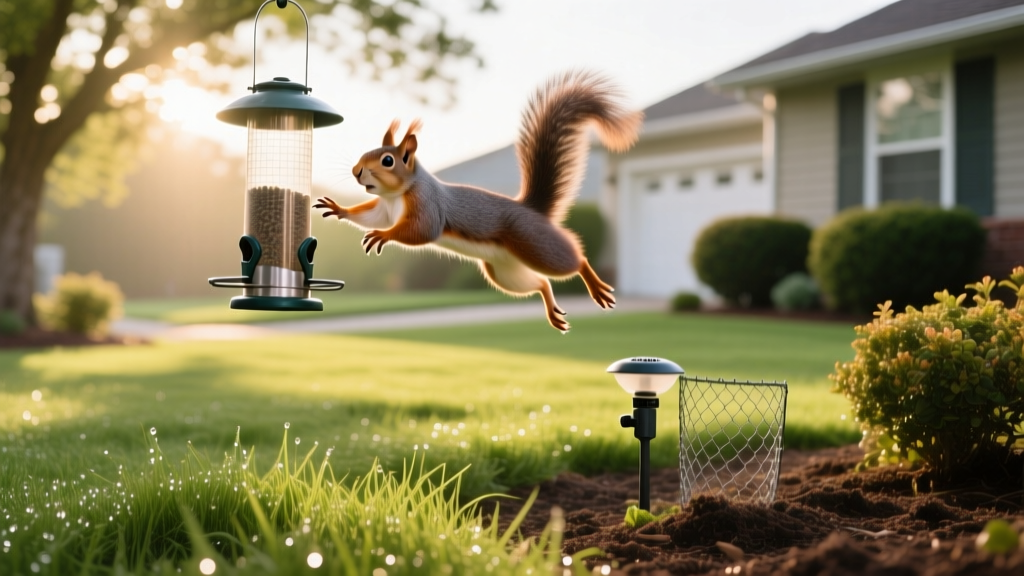
Top Squirrel Deterrents to Protect Bird Feeders & Yards (2026)
Eastern gray and fox squirrels are acrobatic, intelligent, and relentless. When they target your yard, they don't just steal expensive black oil sunflower seeds; they chew through wooden fascia boards, strip bark from ornamental trees, and dig up freshly planted spring bulbs. Finding effective squirrel deterrents requires moving beyond gimmicks and understanding the biomechanics and behavioral patterns of these rodents. In this comprehensive 2026 guide, we break down the physical barriers, mechanical feeders, and botanical defenses that actually work, backed by wildlife biology and real-world yard testing.
The Physics of the Problem: Understanding Squirrel Capabilities
Before deploying any deterrent, you must understand the physical baseline of the Eastern Gray Squirrel (Sciurus carolinensis). According to wildlife damage management data, squirrels possess staggering athletic abilities that render poorly placed defenses useless.
The Squirrel Athletic Matrix:
• Vertical Jump: Up to 5 feet straight up from a standing position.
• Horizontal Leap: Up to 10 feet horizontally from a branch or roofline.
• Drop Distance: Can safely drop 20 feet or more without injury.
• Climbing Angle: Can descend trees and poles head-first due to rotating ankle joints.
Because of these metrics, the Cornell Lab of Ornithology strictly recommends the '5-7-9 Rule' for feeder placement: at least 5 feet off the ground, 7 feet away from lateral jumping points, and 9 feet below overhead branches. If your setup violates any of these thresholds, no deterrent on the market will save your seed.
Physical Barriers: Baffles and Pole Guards
The most reliable first line of defense is a physical baffle. However, not all baffles are created equal. Squirrels can stretch their bodies to bypass narrow cones, making diameter the most critical specification.
Top Pick: Woodlink NABAF18 Audubon Wrap Around Baffle
The Woodlink NABAF18 remains the industry standard for pole-mounted feeders. Priced between $24 and $28, this 18-inch diameter galvanized steel baffle is wide enough to prevent a squirrel from reaching around the edge to grab the pole above it.
- Installation Requirement: Must be mounted on a straight pole (fits 0.5-inch to 1.375-inch diameters) at least 5 feet above the ground.
- Failure Mode: Homeowners often install the baffle too low (e.g., 3 feet off the ground). A squirrel will simply jump *over* the baffle and grab the pole above it. Keep it at chest height (5 feet minimum).
- Pros: Weatherproof, easy to install without dismantling the entire pole system.
- Cons: Only works on straight poles; ineffective on shepherd's hooks unless modified with specialized adapters.
Weight-Activated and Caged Feeders: The Mechanical Arms Race
If a squirrel manages to land on your feeder, the mechanism must deny them access to the seed. Weight-activated feeders use the mass difference between a 1.5-ounce chickadee and a 16-ounce squirrel to trigger a shroud that closes the feeding ports.
| Feeder Model | Trigger Weight | Avg. Price (2026) | Best For | Known Weakness |
|---|---|---|---|---|
| Brome Squirrel Buster Classic | ~3.5 oz | $85 - $95 | Small songbirds (finches, titmice) | Large starlings can sometimes trigger the shroud |
| Woodlink Absolute II | Adjustable (4 settings) | $70 - $80 | Customizing for mid-sized birds (cardinals) | Plastic hopper can be chewed if squirrel hangs upside down |
| Droll Yankees Yankee Flipper | Motorized spin | $110 - $130 | Entertainment and heavy squirrel pressure | Battery pack requires periodic recharging |
The Internet Center for Wildlife Damage Management notes that while mechanical feeders are highly effective, they require maintenance. Seed dust and moisture can jam the weight-activated springs. Clean the shroud mechanism with a dry brush every three weeks to ensure smooth operation.
Chemical and Sensory Repellents: What Works and What's a Scam
The market is flooded with repellents, but mammalian biology dictates which ones actually work. Squirrels rely heavily on their sense of taste and smell, but they also rapidly habituate to non-threatening stimuli.
The Science of Capsaicin
Birds lack the TRPV1 receptor that binds with capsaicin (the chemical that makes chili peppers hot). Mammals, including squirrels, have this receptor in abundance. Coating your seed in capsaicin makes it inedible to squirrels but perfectly safe for birds.
- Product Recommendation: Cole's Hot Meats (suet dough infused with capsaicin) or Kaytee Hot Meats Suet. Expect to pay around $12 for a 5-pound bag.
- Application Tip: If treating your own seed, use a commercial capsaicin seed coating rather than household hot sauce, which washes off in the first rainstorm.
⚠️ WARNING: Avoid Ultrasonic Devices and Mothballs
Ultrasonic repellents emit high-frequency sounds that dissipate within a few feet outdoors. Furthermore, squirrels habituate to the noise within 48 hours once they realize it poses no physical threat. Mothballs (naphthalene) are highly toxic, illegal to use outdoors per EPA regulations, and will poison local soil and groundwater. Never use them as a squirrel deterrent.
Ultrasonic repellents emit high-frequency sounds that dissipate within a few feet outdoors. Furthermore, squirrels habituate to the noise within 48 hours once they realize it poses no physical threat. Mothballs (naphthalene) are highly toxic, illegal to use outdoors per EPA regulations, and will poison local soil and groundwater. Never use them as a squirrel deterrent.
Landscape Modification: Botanical Deterrence
If squirrels are digging up your garden beds, altering your plant selection provides a passive, permanent deterrent. Squirrels dig to bury nuts and to search for tender bulbs, but they avoid plants containing specific toxic alkaloids.
Bulb Substitution Strategy
Tulips and crocuses are essentially squirrel candy. If you experience heavy bulb predation, replace them with Narcissus (daffodils), Alliums, and Hyacinths. Daffodils contain lycorine, a toxic, bitter-tasting alkaloid that squirrels instinctively avoid. When planting vulnerable bulbs like tulips, lay a layer of 1-inch hexagonal chicken wire just below the soil surface and cover with mulch; the shoots will grow through the wire, but squirrels cannot dig past it.
The 8-Foot Tree Trimming Rule
Squirrels use overhanging branches as highways into your yard. Prune any tree limbs that hang within 8 feet of your roofline, bird feeders, or garden beds. This exceeds their maximum horizontal leaping distance and forces them to the ground, where they are more vulnerable to predators and physical barriers.
Decision Framework: Building Your Defense Strategy
Do not rely on a single method. A layered defense is the only way to achieve a 100% exclusion rate. Follow this decision tree to build your 2026 yard defense:
- Step 1: Audit the Perimeter. Trim branches to 8 feet away from target zones. Remove easy access routes like trellises or stacked firewood.
- Step 2: Install the Baffle. Mount an 18-inch steel baffle on a straight pole, 5 feet off the ground, placed 10 feet away from fences or trees.
- Step 3: Upgrade the Hardware. Swap standard tube feeders for a weight-activated model like the Squirrel Buster Classic.
- Step 4: Spice the Menu. Use capsaicin-treated suet or seed in secondary feeders that lack mechanical baffles.
Frequently Asked Questions
Do fake owl decoys work to scare squirrels?
Only for about 48 hours. Squirrels are highly observant and will quickly realize the plastic owl never moves or attacks. To extend the effectiveness, you must move the decoy to a new location every single day, which is impractical for most homeowners.
Can I use grease on the bird feeder pole to stop them?
Applying grease, petroleum jelly, or motor oil to poles is strongly discouraged by wildlife experts. It can mat the fur of squirrels and birds, destroying their ability to regulate body temperature and potentially leading to hypothermia or fatal toxicity if ingested during grooming.
What is the best squirrel deterrent for a balcony or deck?
For elevated decks where pole baffles won't work, use a caged bird feeder (like the Droll Yankees X-Squirrel Proof) or hang the feeder from a weight-activated hook. Ensure the feeder is at least 10 feet from the railing to prevent lateral leaping.

