
Pest Control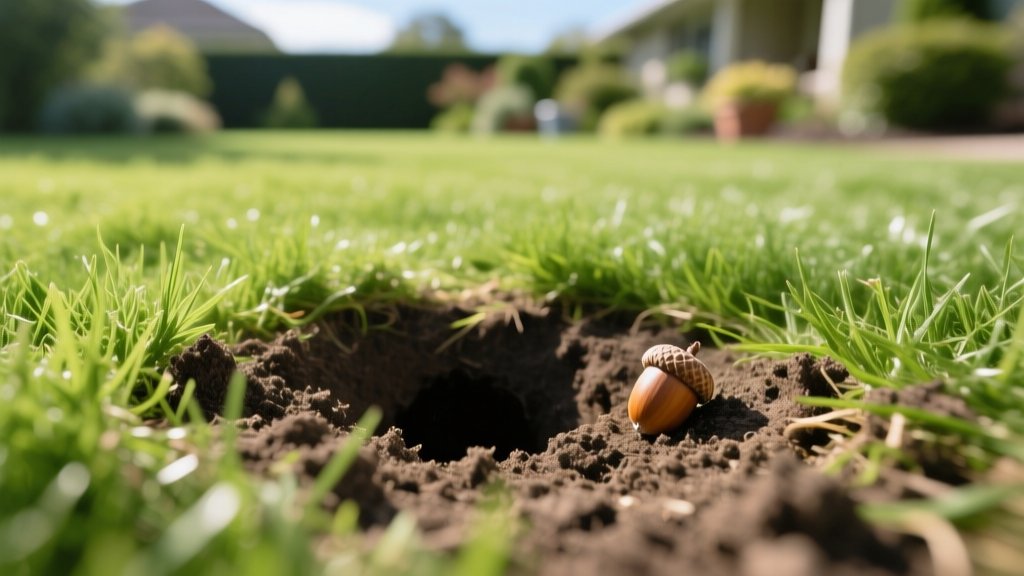
How to Identify, Fill, and Prevent Squirrel Holes in Lawns
The Anatomy of a Squirrel Hole: Identification Matrix
Waking up to a lawn pockmarked with small excavations is a common frustration for homeowners in suburban and wooded areas. Before deploying deterrents or ordering topsoil, you must confirm the culprit. Squirrel holes are frequently misidentified as vole, chipmunk, or groundhog burrows, leading to ineffective treatment strategies. According to Cornell University's Wildlife Damage Management program, tree squirrels (Eastern Gray, Fox, and Red squirrels) primarily dig for caching food or foraging for insects, rather than creating subterranean nesting tunnels.
To accurately diagnose the damage, compare the physical characteristics of the holes against the matrix below.
| Rodent / Mammal | Hole Diameter | Depth & Structure | Dirt Mound? | Primary Purpose |
|---|---|---|---|---|
| Squirrel | 1 to 2 inches | Shallow (1-3 inches deep) | Small, scattered mound | Caching nuts/acorns or foraging |
| Chipmunk | ~2 inches | Extensive tunnel system | No (carried away in cheeks) | Nesting and food storage |
| Vole | 1.5 to 2 inches | Shallow, connected to surface runways | No | Foraging for roots and bulbs |
| Groundhog | 10 to 12 inches | Deep, complex burrow network | Massive dirt fan / mound | Nesting and hibernation |
Why Squirrels Dig: Cache vs. Forage
Understanding the motivation behind the digging dictates your prevention strategy. Squirrels dig in lawns for two primary reasons:
- Caching (Burying): In autumn, squirrels bury thousands of acorns, walnuts, and seeds. They prefer loose, recently aerated soil or freshly laid mulch. These holes are usually isolated, 1-2 inches deep, and often have a single nut placed inside before being hastily covered.
- Foraging (Hunting): In spring and summer, squirrels dig to retrieve forgotten caches or to hunt for protein-rich lawn grubs (white grubs, Japanese beetle larvae). If you notice dozens of shallow holes clustered in a specific zone of your lawn, the squirrels are likely targeting a grub infestation beneath the turf.
Pro-Tip: If your squirrel holes are clustered and accompanied by torn, loose patches of grass, your lawn has a grub problem. The squirrels are merely a symptom. Treating the grubs will naturally eliminate the squirrels' food source.
Step-by-Step Lawn Repair Protocol for Squirrel Damage
Leaving squirrel holes unfilled creates tripping hazards, invites weed seeds to germinate in bare soil, and dries out the surrounding grass roots. Follow this precise repair protocol to restore your turf.
1. Clear and Prep the Cavity
Remove any exposed acorns, shells, or debris from the hole. If the squirrel has buried a nut, extract it; otherwise, it will germinate into an oak or hickory seedling directly in your lawn. Use a hand trowel to loosen the compacted soil at the base and sides of the hole to encourage new root penetration.
2. Apply the Optimal Soil Amendment Mix
Do not fill the holes with pure topsoil or potting mix, which will compact and drain poorly. Mix a custom repair blend:
- 60% Screened Topsoil: Provides the mineral base.
- 30% Organic Compost: Retains moisture and provides slow-release nutrients.
- 10% Coarse Mason Sand: Prevents compaction and improves drainage.
Fill the hole to about half an inch below the surrounding grade to allow for natural settling.
3. Overseed with Fast-Germinating Cultivars
For rapid patch repair, use Perennial Ryegrass (germinates in 5-7 days) or a Turf-Type Tall Fescue blend (germinates in 10-14 days, more drought-tolerant). Apply seed at a rate of 5 to 7 pounds per 1,000 square feet over the repaired holes. Lightly rake the seed into the top 1/8 inch of your soil mix.
4. Protect and Hydrate
Cover the repaired spots with a thin layer of biodegradable jute netting or weed-free straw to prevent birds from eating the seed and to deter squirrels from immediately re-digging the fresh soil. Water lightly twice daily for the first 10 days to keep the top inch of soil consistently moist.
Proven Deterrence Strategies: What Actually Works
Deterrence requires a multi-layered approach. Relying on a single method, like ultrasonic spikes, yields poor long-term results as squirrels quickly habituate to static stimuli.
Eliminate the Food Source (Grub Control)
If squirrels are foraging for grubs, apply Heterorhabditis bacteriophora (Hb) beneficial nematodes. These microscopic worms actively seek out and destroy white grubs without harming earthworms or turf. According to Penn State Extension, nematodes are highly effective when applied correctly.
- Application Rate: 250 million nematodes per 10,000 square feet.
- Cost: Approximately $45 to $65 per treatment area.
- Timing: Apply at dusk when UV radiation is low. Soil temperatures must be between 60°F and 85°F. Water the lawn immediately after application to wash the nematodes into the soil profile.
Taste and Olfactory Repellents
For caching behavior, taste repellents are more effective than scare tactics. Look for products containing Putrescent Whole Egg Solids (e.g., Bonide Repels-All or Liquid Fence) or Capsaicin (hot pepper extract).
- How to Apply: Spray the liquid repellent directly over the repaired holes and surrounding lawn. The sulfur-like odor of putrescent egg solids mimics predator decay, triggering a flight response.
- Maintenance: Reapply every 30 days, or immediately after 1/2 inch of rainfall. Expect to spend $15 to $25 for a 32-ounce ready-to-spray bottle, which covers roughly 500 square feet.
Physical Barriers for Garden Beds
If squirrels are decimating your mulched garden beds or bulb plantings, liquid repellents will wash into the soil and lose efficacy. Instead, install physical barriers. Lay 19-gauge, 1/2-inch galvanized hardware cloth over the soil surface after planting, then cover it with 2 inches of mulch. Squirrels cannot dig through the steel mesh, but plant stems and water will pass through easily. A 10-foot roll costs roughly $30 at most hardware suppliers.
Frequently Asked Questions
Do mothballs work to keep squirrels out of lawn holes?
No. Mothballs contain naphthalene or paradichlorobenzene, which are highly toxic to pets, children, and local waterways. Furthermore, using mothballs outdoors violates federal pesticide regulations in many regions, and the scent dissipates too quickly in open-air lawn environments to deter squirrels.
Will filling the holes with gravel stop them from digging?
While squirrels dislike digging in sharp gravel, placing gravel in your lawn creates a severe hazard for lawnmower blades and poses a tripping risk for humans. Stick to the soil-compost-sand mix and use surface repellents instead.
Are ultrasonic squirrel repellents effective for lawn protection?
Independent university studies consistently show that ultrasonic devices have minimal to no long-term effect on rodent behavior in open outdoor spaces. The sound waves are easily blocked by grass, shrubs, and terrain undulations, making them an unreliable investment for lawn-wide deterrence.

